Reading Time: 3 Minutes 36 Seconds
Origins of Tančírna
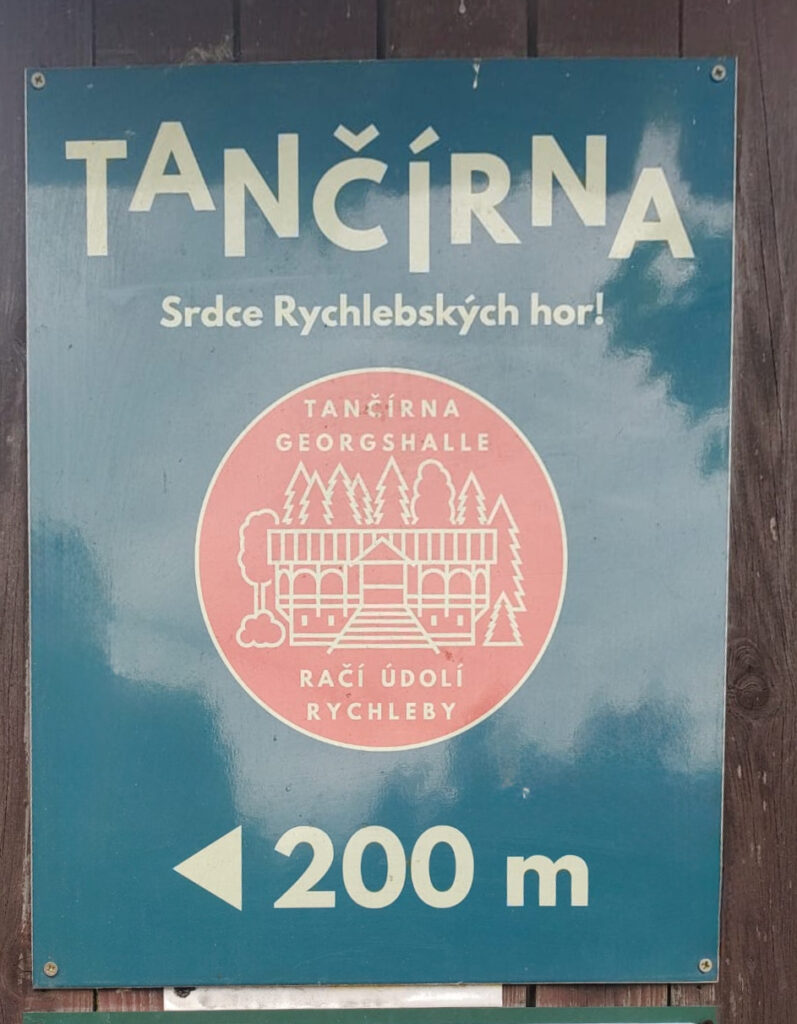
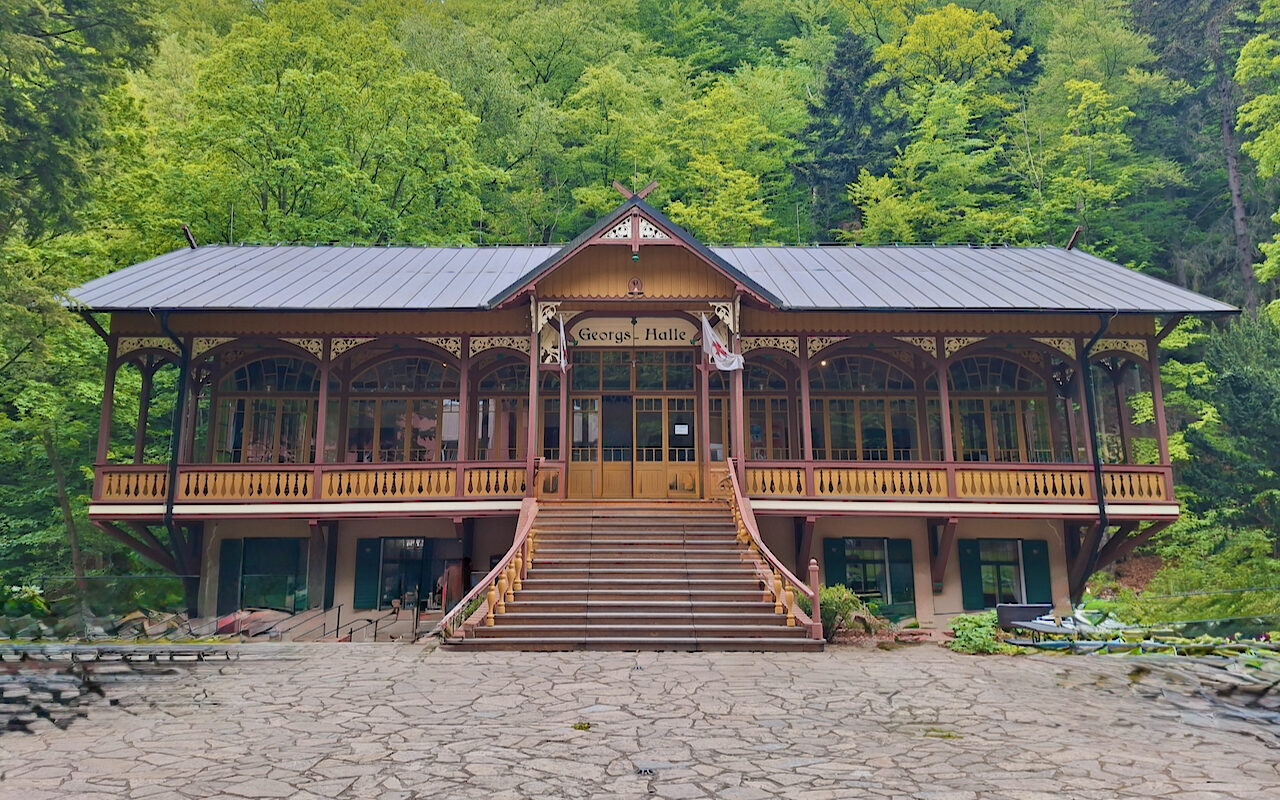
Tančírna in Račím údolí (originally “Georgshalle“, in English “Dance Hall”) is one of the most distinctive historic buildings in the Javorník region.
It is located in the Rychlebské hory, a mountain range spanning the Czech-Polish border in Northern Moravia, within an area that was historically part of the Sudetenland.
Built between 1906 and 1907 on the initiative of Bishop and Cardinal Georg Kopp of Wrocław, it replaced an earlier steam powered sawmill that had stood on the site since the late 19th century.
The new building was designed as a restaurant, guesthouse and dance hall, becoming a popular destination for both local residents and visitors.
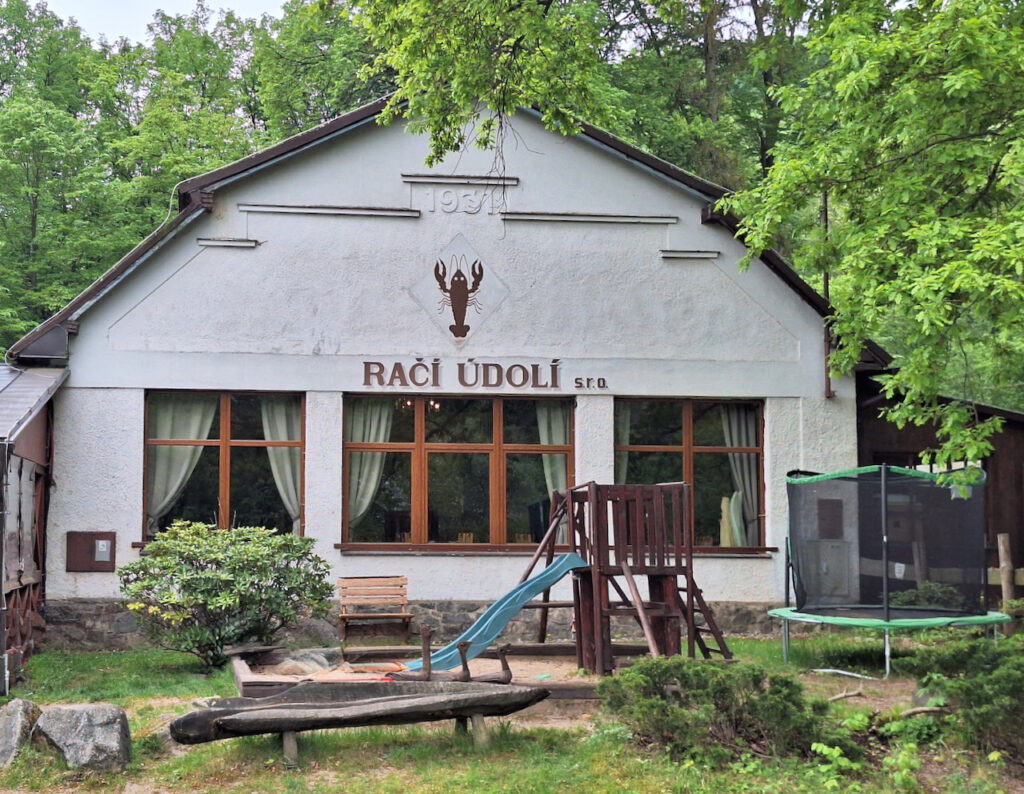
Before WWII, Račí údolí (literally, the “Crayfish Valley”) offered several restaurants, taverns and guesthouses, making it one of the area’s most popular recreational destinations.
The valley was known for its lively social life: Saturday evening dances and Sunday musical gatherings attracted guests from across the region.
Architecture of the Dance Hall
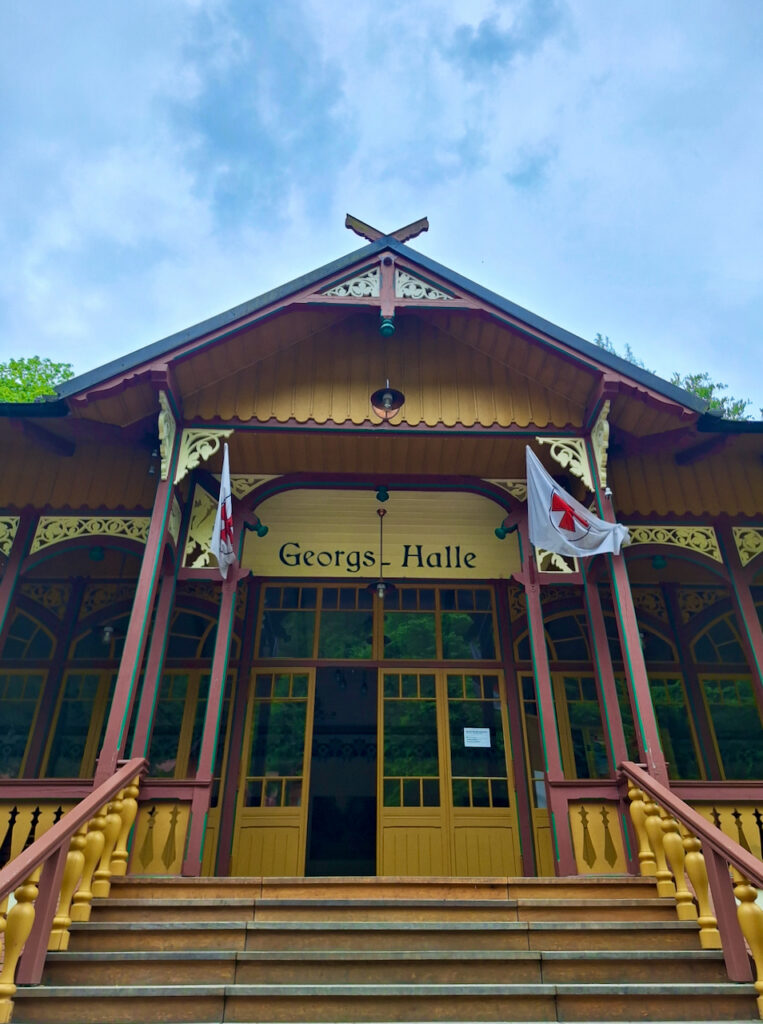
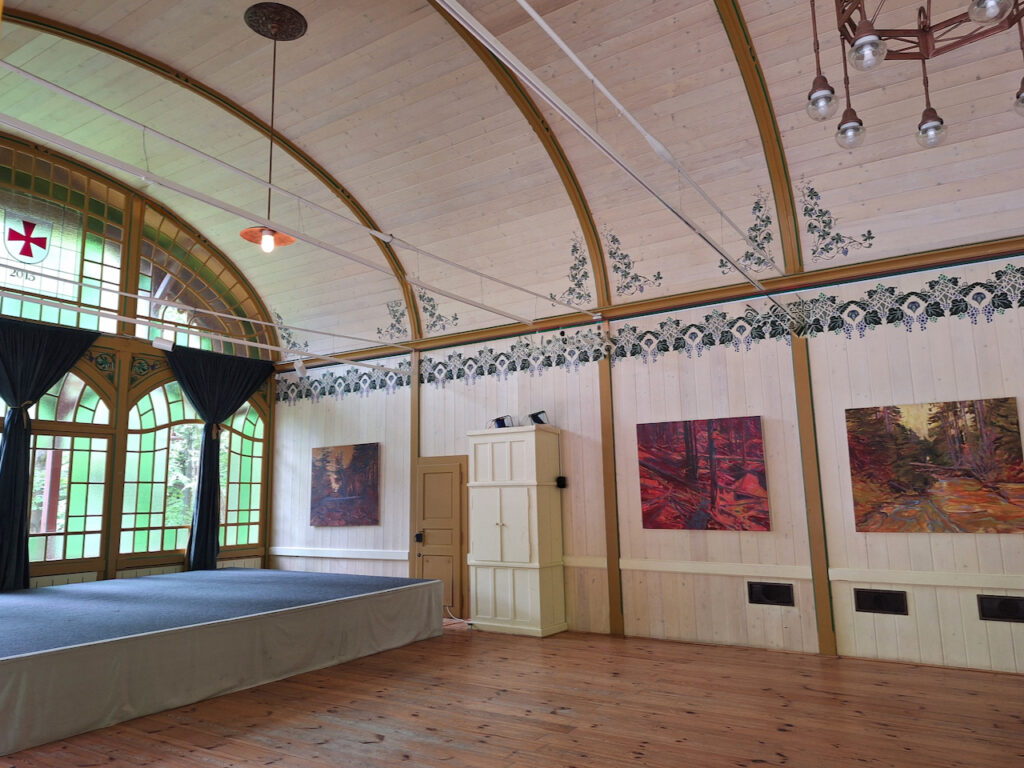
Tančírna is notable for its Art Nouveau architecture.
The brick ground floor housed service facilities including a bar and a kitchen, while the upper floor, built primarily from wood and glass and surrounded by a veranda, contained the main hall.
Decorative wooden details, ornamental carvings and colourful stained-glass windows in shades of blue and green gave the building its unique character.
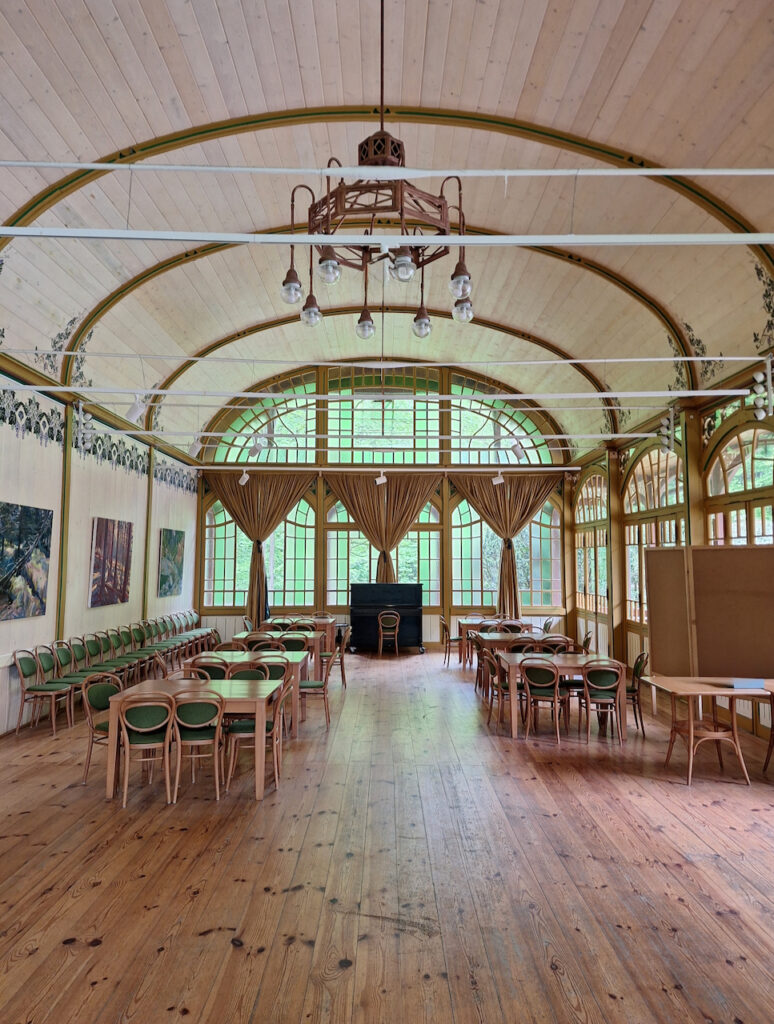
The entire complex was equipped with electricity, which was considered a modern feature at the time.
The surrounding park was created together with the dance hall and formed an integral part of the overall design.
Landscaped paths, rock gardens, ornamental trees, rhododendrons and outdoor seating areas created a pleasant setting for visitors.
Following decades of neglect, the building became one of the most severely deteriorated historic sites in the region.
Today, it is owned by the municipality of Bernartice, which, in 2009, initiated a reconstruction project to preserve the historic dance hall and adapt it for contemporary use.
Existing rooms were converted into club facilities – a kitchen, offices and changing rooms – while the historic hall was preserved as a venue for cultural and community events, particularly during the summer season.
Tančírna in Račí údolí remains a rare example of Art Nouveau recreational architecture and a reminder of the rich social and cultural life that once flourished in the valley.
Visiting Tančírna today
More than a restored historical landmark, Tančírna is now an active cultural venue and tourist attraction in the heart of the Rychlebské Mountains.
Throughout the year, the hall hosts concerts, exhibitions, workshops, lectures, dance performances and a variety of community events.
You can check out the events calendar at the official website or on their facebook page.
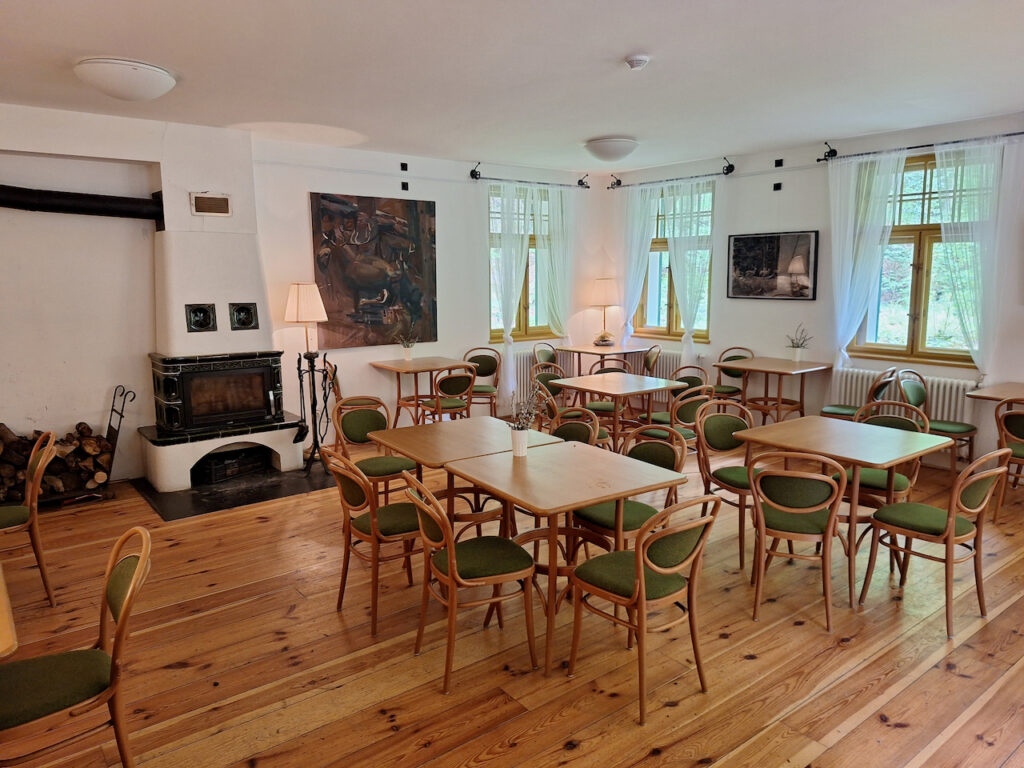
The ground floor includes a café and information centre, making it a pleasant stop while exploring the surrounding valleys and mountain trails.
The main hall continues to serve as a centre of cultural life, just as it did more than a century ago.
How to get there
In general, reaching this remote corner at the end of the world without a car is difficult and takes long (ex. almost 5hours from Prague, 3hours from Olomouc).
Parking is allowed at the end of the road, near a large gazebo where travellers sometimes camp. There is also a spring with “probably” drinkable water or where you can simply cool off.
Otherwise, you can try parking in front of the Isolde Restaurant and adjacent camping site.
The closest train station is Javorník ve Slezsku, located ~4km from the Tančírna, and the closest bus stop is Javorník, Račí údolí, which is just 2km away.
Google maps won’t help you in any case, so to organize your trip, please use mapy.cz, pubtrans.cz or české dráhy (the Czech railway company).