Reading Time: 4 Minutes 54 Seconds
Today we explore two mysterious places in the heart of Krušné hory (Ore Mountains).
The short loop hike starts and ends at Kovářská railway station, easily reachable by train from Chomutov.
If you travel by car, you can either park in a small area at the entrance of the forest, or in the proximity of the train station (somewhere around here).
The hike is easy and suitable for most walkers.
It leads through a peaceful forest and combines industrial heritage, fascinating local history and beautiful mountain scenery.
Along the way you will meet a historic lime kiln and the haunting ruins of Königsmühle, a vanished mountain settlement tucked away in a secluded valley.
The lime kiln in Kovářská
About 1km from Kovářská train station stands a historic lime kiln, considered one of the most important technical monuments in the Czech Ore Mountains.
The complex was established during the 19th century near deposits of calcite-dolomitic marble and preserves evidence of the mining and processing of calcareous rocks in this area.
The site forms part of the Mining Cultural Landscape Háj–Kovářská–Mědník, which became a protected conservation zone in 2014.
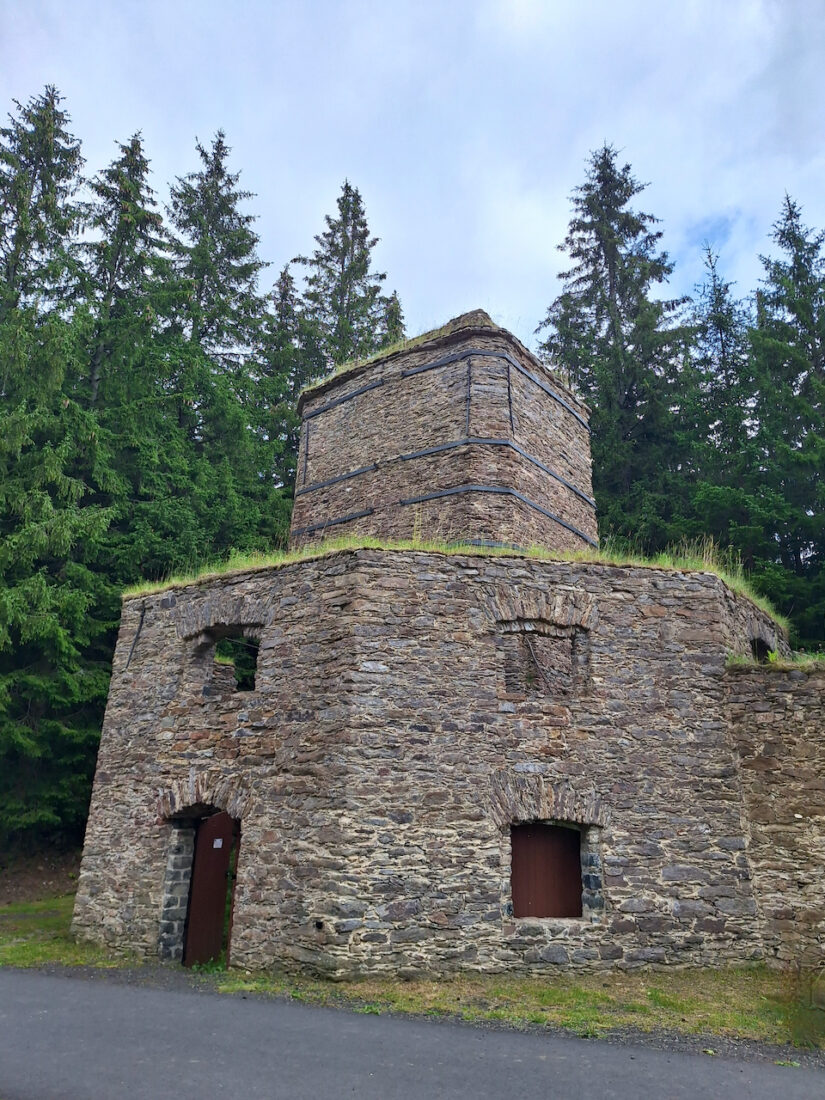
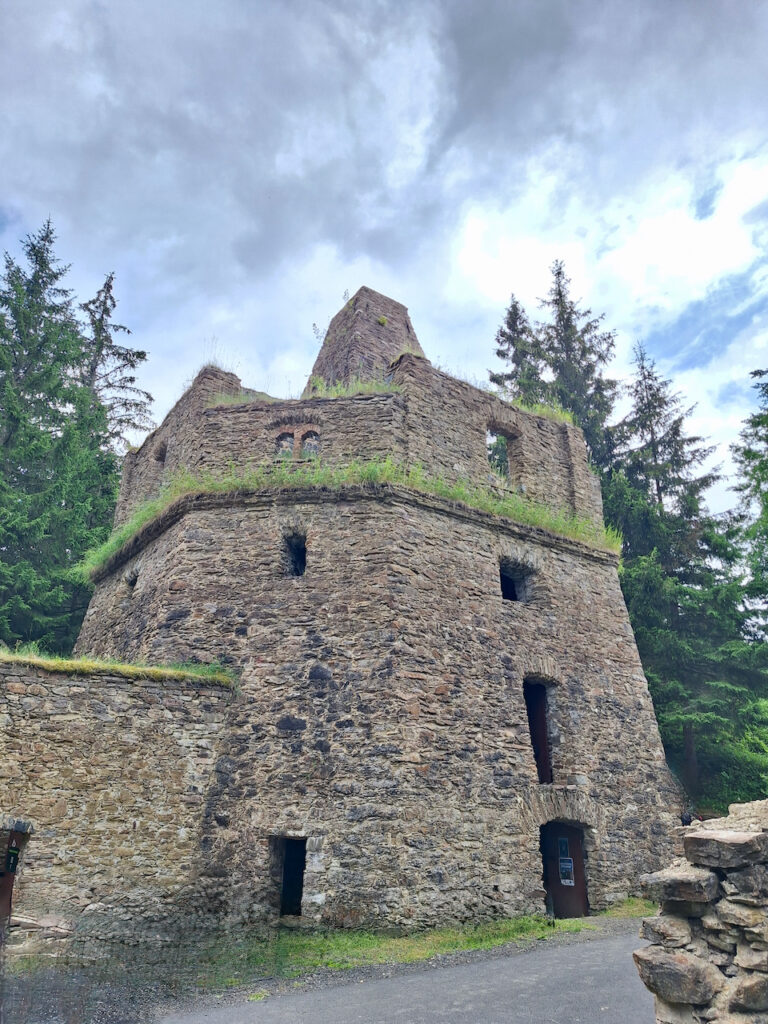
Two polygonal Rumford furnaces built in 1851 and 1856 formed the heart of the operation.
Material extracted from nearby quarries, including one directly behind the kiln, was transported by ramps and wooden bridges directly to the furnaces, where it was burnt using wood, peat and later coal.
The resulting lime was used in construction, metallurgy and as agricultural fertilizer.
It is estimated that more than 1.5 million tonnes were mined from the surrounding area over the years.
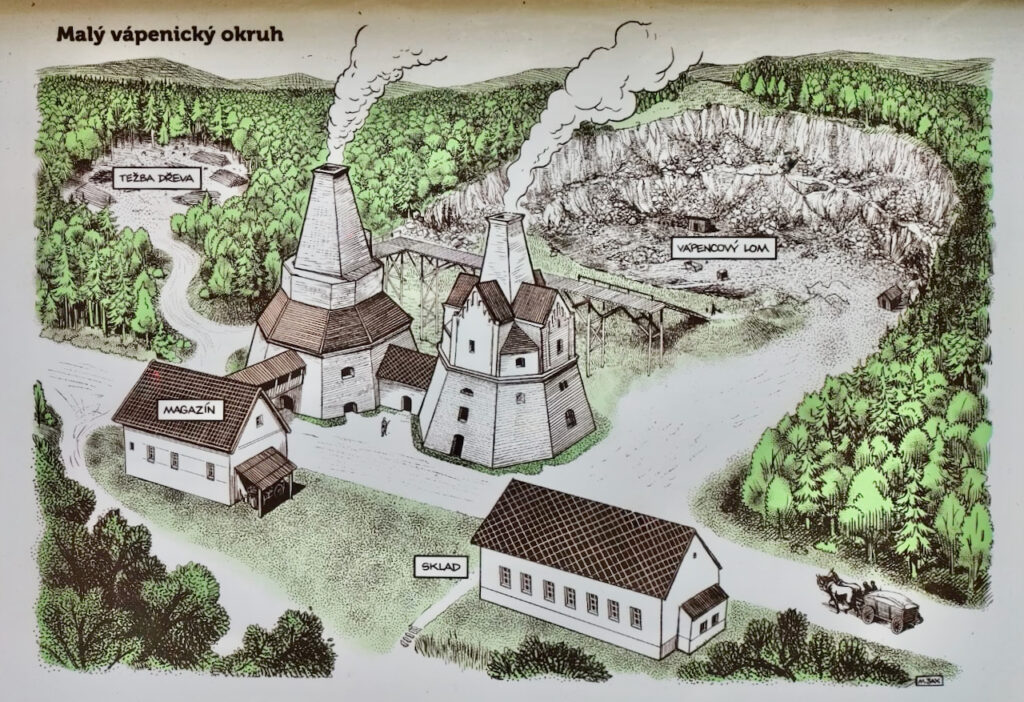
Production continued until 1924. After the kiln was shut down, the quarry was gradually reclaimed by the forest and the buildings fell into disrepair.
Decades of harsh mountain weather, neglect and vandalism accelerated the deterioration, and and one of the furnaces partially collapsed.
A major restoration project was launched in 2017 and completed in 2019.
Costing more than 6 millions CZK, the reconstruction stabilized the remaining structures, repaired damaged masonry, arches and vaults, and added information panels.
Königsmühle, a vanished village
Leaving the lime kiln behind, the trail continues through the forest towards the abandoned settlement of Königsmühle, known in Czech as Králův mlýn (or the King’s Mill).
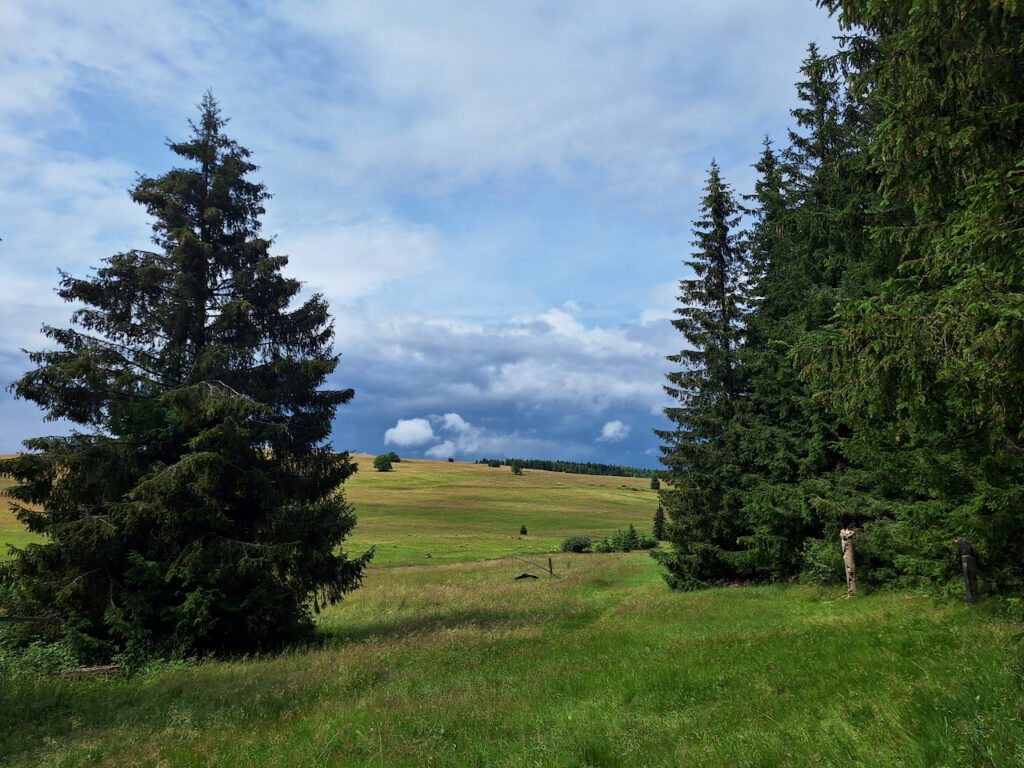
Hidden in the valley of the Černá voda (Black water) stream at an altitude of around 915 m, the village lies within the “Horská louka u Háje” nature reserve.
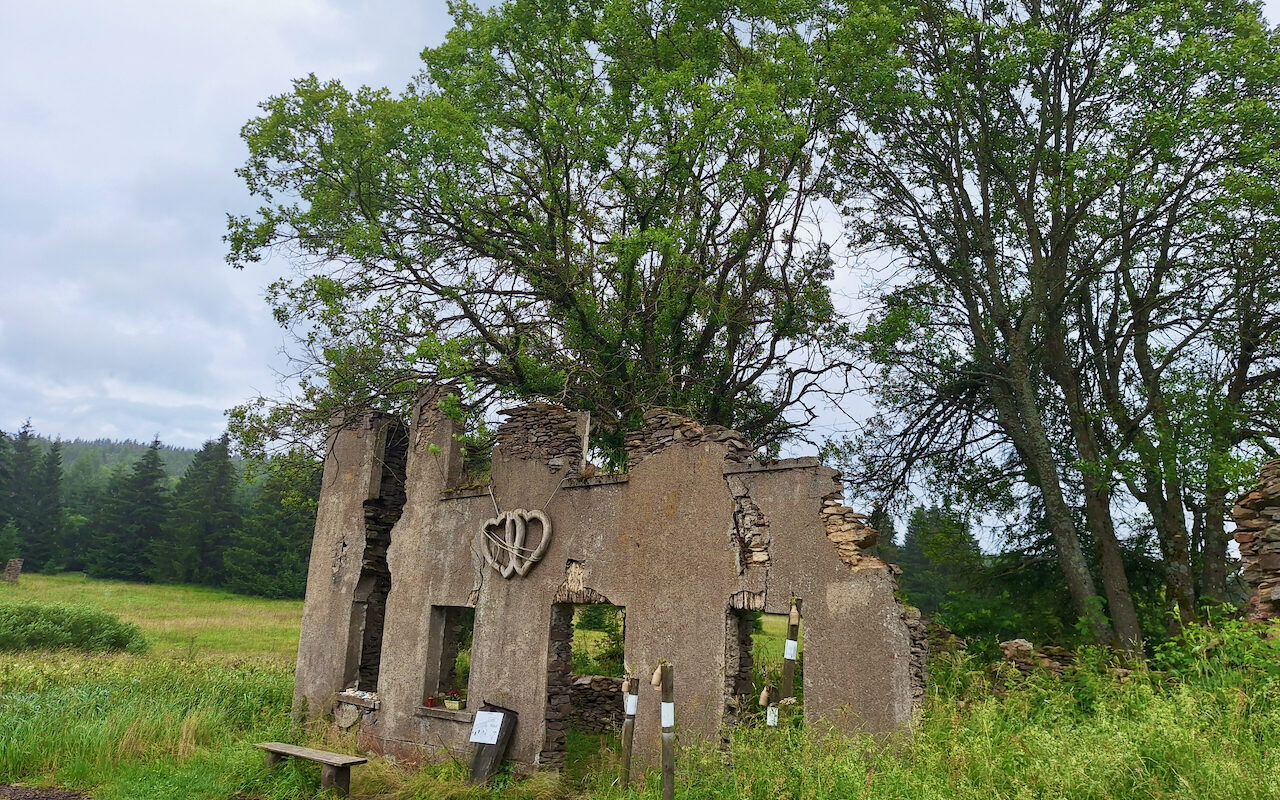
Today, only ruins remain, but the place tells a powerful story of centuries of mountain life and the dramatic changes that transformed the Czech-German borderlands after WWII.
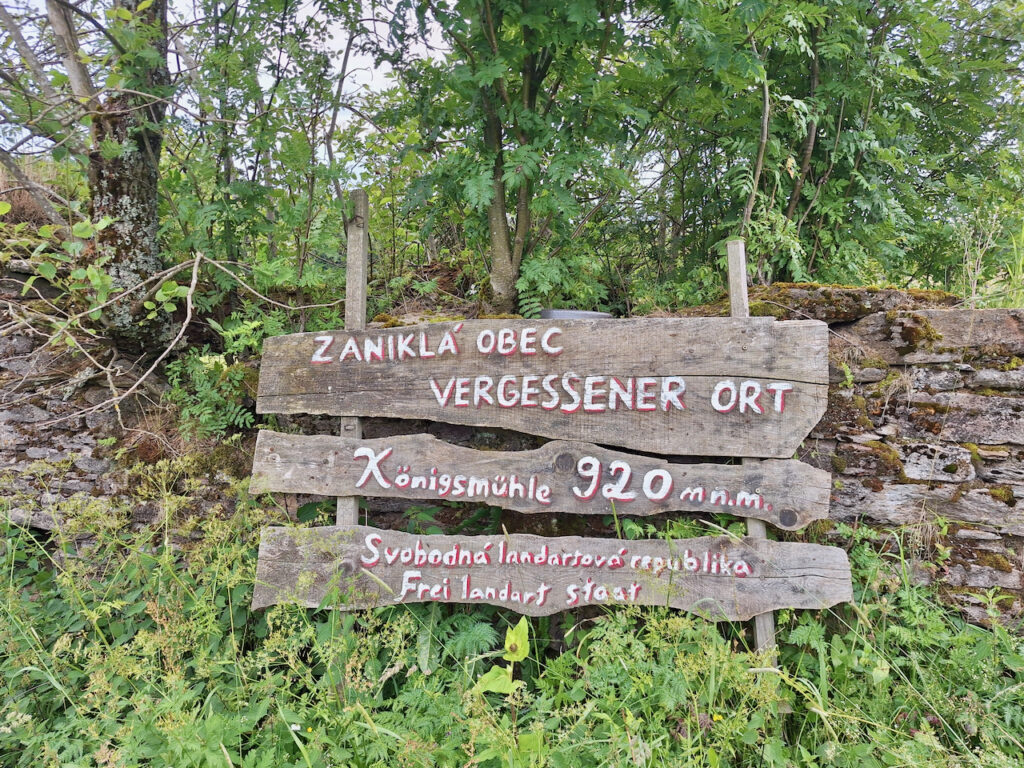
Königsmühle was probably founded in the 16th century around a mill that served travellers moving between Bohemia and Saxony.
A historic trade route passed directly through the valley, and over time houses, mills and agricultural buildings were established.
By the early 20th century approximately 60 people lived in the village. They earned their living through forestry and farming.
Before WWII, the population was predominantly German speaking.
Following the war and the expulsion of the Sudeten German population, the inhabitants were forced to leave.
The village was gradually abandoned, removed from maps, and eventually ceased to exist during the 1950s.
Most of the buildings were demolished, and nature slowly reclaimed the landscape.
Königsmühle today
Despite its disappearance, Königsmühle was never truly forgotten.
In 2011 writer Petr Mikšíček met local native Rosemarie Ernst and became fascinated by the history and atmosphere of the site.
Inspired by the Kjerringøy Land Art Biennale in Norway, he came up with the idea of a cultural gathering to commemorate this unique place of Czech-German history and landscape.
Since 2012, Königsmühle has hosted an annual summer festival dedicated to land art, music, ecology, and the relationship between people and nature.
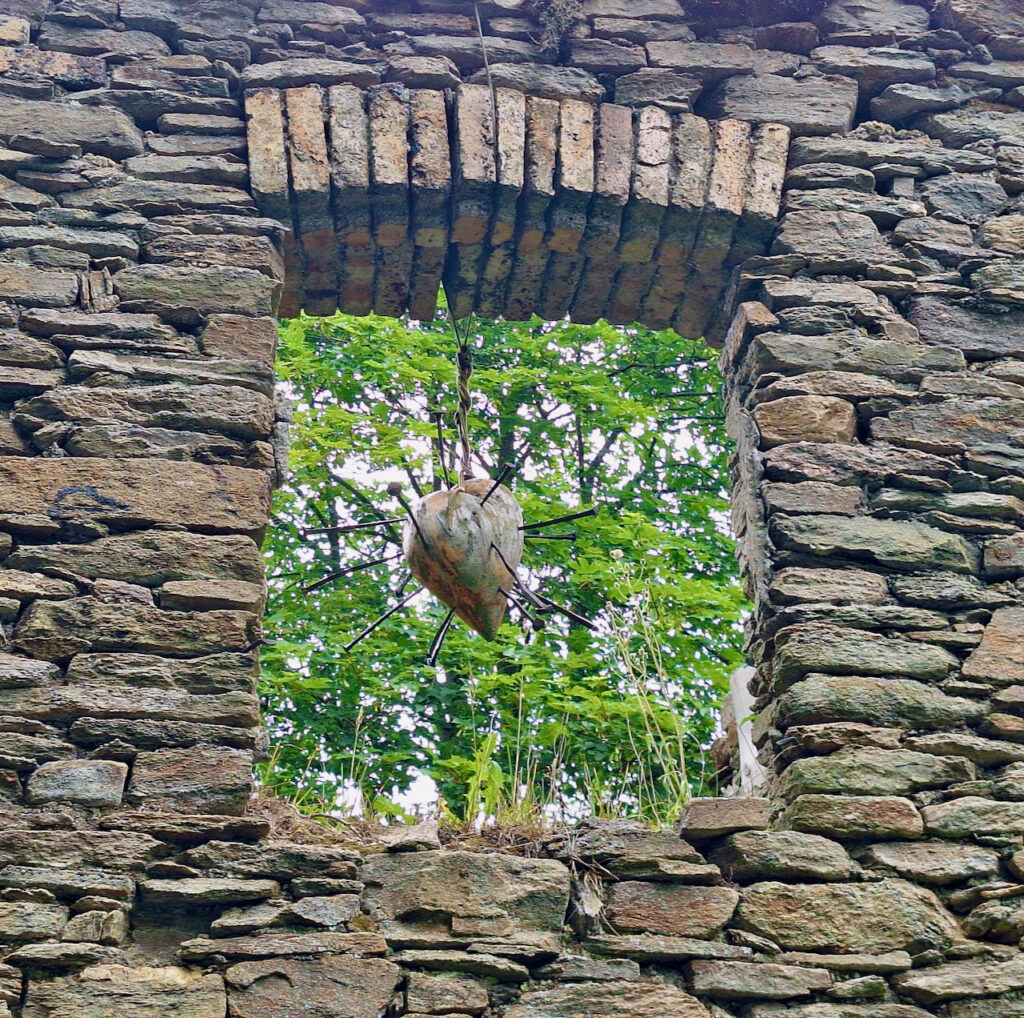
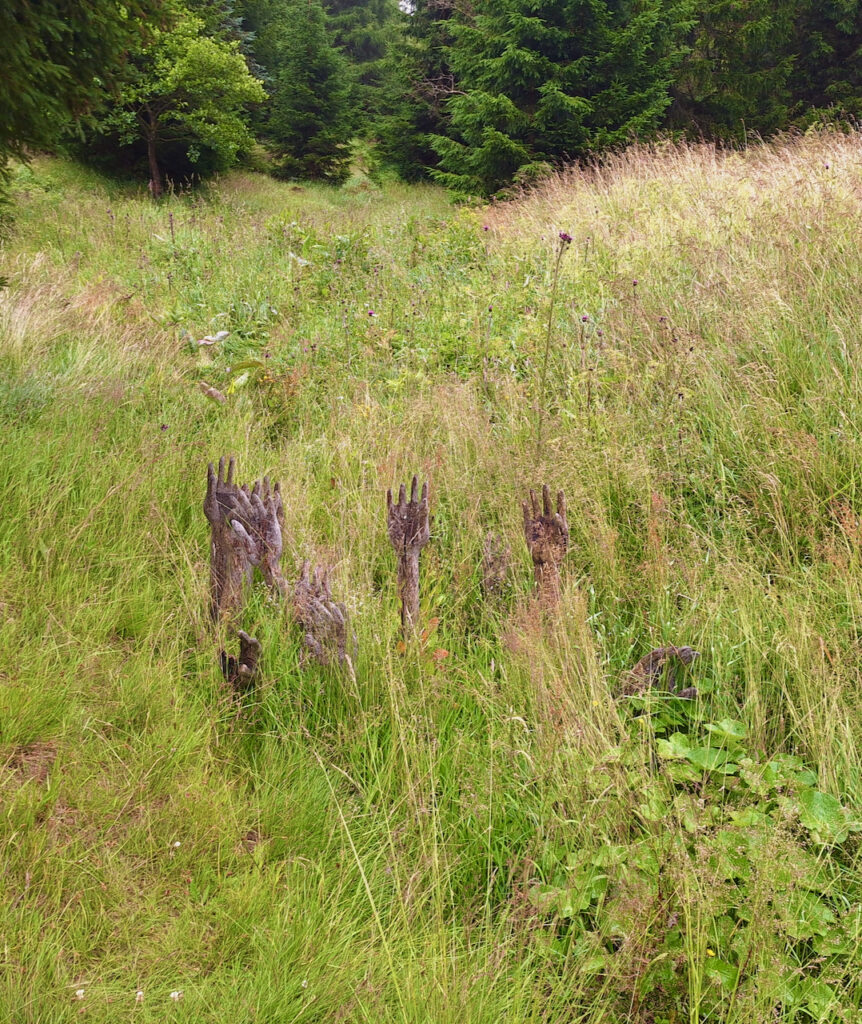
The annual festival gives the ruins a new symbolic life: artists and visitors gather among the ruins to create temporary works that blend into the surrounding environment.
Walking through Königsmühle today feels like stepping into a place where history, nature and memory coexist.
Remains of former houses emerge from the wild grass, stone walls disappear into the forest, and the silence of the valley contrasts with the lives once stood here.
Extra info
Today, the interior of the lime kiln can be visited via guided tours, which can be booked online and take place in summer. Be aware that these are only in Czech, maybe German is offered too.
Since the lime kiln lies along the Via Czechia – Severní trail (Northern trail), the first part of the hike follows a paved forest road that is easy to walk in all weather conditions.
Afterwards, the route leaves the road and continues along quieter forest paths towards Königsmühle.
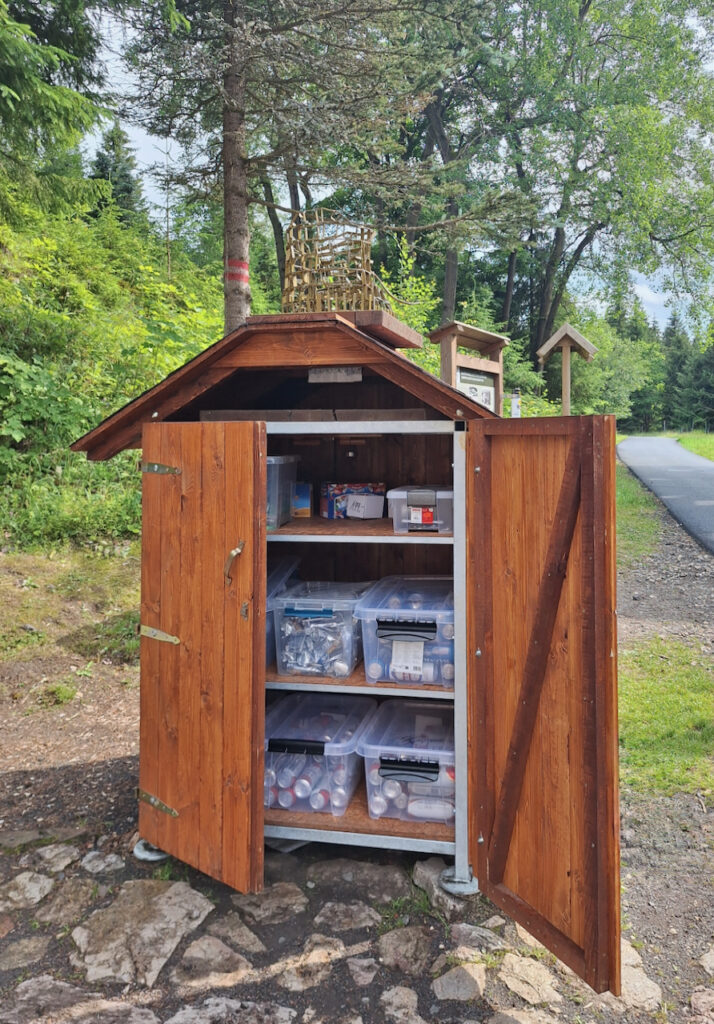
Next to the kiln there is a self-service forest bar where hikers can buy refreshments at any time of the day, throughout the year, and pay via QR code.
If you visit the area during summer months, keep an eye on the roadside while walking: wild strawberries are common here and can often be spotted beneath the leaves.