
Reading Time: 4 Minutes 26 Seconds
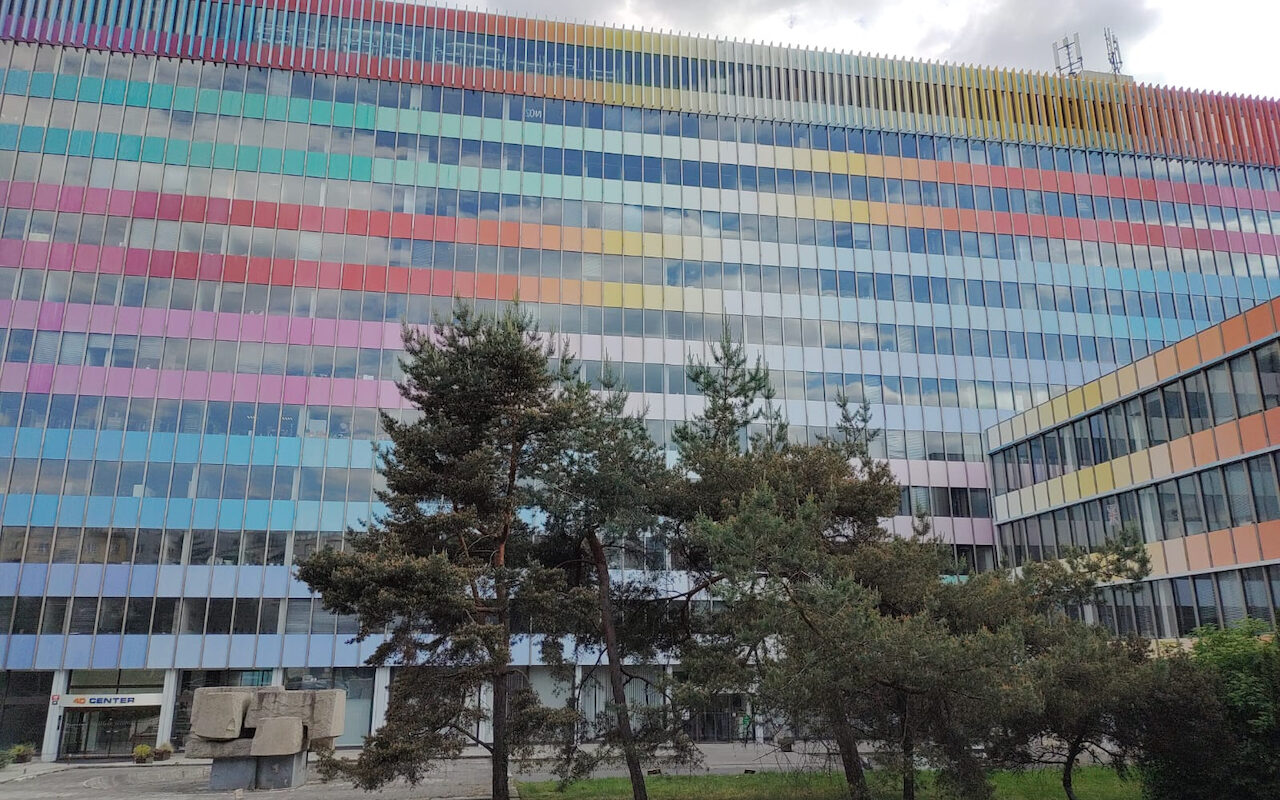
The Chemapol‑Investa building in Prague is one of the most significant examples of Czechoslovak architecture of the 1960s.
Its structure is a dominant feature of the Vršovice neighborhood and is renowned especially for its stylistic purity, which follows the model of the American “skin and bone” architecture associated with Ludwig Mies van der Rohe.
The building was constructed between 1966 and 1970 according to the winning project of architects Zdenka Marie Nováková and Dagmar Šestáková for a 1964 competition for the energy sector’s central office.
Their design stood out thanks to the integration of modern landscape compositions – terraces, green areas, and public spaces – that served both aesthetic and practical purposes.
Architectural design
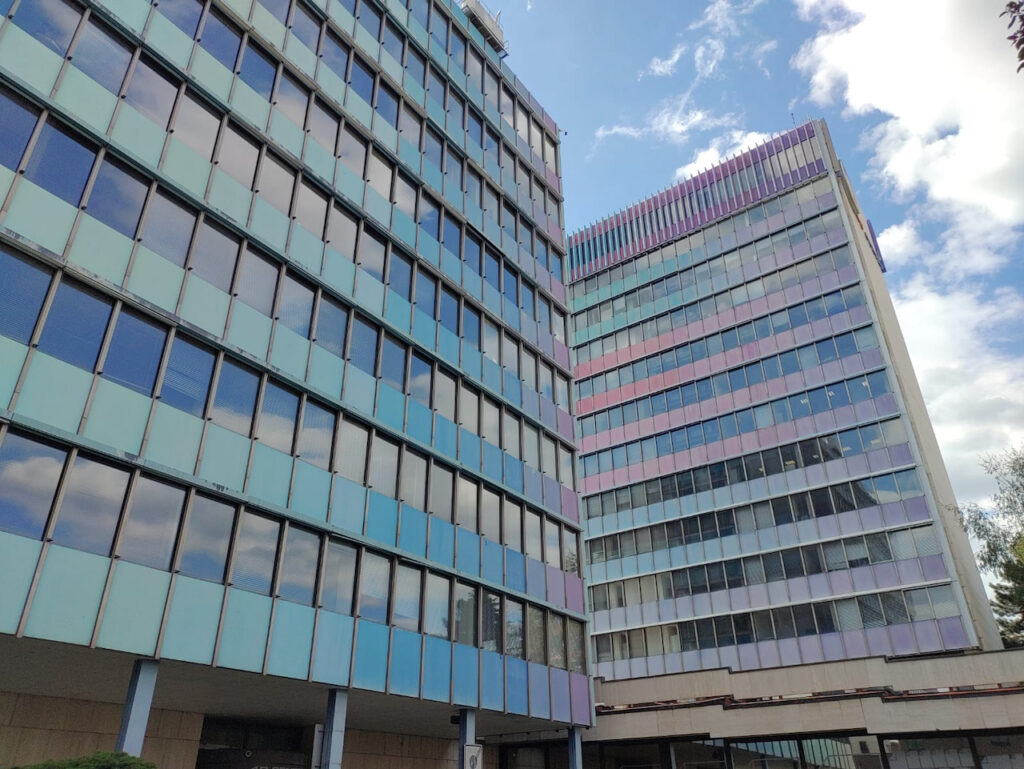
The complex comprised 3 interconnected buildings: an administrative tower (Building A), a 10-storey headquarters (Building B), and a technical wing (Building C).
At the heart of their architectural proposal was an innovative two-level terraced platform that connected the 3 buildings and housed a foyer, restaurant, conference halls, and an atrium beneath – all intended as representative spaces enhanced by extensive artistic decoration.
The terraced design allowed pedestrian access from multiple sides while adapting the sloping terrain into cascading levels of green spaces and public areas.
Technology and interiors
Financial constraints led the original energy company to withdraw from the project, which was subsequently taken over by the two foreign trade companies Chemapol and Investa, which were looking to establish a representative headquarters of international standard.
Chemapol imported oil and chemical products to Czechoslovakia and Investa exported textile, clothing and shoemaking machines worldwide.
In pursuit of a modern and globally competitive office building, they engaged the Italian firm FEAL as the main contractor, which was a specialist in prefabricated structures, operating its own steel plants.
The cooperation with a Western company was something unusual during the Communist era.
Chemapol director Zdeněk Mojžíšek had seen FEAL’s office buildings during his business trips to Italy and he got impressed by their distinctive lightness and elegance – qualities made possible by suspended facade cladding.
Such refined architectural features stood in contrast with domestic capabilities, as Czechoslovak prefabrication plants at the time were limited to producing heavy facade panels.
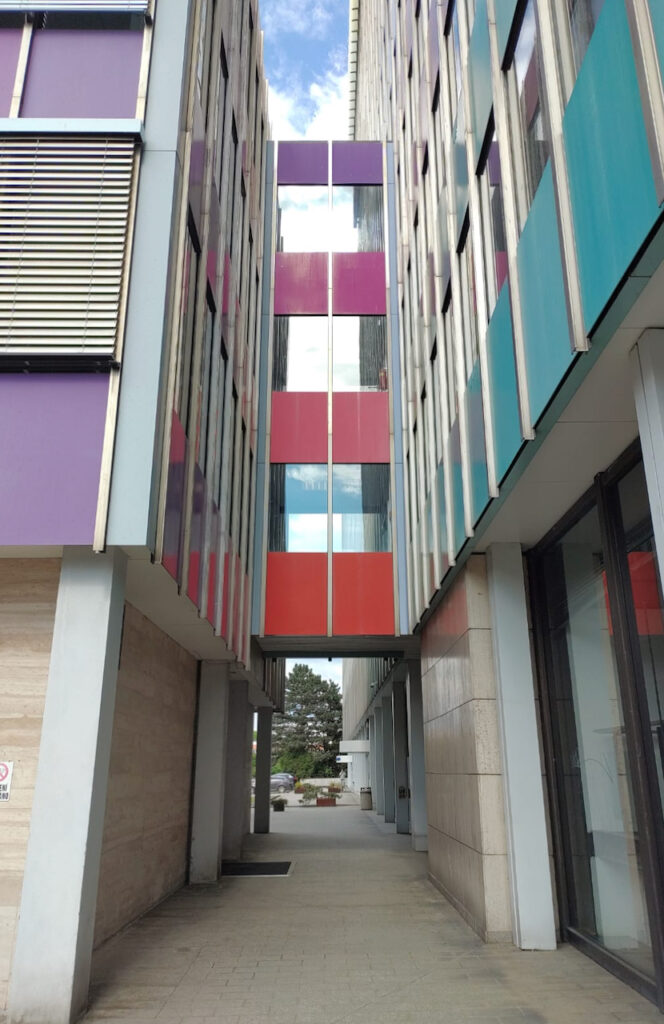
FEAL’s modular system for facade cladding, suspended ceilings and lightweight interior partitions accelerated the construction process while raising the technological standard of the building.
The steel, glass, and aluminum represented a technological innovation for Czechoslovakia, combining prefabricated efficiency with modern materials and methods that defined the building’s success.
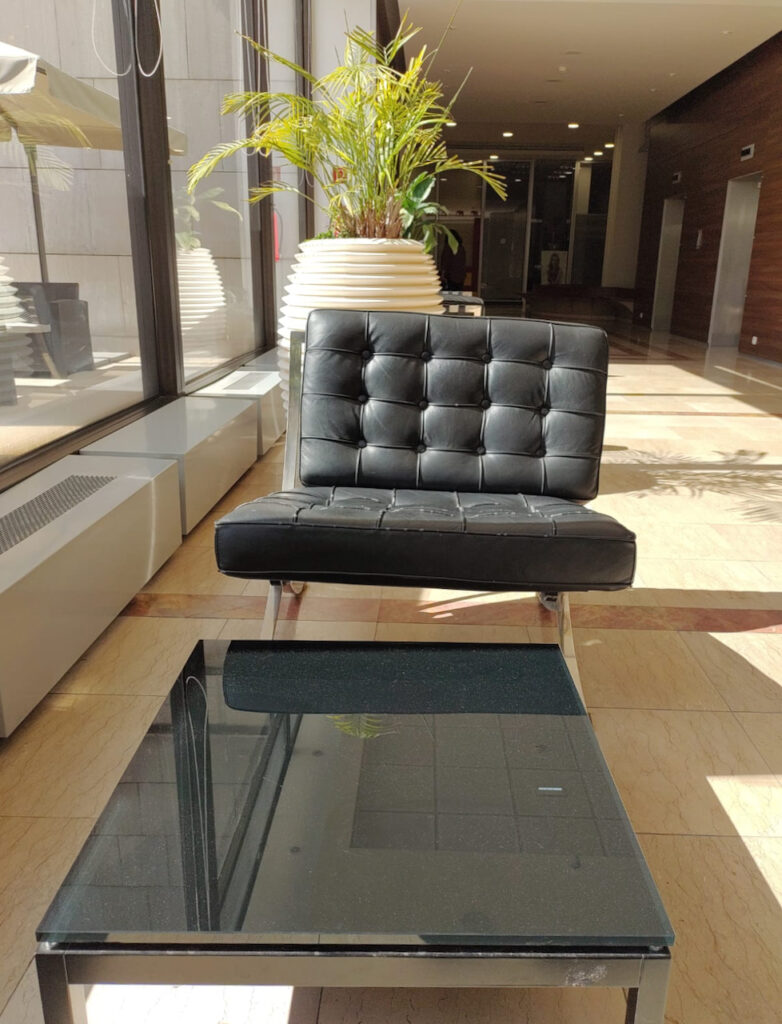
The interiors offered modern facilities such as glass‑enclosed meeting rooms, flexible lounge areas, a conference hall that could also serve as a cinema, medical offices, a bright dining hall, and well‑equipped offices.
Altogether, these features gave employees a sense of working in an environment comparable to the West.
The building originally included also artistic decoration by leading figures of the Czechoslovak art scene.
Building’s alterations and loss of significance
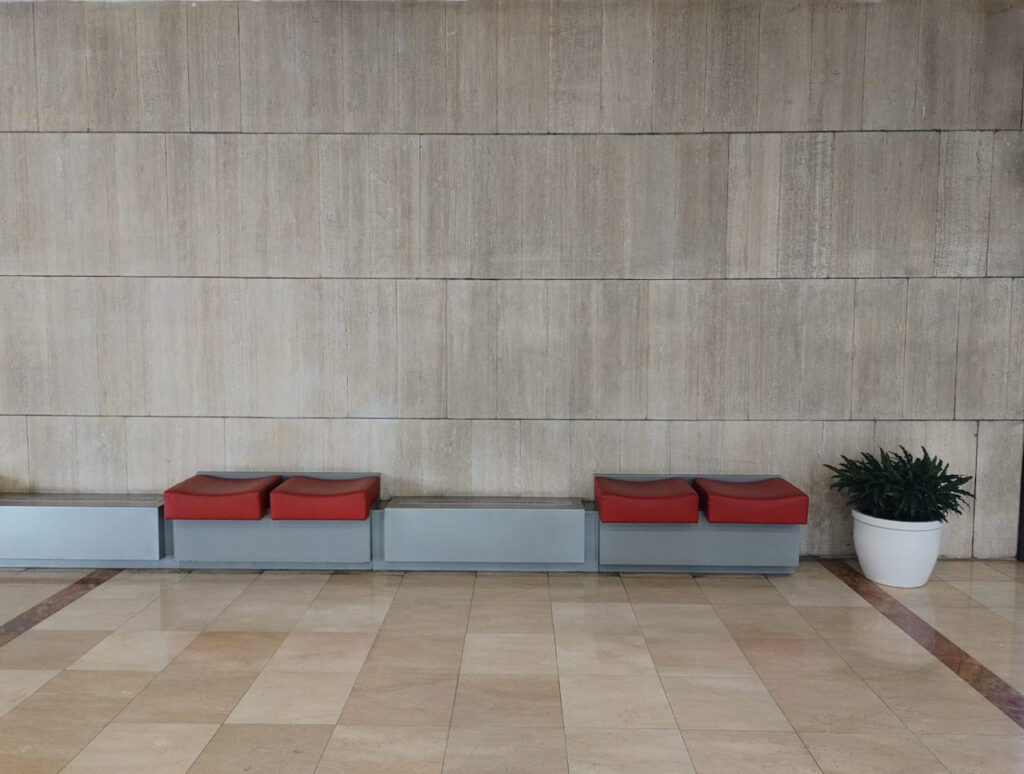
After changing ownership, the building underwent a radical reconstruction in the early 2000s that significantly altered its character: nearly all of the original interiors were removed and most artworks disappeared.
Only Karel Kronych’s fountain in the garden by the back entrance survives today.
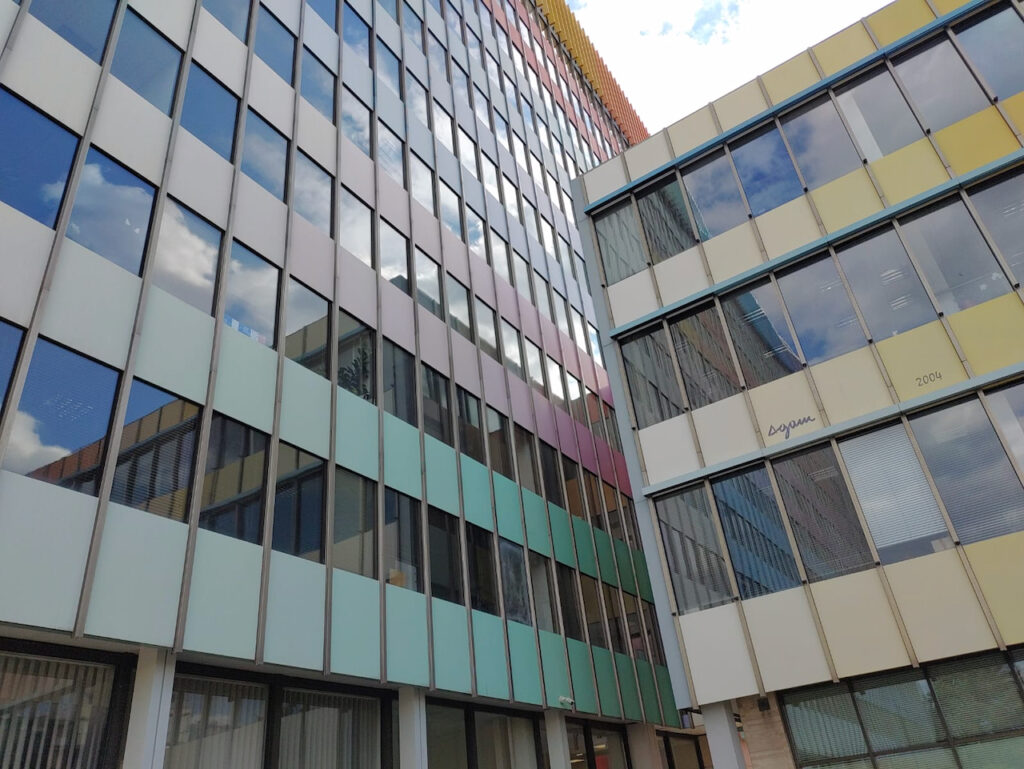
The formerly dark, restrained facade was repainted in bright colors by French-Israeli artist Yaacov Agam between 2003 and 2004, against Nováková’s wishes.
This intervention was widely criticized for undermining the building’s architectural integrity and elegance.
These changes, combined with the loss of original elements and the presence of asbestos, ultimately led the Ministry of Culture in 2023 to deny heritage protection, despite acknowledging the complex as an important example of 1960s architecture.
A subsequent architectural-historical survey confirmed that only the structural frame and outer shell largely remained intact, while the interiors survived only in fragments, such as a few doors, partitions, and a staircase structure.
Critics, however, warn that the loss of Chemapol represents the disappearance of a key work of postwar modern architecture in Prague.
After having survived a fire in 1970 and the bankruptcy of the Chemapol company, the building is planned for demolition, to give space to new apartment complex.
Note: In September 2024 we managed to join a meeting right in front of Chemapol with architect Zdenka Maria Nováková!
