Reading Time: 15 Minutes
Vrchlabí at a glance
Recently, I spent a week in Vrchlabí, a town at the foot of the Krkonoše Mountains, known in English as the Giant Mountains.
The Elbe River runs through it, and its location makes it a convenient base for exploring the surrounding hills and trails.
Vrchlabí is often called the gateway to the Krkonoše, and it has a mix of mountain town life, historic architecture and modern industry.
It also hosts the headquarters of the KRNAP, the administration of Krkonoše National Park.
During my stay, I went on a hike to a different place in the surrounding area every day.
I also spent some time exploring the town itself, which has enough to see in a relaxed mood and walking pace.
A stroll around Vrchlabí
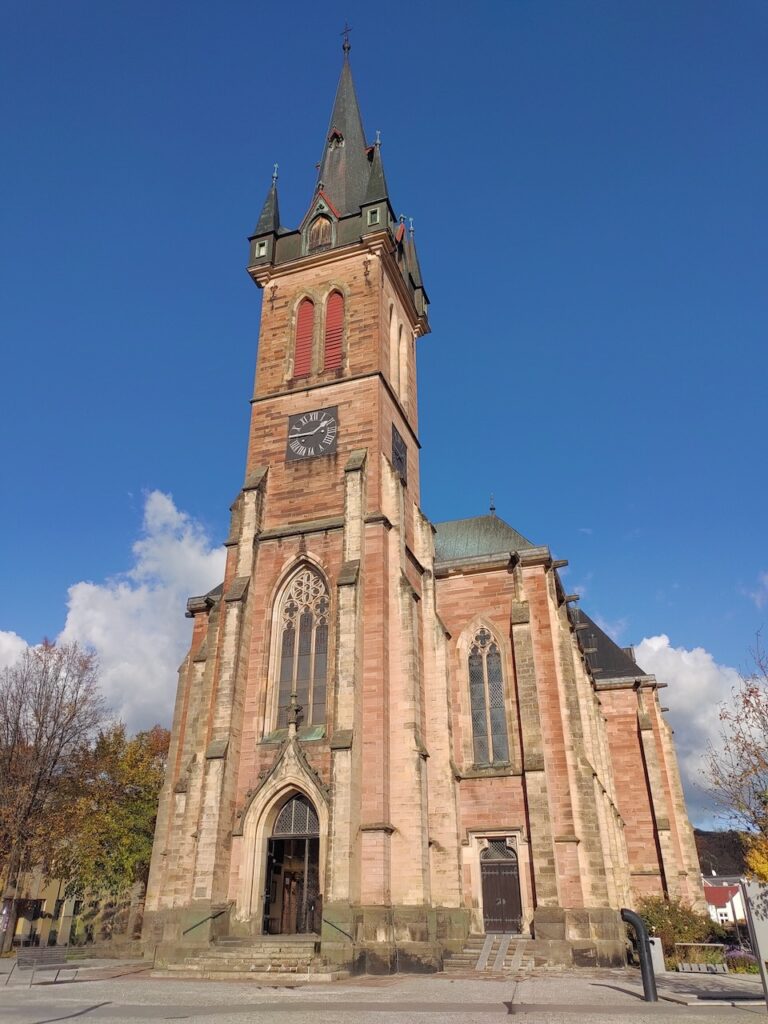
One of the town’s most recognizable landmarks is the Neo-Gothic Church of Saint Lawrence, standing in Náměstí Míru (Peace square).
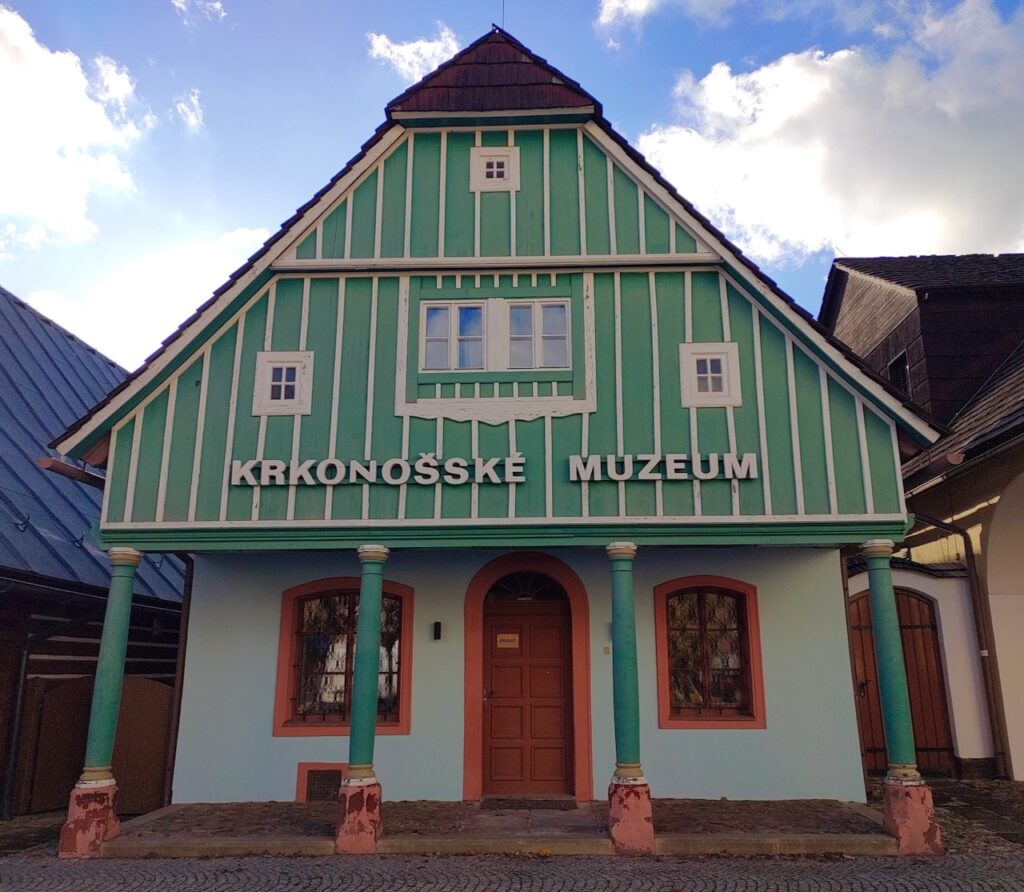
Across from the church there are 4 historic houses, which are among the oldest buildings in the Krkonoše region. They supposedly host a museum, but it was closed for renovation at the time of my visit.
The tourist information centre is also in the square, in a light-blue wooden building.
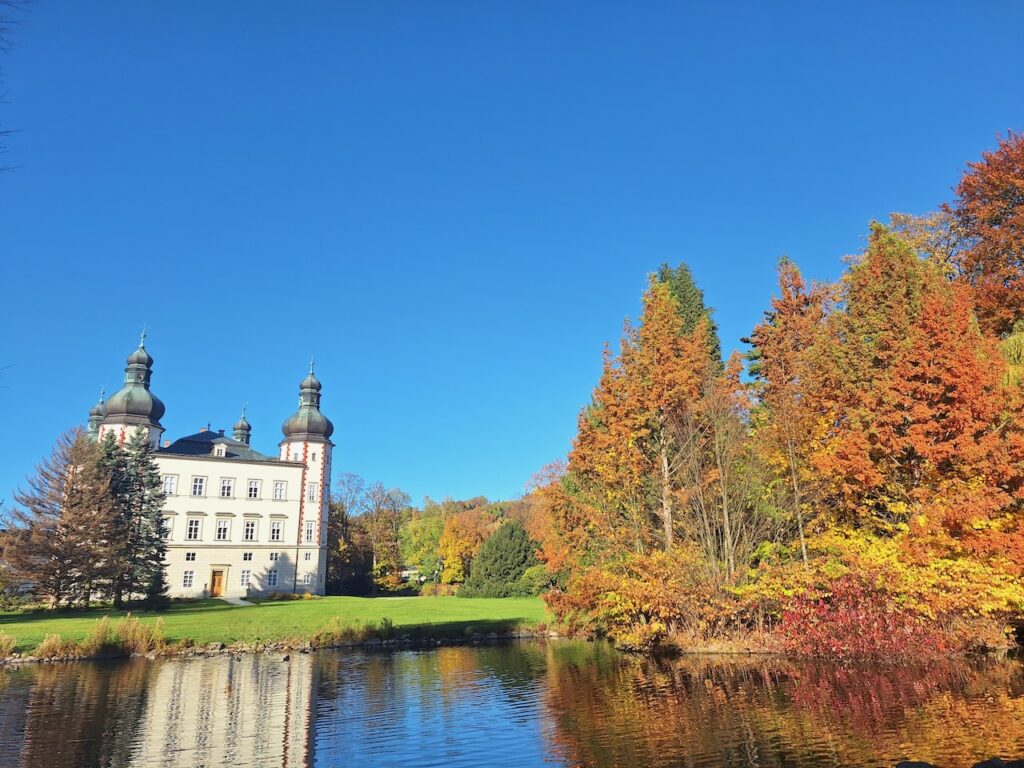
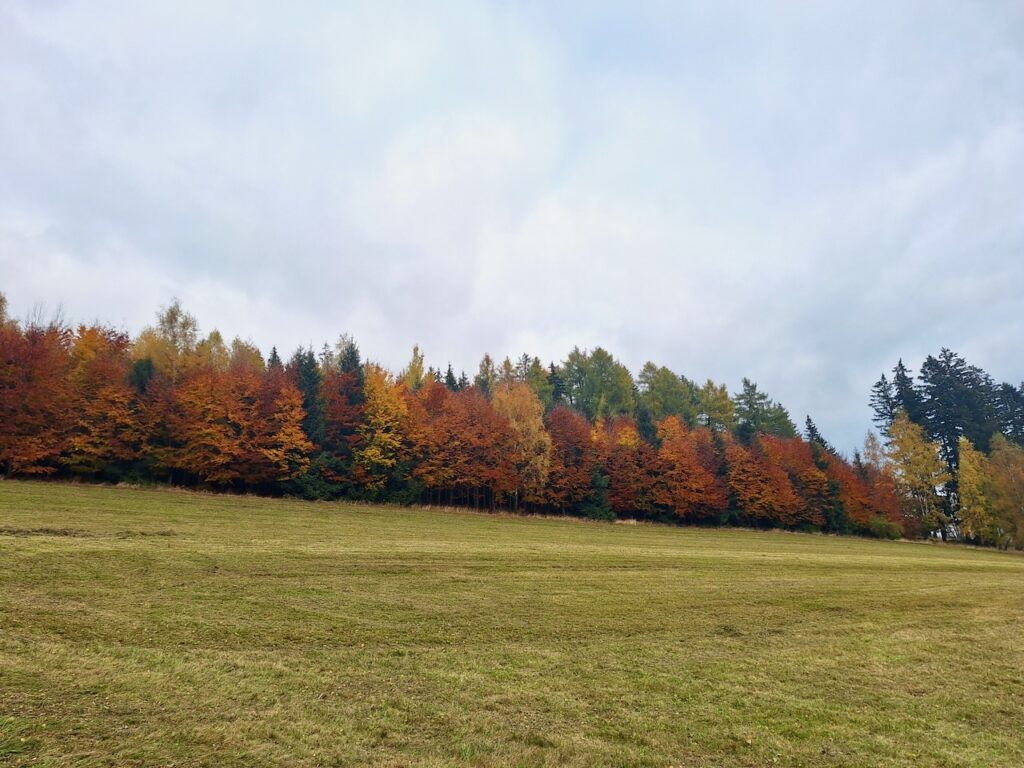
Few steps away, are the Vrchlabí Castle, now home to the city hall and other municipal departments, and its park, which is especially beautiful in autumn, when the trees’ leaves turn yellow, orange and red.
At the back of the park, on its western side, stands the Neo-Gothic Czernin-Morzin Chapel – the entrance is from Dobrovského street.
The chapel is open during Sunday or holidays masses, but it seems it is still possible to enter the park and see the chapel from the outside at other times.
Although the pedestrian gate seemed locked, it was enough for me to push it and enter the park.
Another landmark to look out for is the timbered House with Seven Gables (Dům se sedmi štíty), one of Vrchlabí’s oldest houses.
It now contains a small café, that is often busy and full, as the indoor tables are limited.
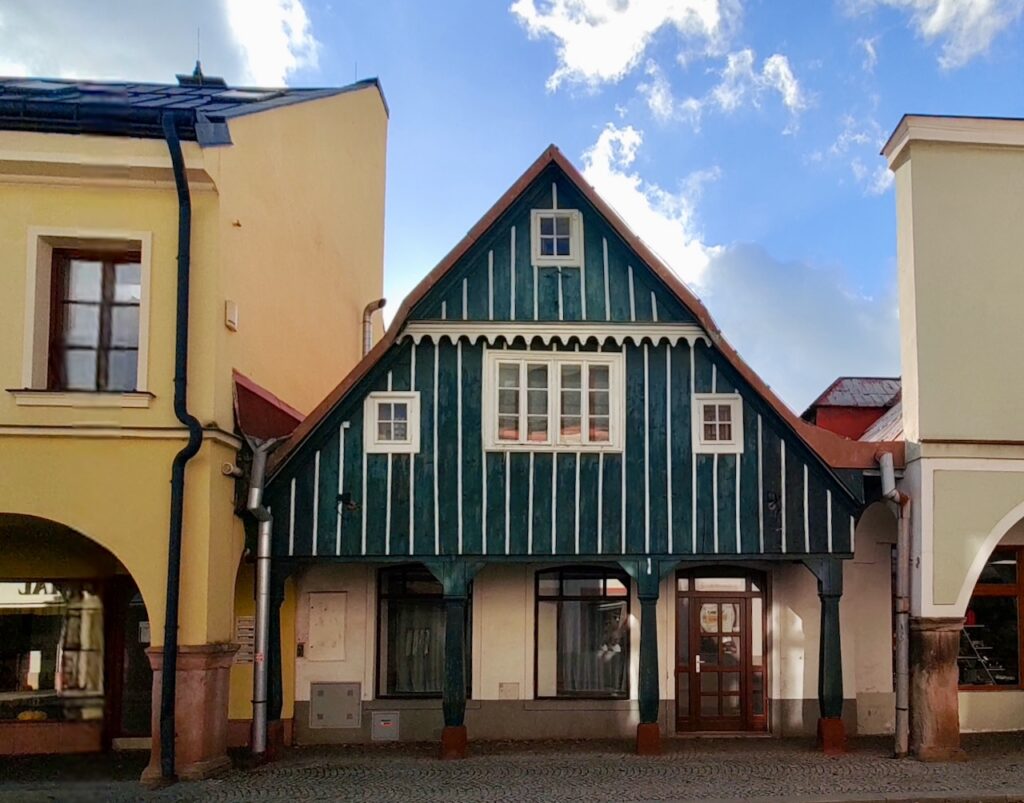
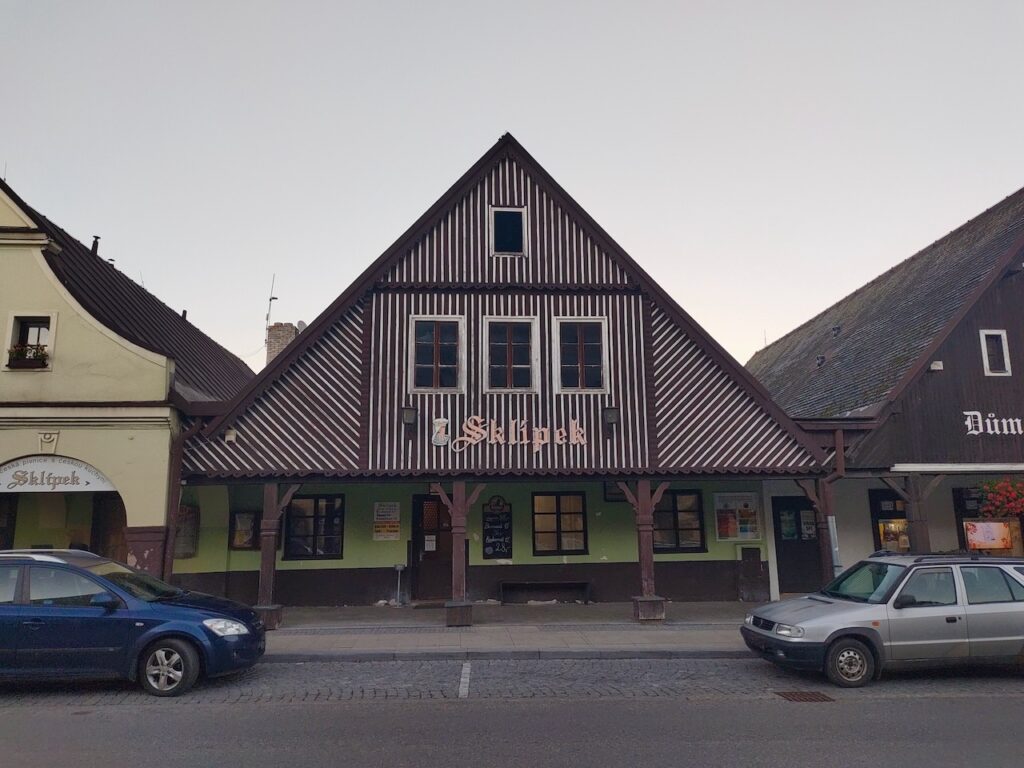
Other traditional wooden houses are along Zámecká and Krkonošská streets, between Náměstí Míru and Náměstí T. G. Masaryka.
One interesting example is the Sklípek pub, where beer is sold for only 30kč!
The hikes
Vrchlabí’s position at the edge of the mountains makes it a natural starting point for days outdoor.
There is plenty of hiking options, considering that you can easily connect with public transport, and the trails can be combined in multi-day hikes too.
1. An easy 10km hike to Jilemnice
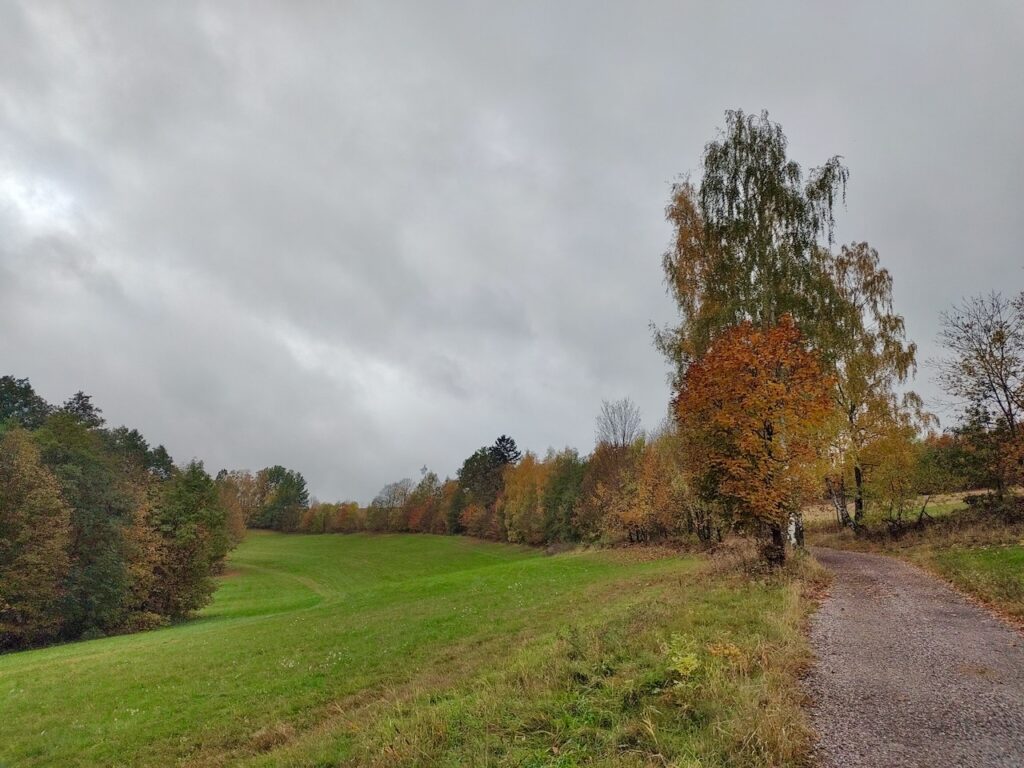
On the first day, I started with a short warm-up hike from the centre of Vrchlabí to the town next door, Jilemnice.
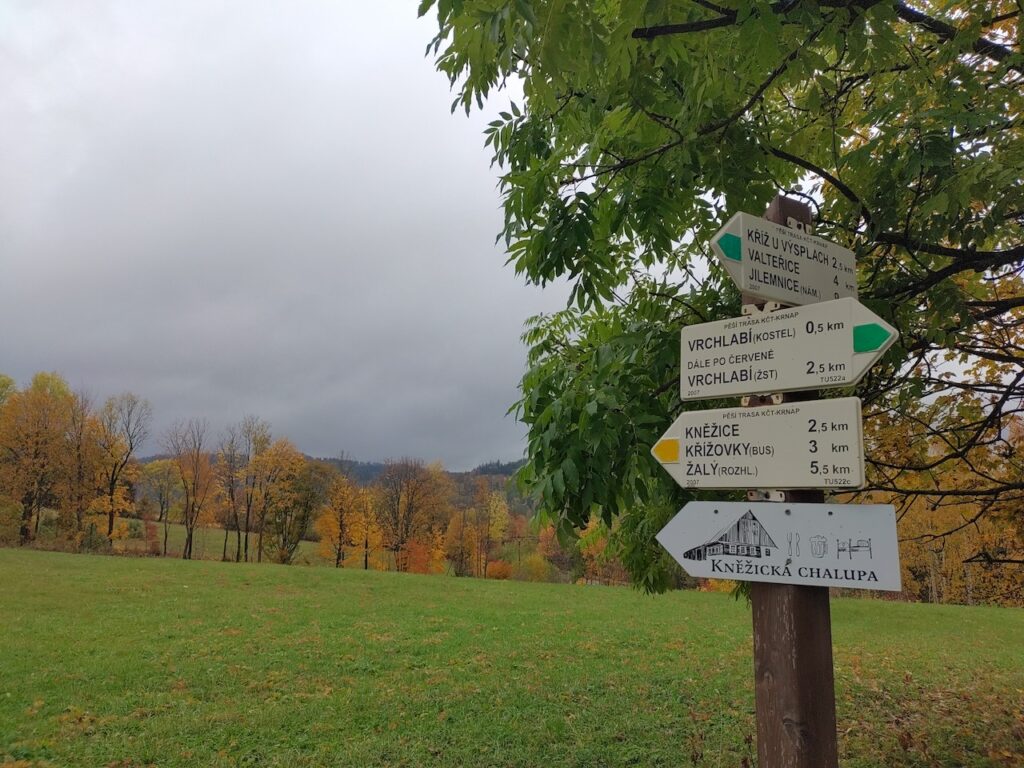
The walk is quite easy, with very little elevation, and follows the green markers all the way into Jilemnice.
The halfway point is the village of Valteřice.
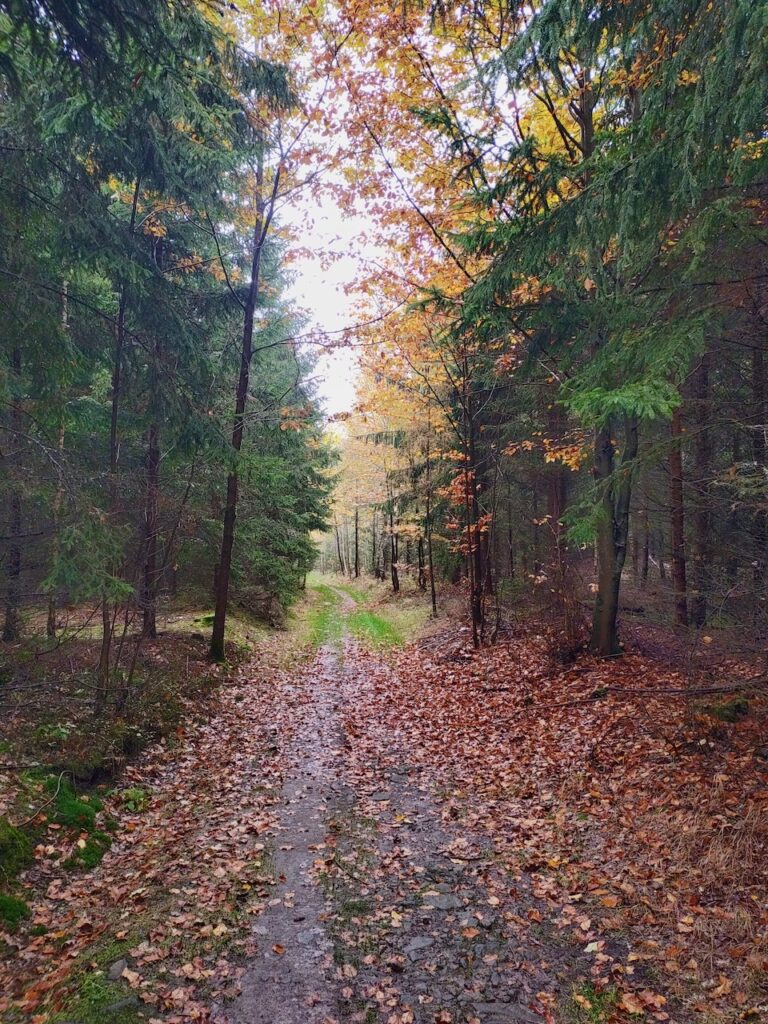
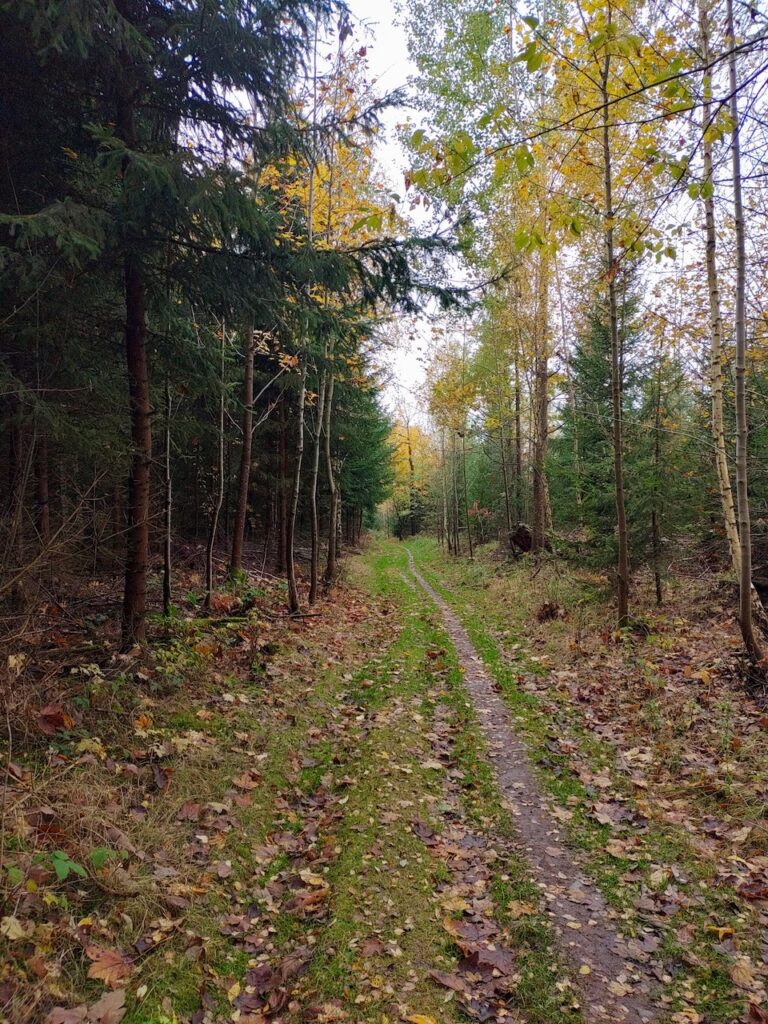
Once in Jilemnice, I stopped to see Jiří Fischer’s villa (point 2), built in Functionalist style and now used as a school. This can be definitely skipped by non-architecture enthusiasts.
Then I strolled around the castle park (point 3) and moved on to Zvědavá ulička (the Curious alley, at point 4).
This tiny lane is like an open air museum, with timbered houses dating back to the 18th century that are typical of folk architecture in the Krkonoše region.
The historic farmhouse on the corner is now a restaurant.
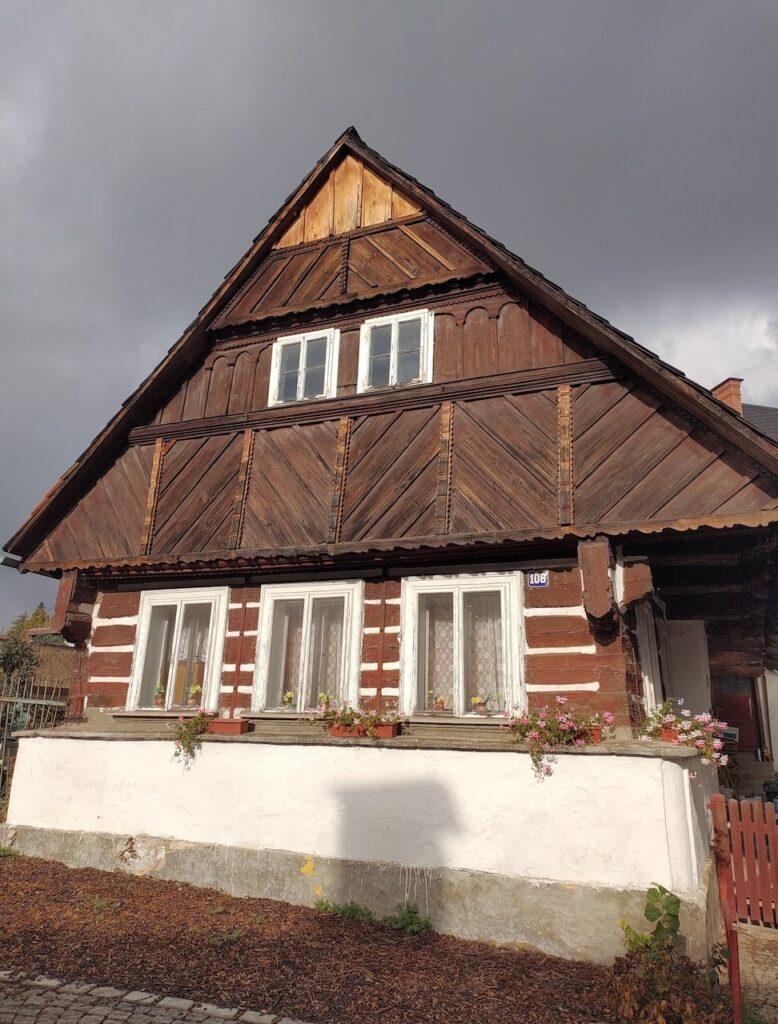
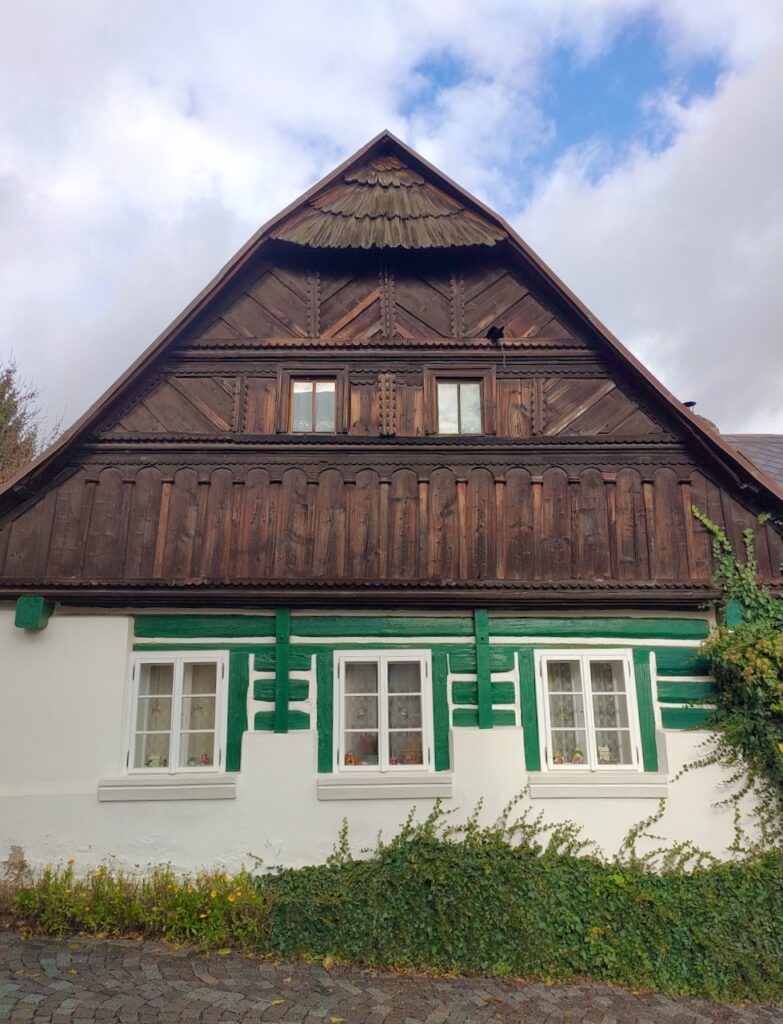
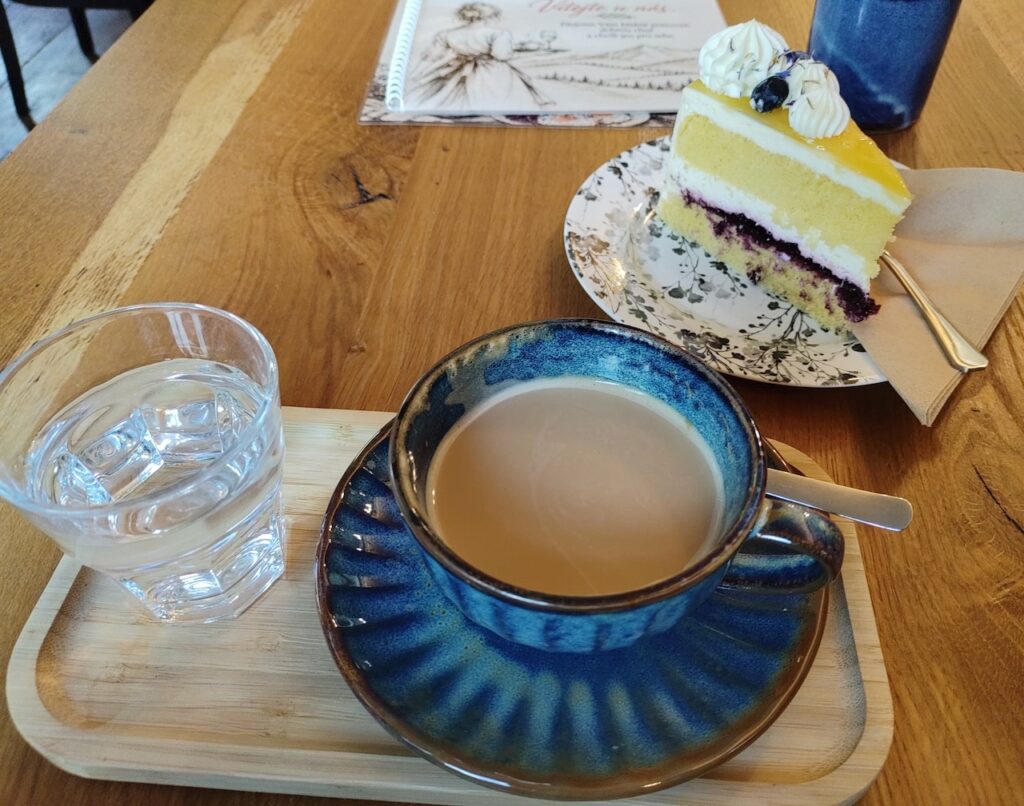
I stopped for cake and coffee at the only café open in town (point 5), which serves typical Czech sweets, then continued to go see the main square.
At the end, I reached the bus station, where I caught a bus back to Vrchlabí.
Tickets can be bought directly on the bus or online through the IREDO or IDOL app, where they are cheaper.
IREDO is the app for the public transport network in the Hradec Kralové region and IDOL is for the Liberec region.
Since the border between the 2 regions is between Vrchlabí and Jilemnice, you can buy the ticket through either app.
2. Hike to Přední Žalý lookout tower
This hike starts at the Herlikovice bus stop or parking area, mostly follows the yellow markers, and immediately begins with a climb through the forest.
It is easy to reach the starting point by hopping on a bus that from Vrchlabí goes to Špindlerův Mlýn (or vice versa).
The area is popular in winter, and the Herlíkovice–Bubákov ski centre’s cable car bring skiers up the hill.
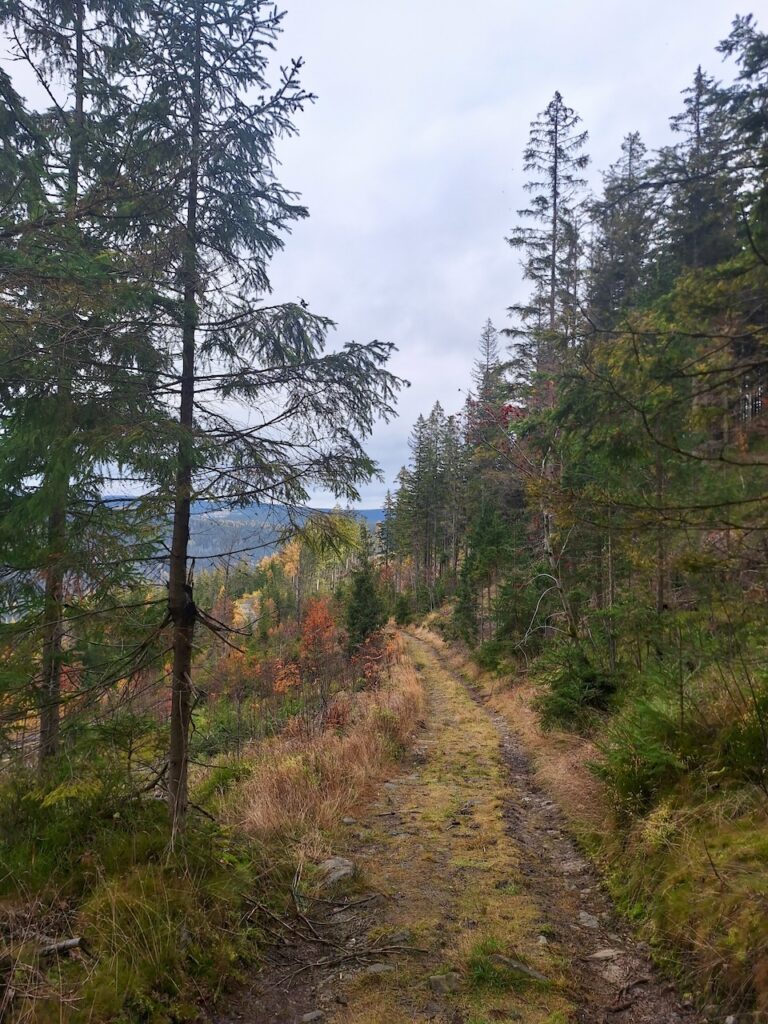
The first section has huge man-made stone steps, which, in my opinion, do not make the walk any easier.
They are slippery, especially because the forest is damp and shaded, and a stream flows alongside the path.
When you think you have reached the top and are out of the forest, continue for a while along the partly paved path (called Velbloudka on the map).
You will reach a wooden table where you can have a picnic or simply admire the surrounding landscape.
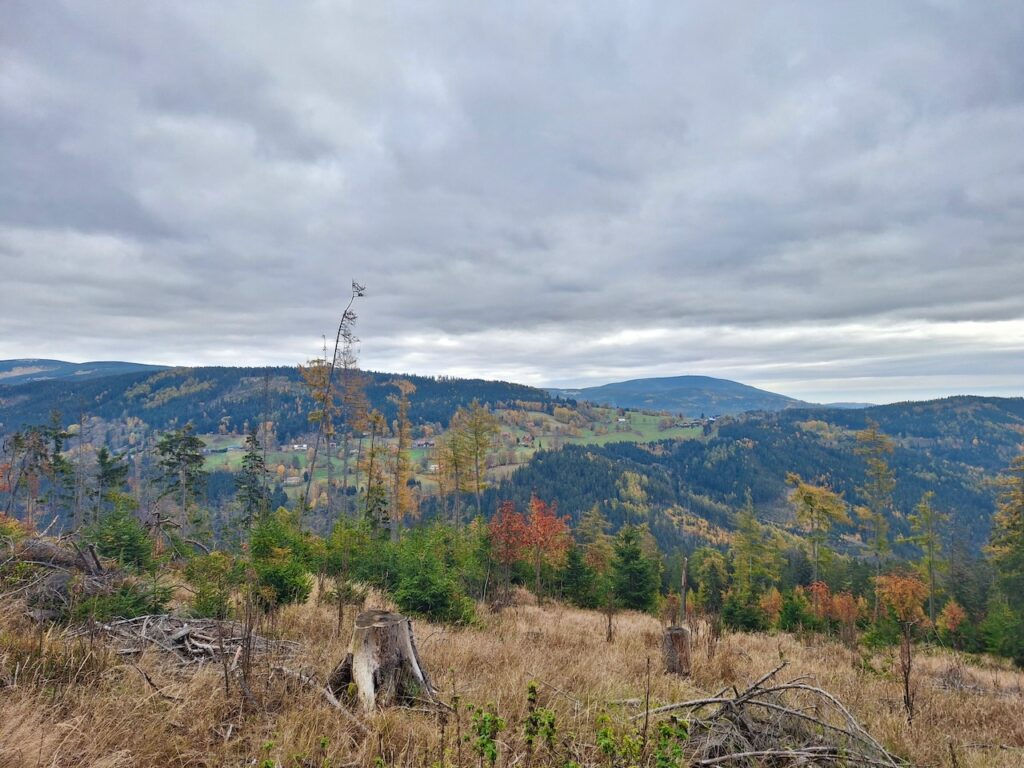
Leave Velbloudka behind and keep following the yellow markers through the forest to reach the locality of Benecko.
If you are hungry and are visiting during the high season or on a weekend, you can try one of the few restaurants in the area.
Then follow the green trail to the summit of Přední Žalý, at 1019m, where a stone lookout tower awaits.
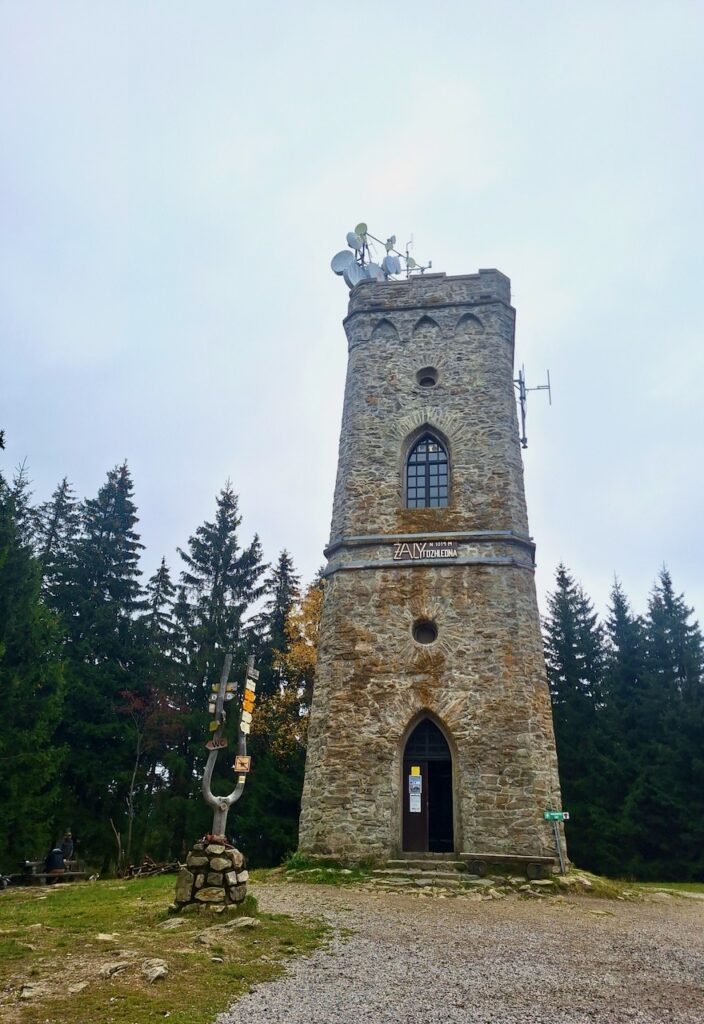
Climb the tower for views of the surrounding landscape and mountains, or stop at the hut opposite for a quick snack – the menu offers basic Czech food, which means sausages and fried food.
To descend, retrace your steps for a short while, then turn left at the junction you passed on the way up.
Continue downhill along the yellow trail until you reach a paved road that leads back to Vrchlabí.
3. Scenic hike to Pec pod Sněžkou
This is a 15 km hike from the centre of Vrchlabí to Pec pod Sněžkou and follows the blue marked trail.
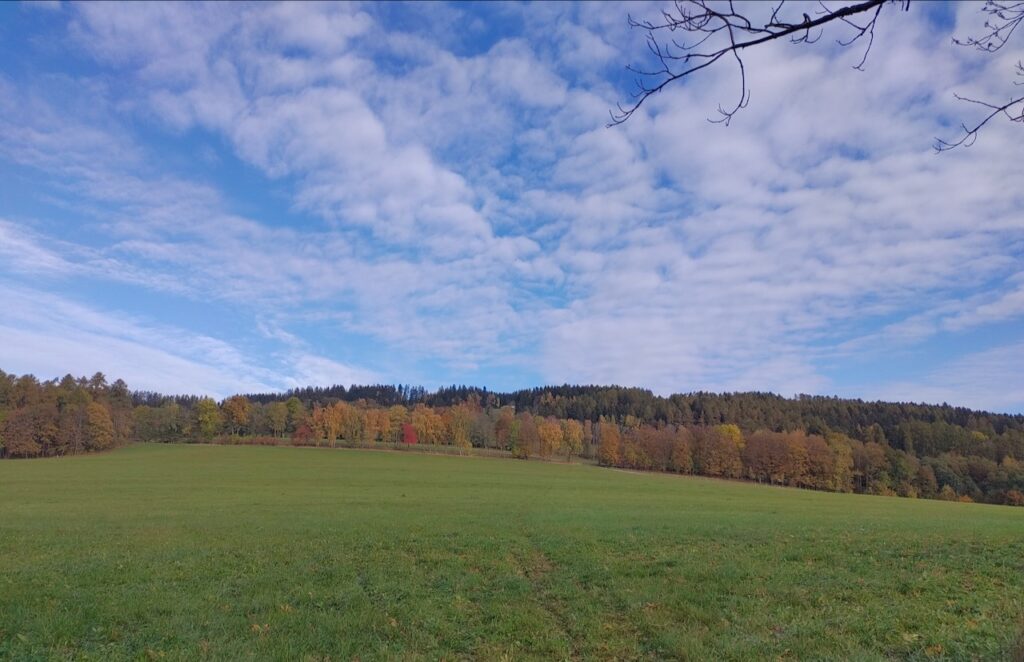
The route begins with a climb through the town park, then crosses a field and continues alongside a deer enclosure.
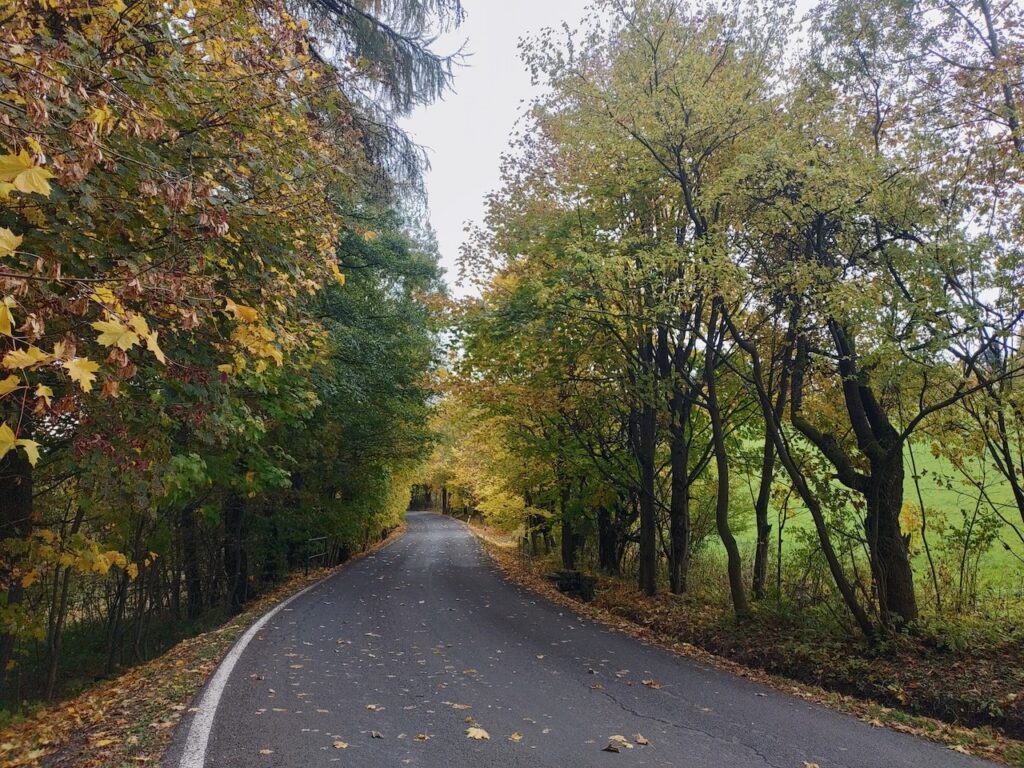
It then goes on asphalt road until the village of Horní Lánov, where it hiddenly zigzags behind some gardens on a slippery, rocky and leaf covered path.
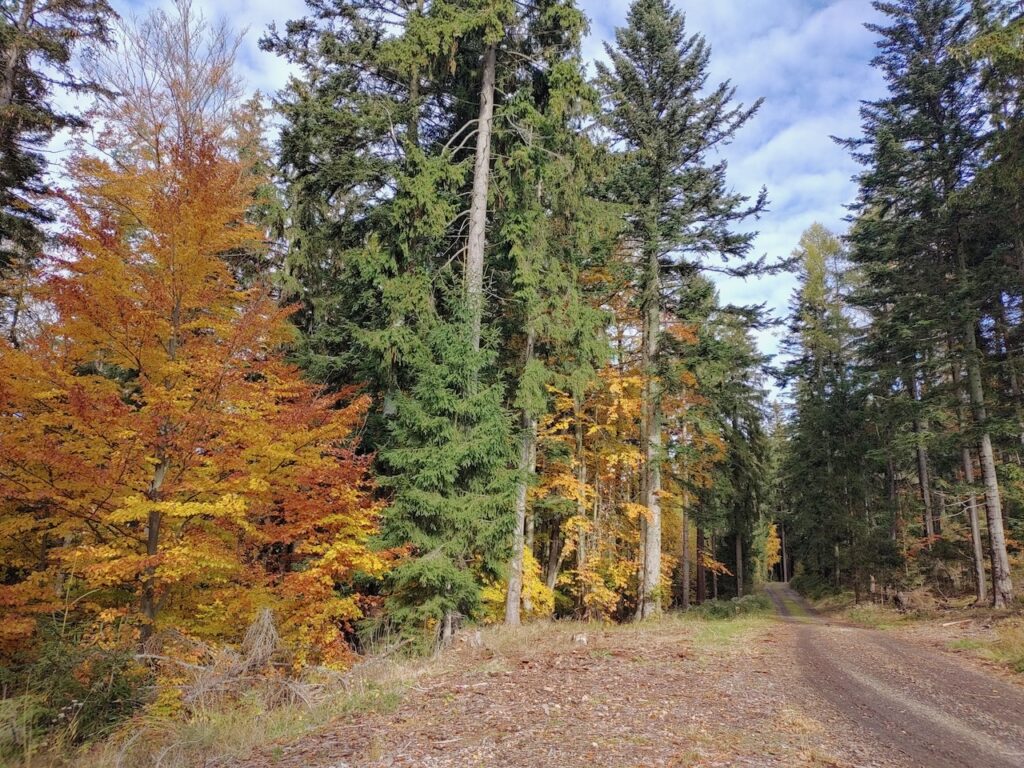
From the village, the trail turns away with a fairly steep ascent into the mountain forest of the Krkonoše National Park, where the beautiful evergreen pines and moss line the way.
The route soon reaches the shelter at Rejdiště, built as an emergency refuge for travellers caught in storms.
While such huts are not meant to be holiday spots for sleeping, since they lack facilities like water, electricity, or toilets, hikers can still use them for a short while to rest and eat a snack.
Remember to take the garbage away with you!
From here, the route briefly follows an asphalt road before turning into “Idina cesta” and entering the forest park’s quiet zone (klidové území).
This designated area allows ecosystems to develop undisturbed, and for this reason visitors must stay on the marked paths.
In some places, wooden boardwalks help limit disturbance to the surrounding environment.
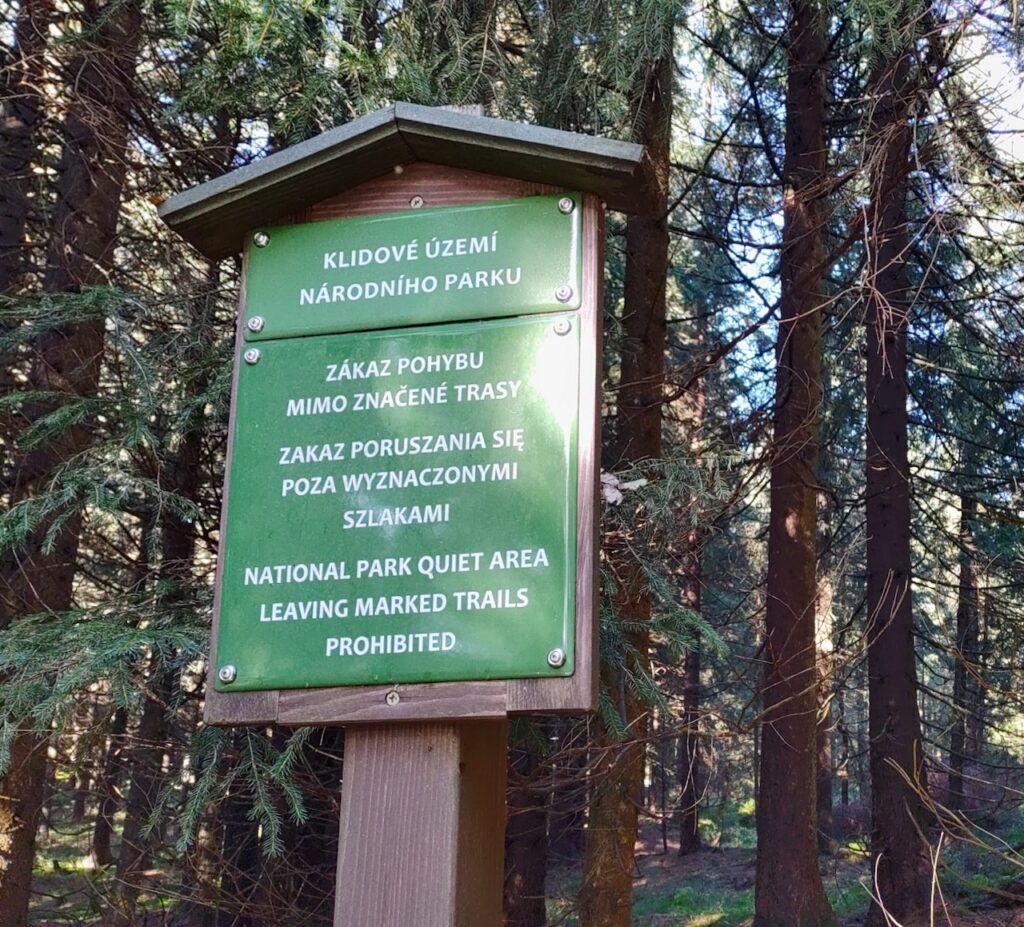
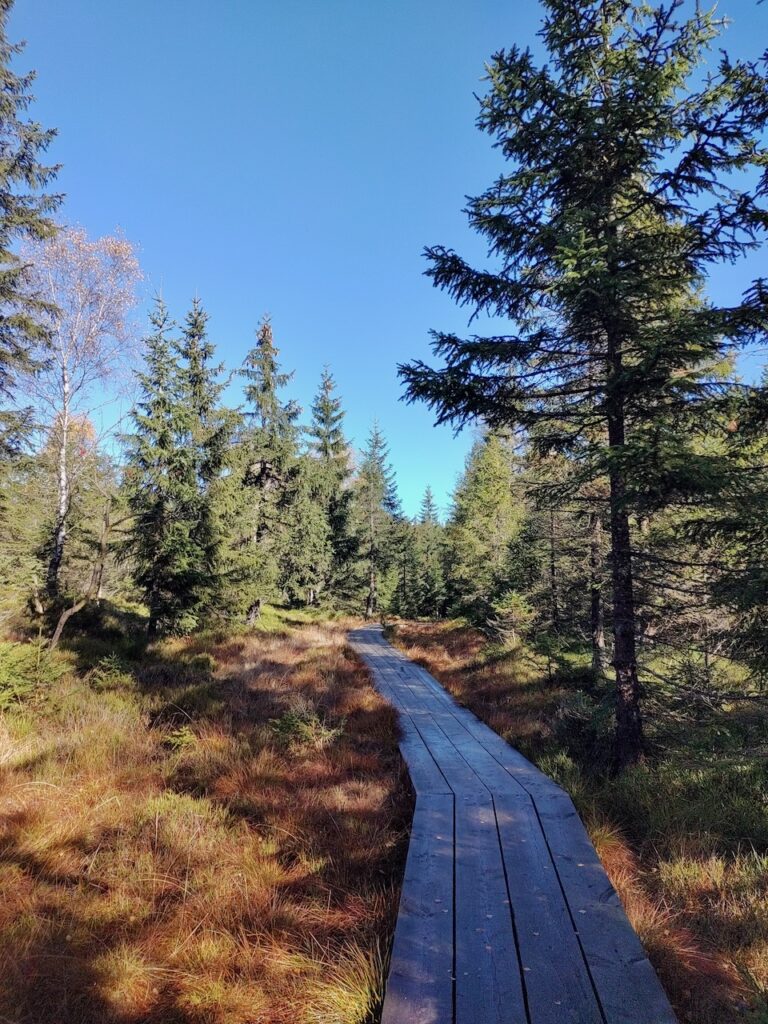
Further along, a wooden bridge crosses the Čistá stream and the trail leaves the forest to pass by a group of mountain huts, many of which remain closed outside the high season.
Following another short stretch through the trees, the route emerges near Husova bouda, offering great views of Sněžka across the valley with Pec pod Sněžkou down below.
The final stretch descends into town along an asphalt road, where cars like to pass at high speeds, so watch out!
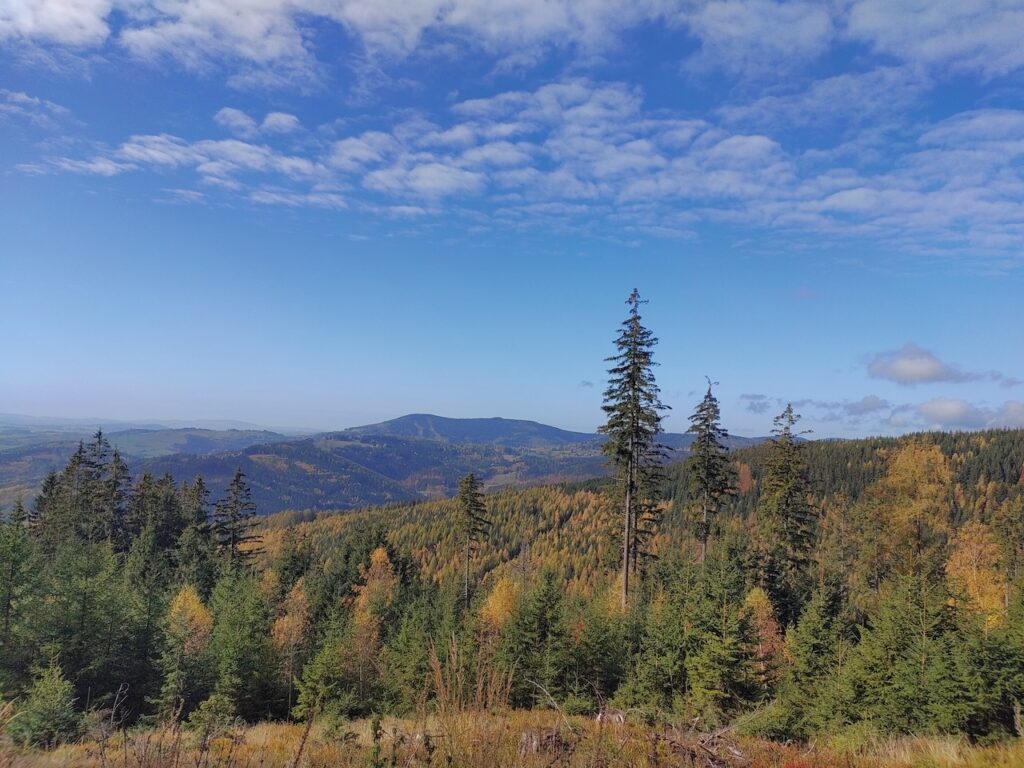
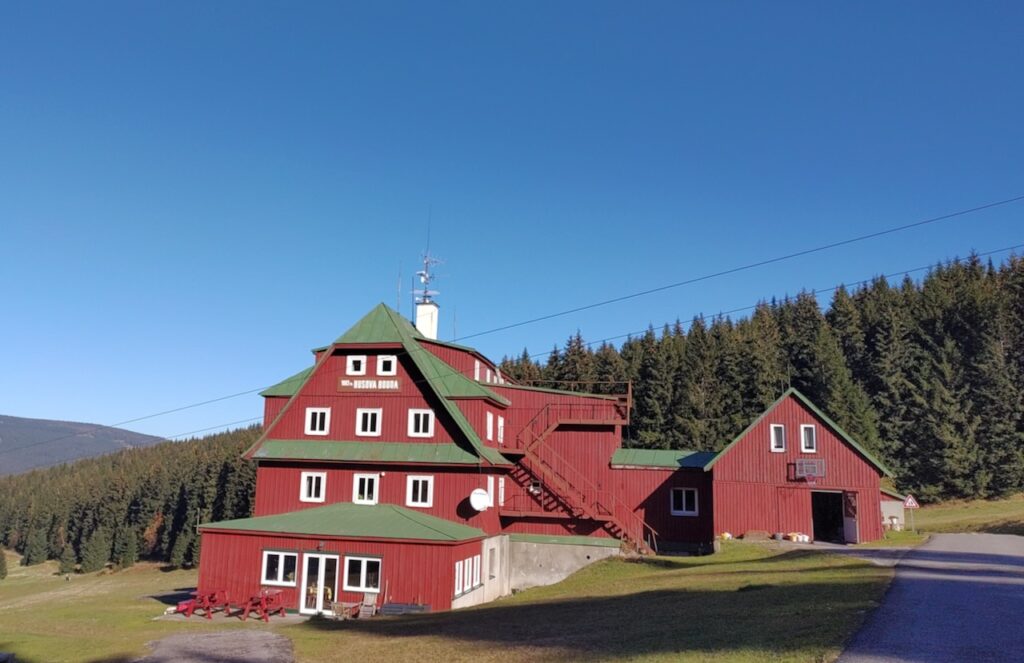
Getting back to Vrchlabí from Pec
At the bus terminal of Pec pod Sněžkou I got on a bus back to Vrchlabí.
The ride takes approx 1 h, with various stops in the towns and villages on the way – schedule and tickets on the IREDO website and app.
The terminal is open-air, with no proper building where to wait or escape bad weather.
You can sit on the benches or shelters lined along the back wall, or try your luck with the post office at the corner, as long as it is open.
Otherwise, there are plenty of restaurants nearby where you can have something to eat and relax.
It is worth mentioning that there is a clean and warm public toilet inside the building to the right of the bus terminal – you will see a WC sign anyway.
It costs 10 Kč, and you need the exact coin to enter, as it has to be inserted into the slot in the toilet door handle.
4. A visit to Špindl
Also this hike starts from the centre of Vrchlabí, initially following the red marked trail along the Elbe on a muddy riverside path.
After crossing the main road, the route joins the blue trail, which leads all the way to Špindlerův Mlýn.
Known locally as Špindl, the town is a popular tourist destination and one of the Czech Republic’s best known and most visited sports resorts, especially during the winter months.
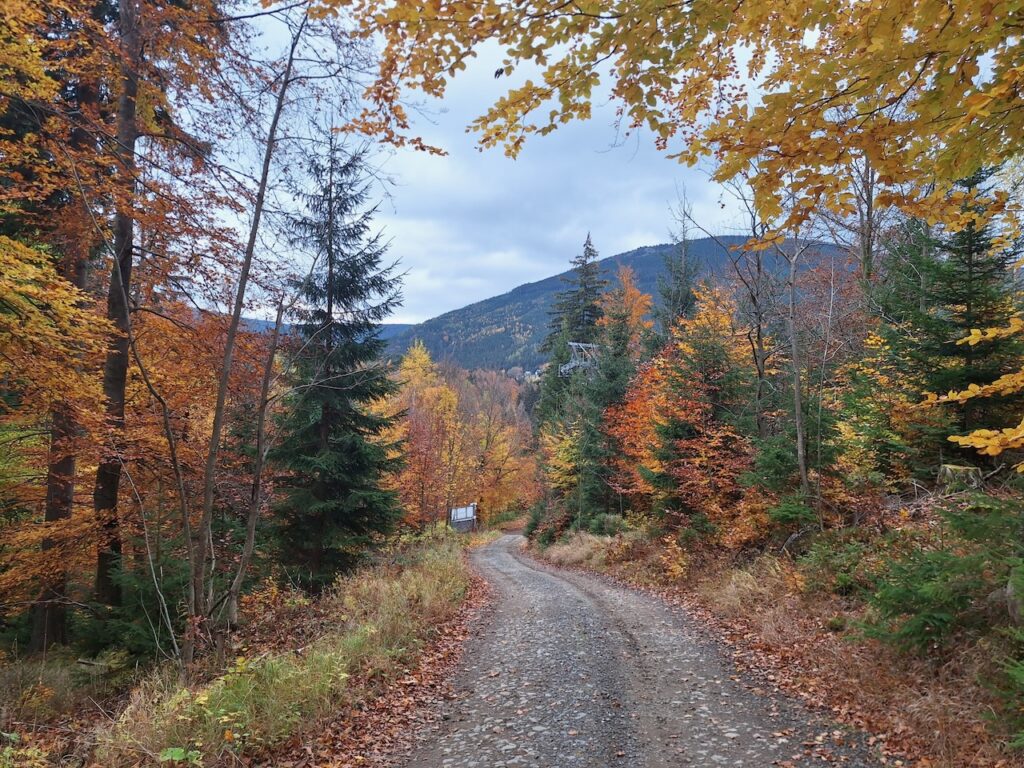
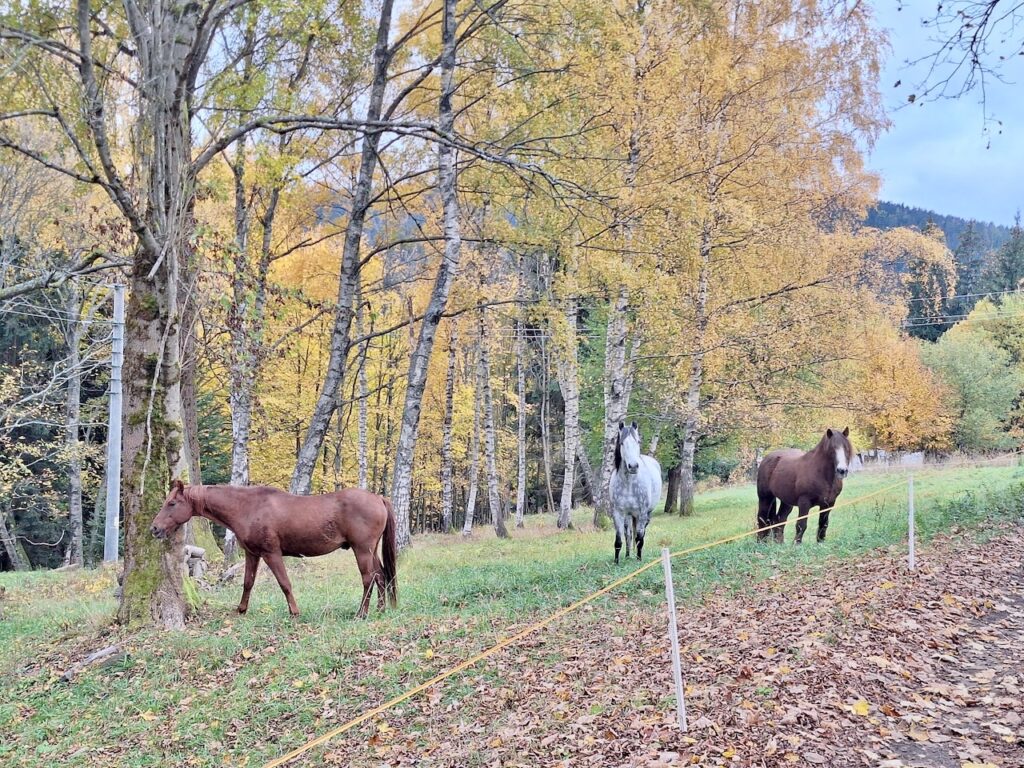
From the point where the route joins the blue trail, the climb becomes long and steady.
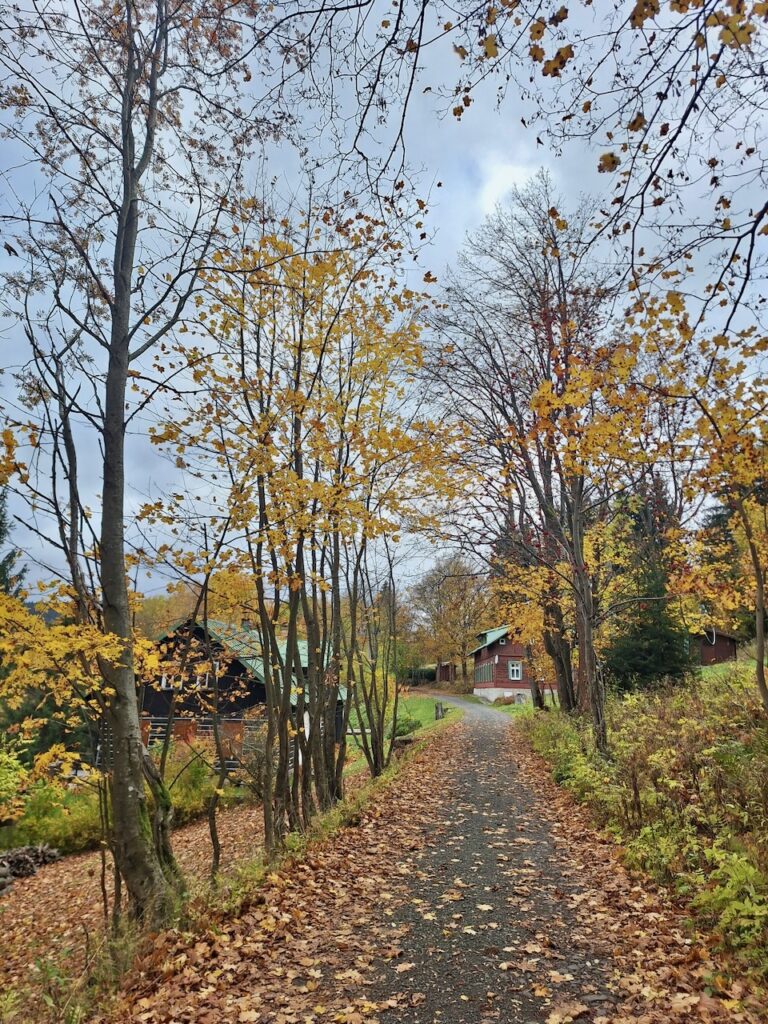
The trail winds through a forest dotted with mountain cottages and offers beautiful views across the valley.
It also passes by a lovely Art Nouveau Evangelical church, and at the Přední Labská crossroads, a tiny church stands beside a wooden bell tower.
Further on, the trail enters the Michlův mlýn game preserve (obora), where the vegetation changes and the forest has a quieter feel.
Keep in mind that the blue and green hiking trails through this preserve are closed from 1st November to 30th April, to give wildlife a place to spend the winter undisturbed.
In the Czech Republic, feeding wildlife during harsh winters is both a legal requirement and a long-standing tradition.
It helps keep animals healthy while reducing the risk of hungry herbivores damaging young trees and forests.
This care for wildlife is an important part of the work of local conservationists and hunters, who help animals get through the most difficult months of the year.
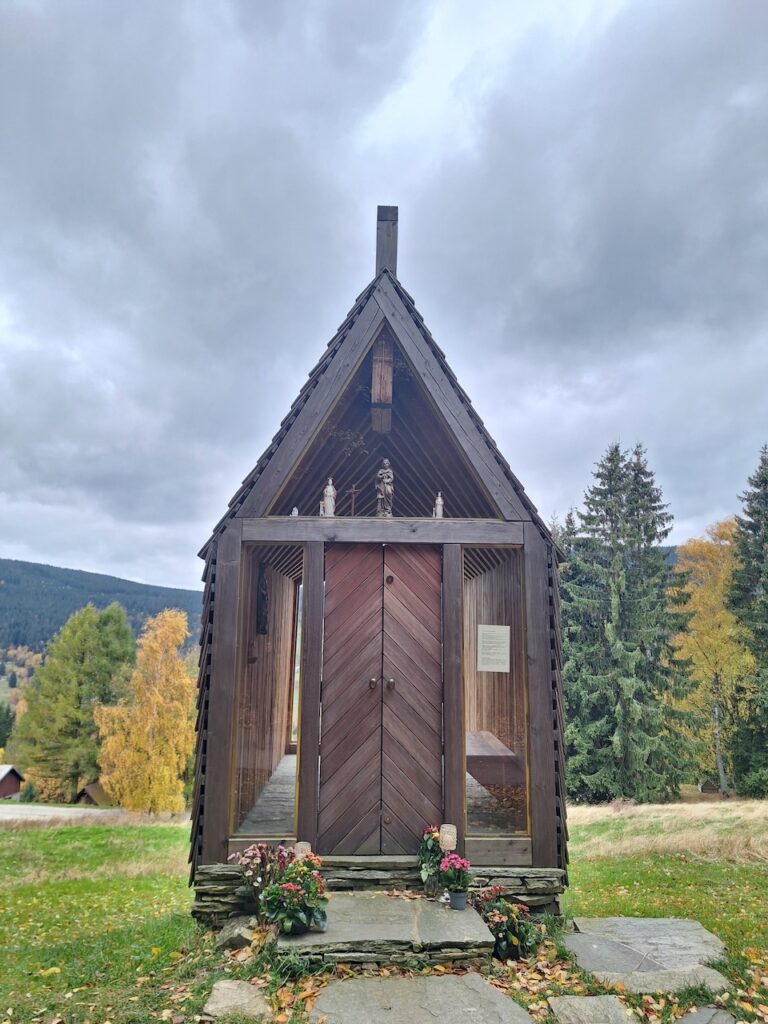
As the trail approaches Špindl, it passes close to a modern chapel with distinctive wood and glass architecture.
The route eventually reaches the town centre, where you can take a stroll or rest at one of the many restaurants.
The town is compact, everything is at walking distance, and the bus terminal where to get a bus back to Vrchlabí is just few steps away.
Check the bus schedule and buy a ticket on the IREDO app.
5. Along the trail to Černý Důl
This was the final hike of the week. It covered ~12km, starting in the centre of Vrchlabí and ending in Černý Důl.
The route initially follows the same blue marked trail as the previous hike to Pec pod Sněžkou, as far as the first chapel (point 2 on the map).
From there, it crosses the open countryside towards Horní Lánov, where meadows and fields offer colourful views towards the mountains.
After passing through the village, the trail climbs through quieter, wooded sections before reaching Černý Důl.
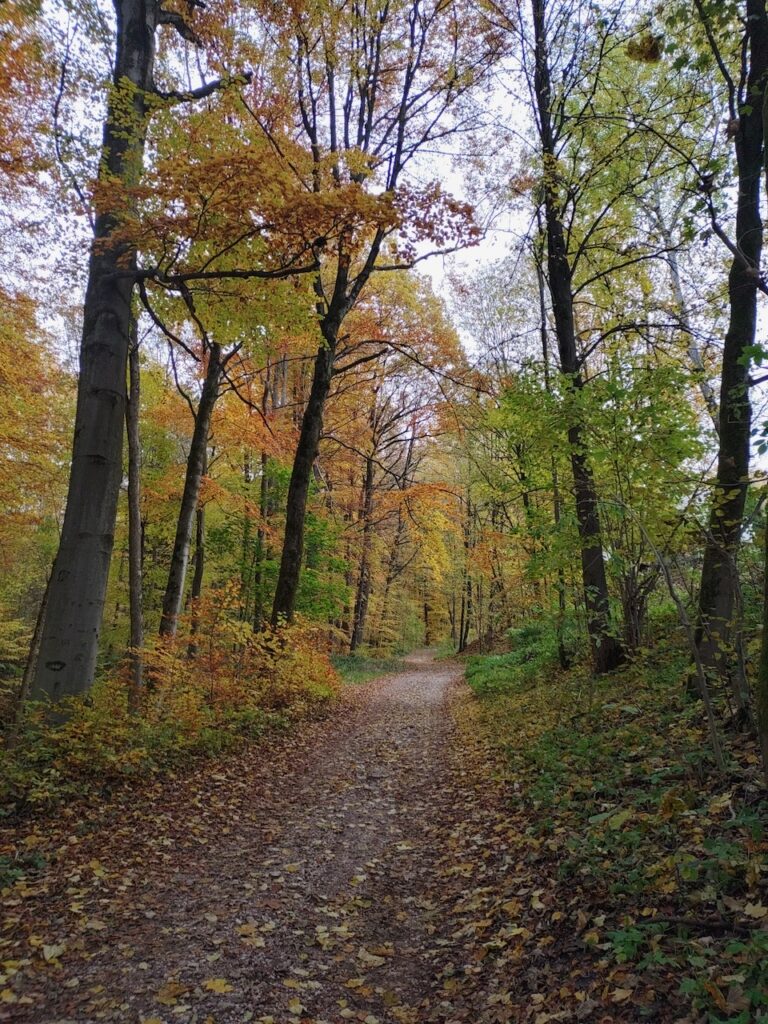
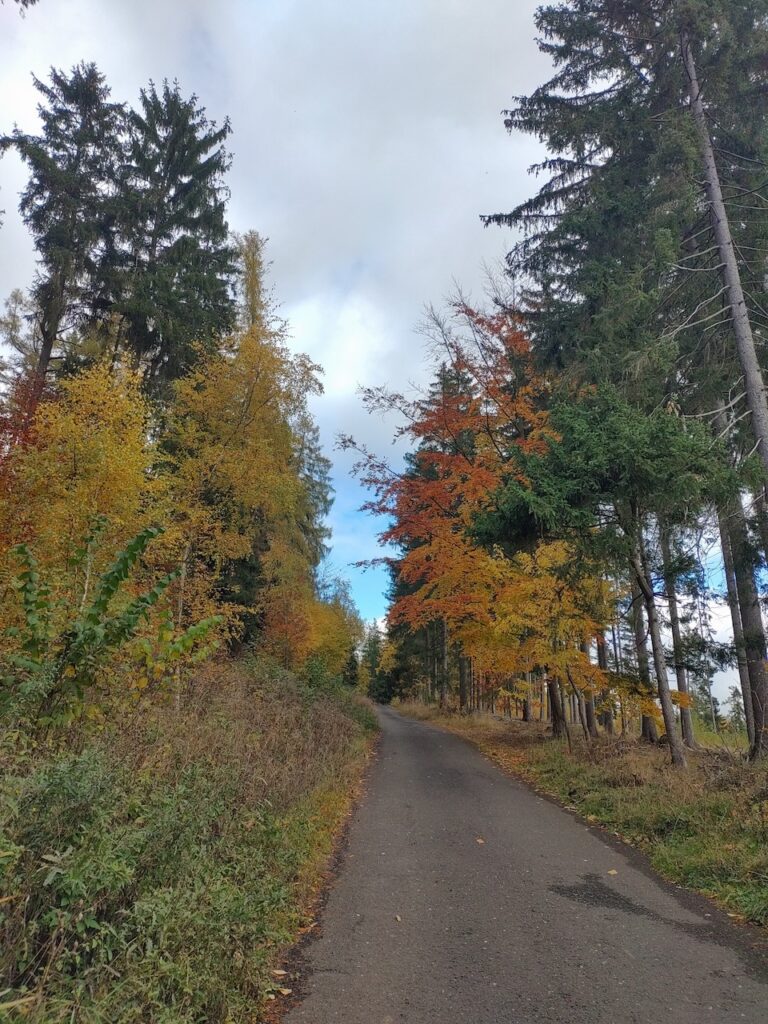
Much of the route here is on asphalt, and random cars may pass at full speed even if you are in the middle of the forest, so watch out.
Černý Důl
You arrive in Černý Důl near the base of the ski slopes and ski lifts.
Černý Důl, whose name means “Black Mine”, is a small mountain town with a long mining history.
At point 4 on the map, you can get a view of the terraced limestone quarry, where mining is still going on.
The limestone excavated here is then transported by a freight cableway to Kunčice nad Labem, where a plant processes it.
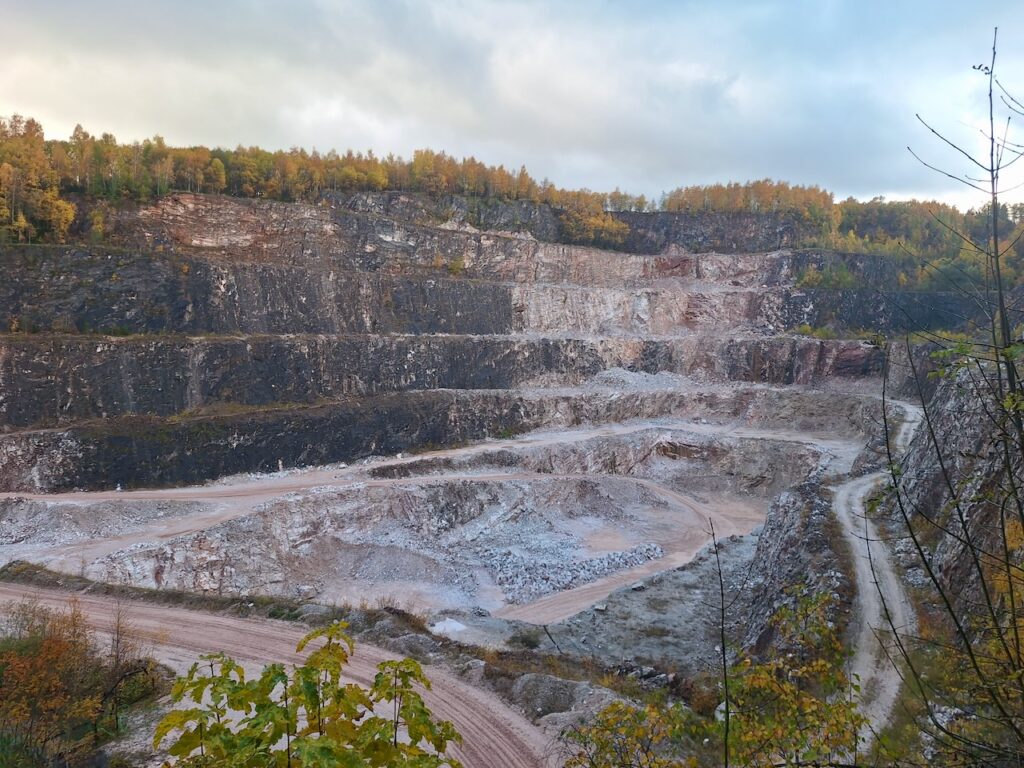
The cableway is more than 8km long and operates only during the day on weekdays. In the past it used to run continuously, but the loud noise disturbed the villages along its route.
So, if you want to see and hear it in operation, visit the area on working days.
At point 5, there are the remains of a lime kiln (vápenka), which closed in the 1990s.
You can also read about two other lime kilns I wrote about: Pacoldova vápenka in Prague and the kiln close to Kovářská in the Ore Mountains.
The village is very small and outside of the ski season does not have much to offer.
In the main square, you will find a few old houses and the former post office, which is now a restaurant with accommodation.
There is also a small museum about the history of underground mining, but I haven’t visited it, so I cannot comment on it.
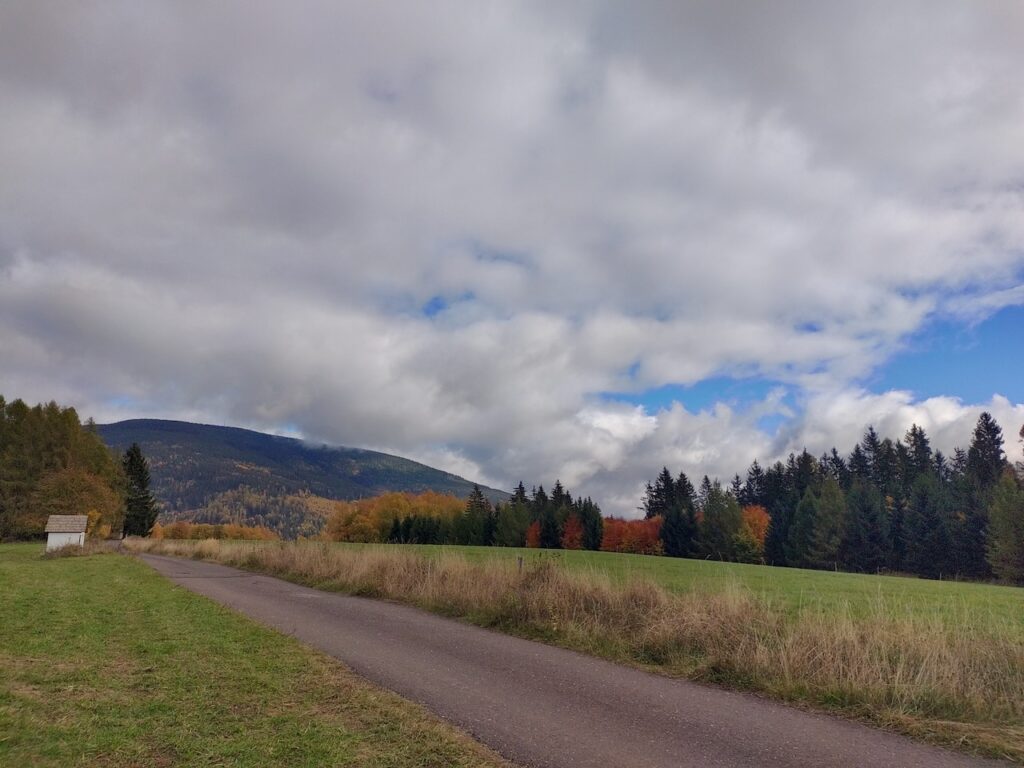
What I can recommend is Café v papírně down the road in Čistá v Krkonoších, for delicious coffee and cakes.
Then catch a bus back to Vrchlabí from the stop near the school. Remember to check the timetable and, if you want to buy your ticket in advance, use the IREDO app.
How to reach Vrchlabí
You might be surprised to learn that Vrchlabí is easy to reach by public transport.
Traveling by car may be more comfortable, but a backpack and a bus make a great combination too!
Direct buses leave from Prague Černý Most and take about 2.5 hours. Check line 405, operated by PID, and lines 920 and 922, operated by Michal Pelc.
All the buses have Špindlerův Mlýn marked as destination.
You can also take a bus to Trutnov and then a train to Vrchlabí, or choose other combinations with more transfers and a longer travel time.
Check the schedules on pubtran.cz or IDOL application to plan your trip ahead.