
Reading Time: 4 Minutes
Inside the Chomutov railway depot
The railway collection in Chomutov is housed in a former locomotive depot and belongs to the National Technical Museum.
Rather than being presented as a polished museum exhibition, it is a working collection depository that retains the atmosphere of the original railway depot.
The Chomutov railway collection contains nearly 100 historic vehicles of different types and gauges.
The exhibits range from the steam locomotive Donnersberg built in 1870 to much newer railway vehicles.
Donnersberg once ran on the line between Ústí nad Labem and Chomutov and is the second-oldest preserved steam locomotive in the Czech Republic.
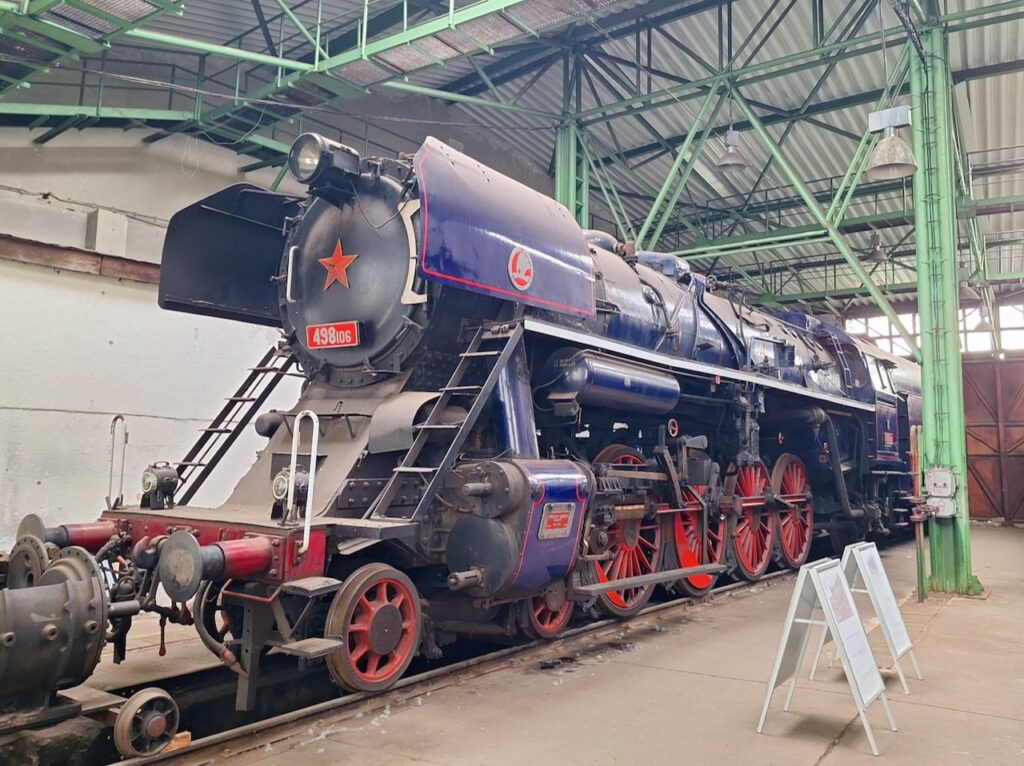
One of its most striking exhibits is the Albatros 498.106, a powerful steam locomotive built in 1955 for express services.
In 1964, it reached 162km/h, a speed record for a Czechoslovak steam locomotive.
Locomotives and other railway vehicles
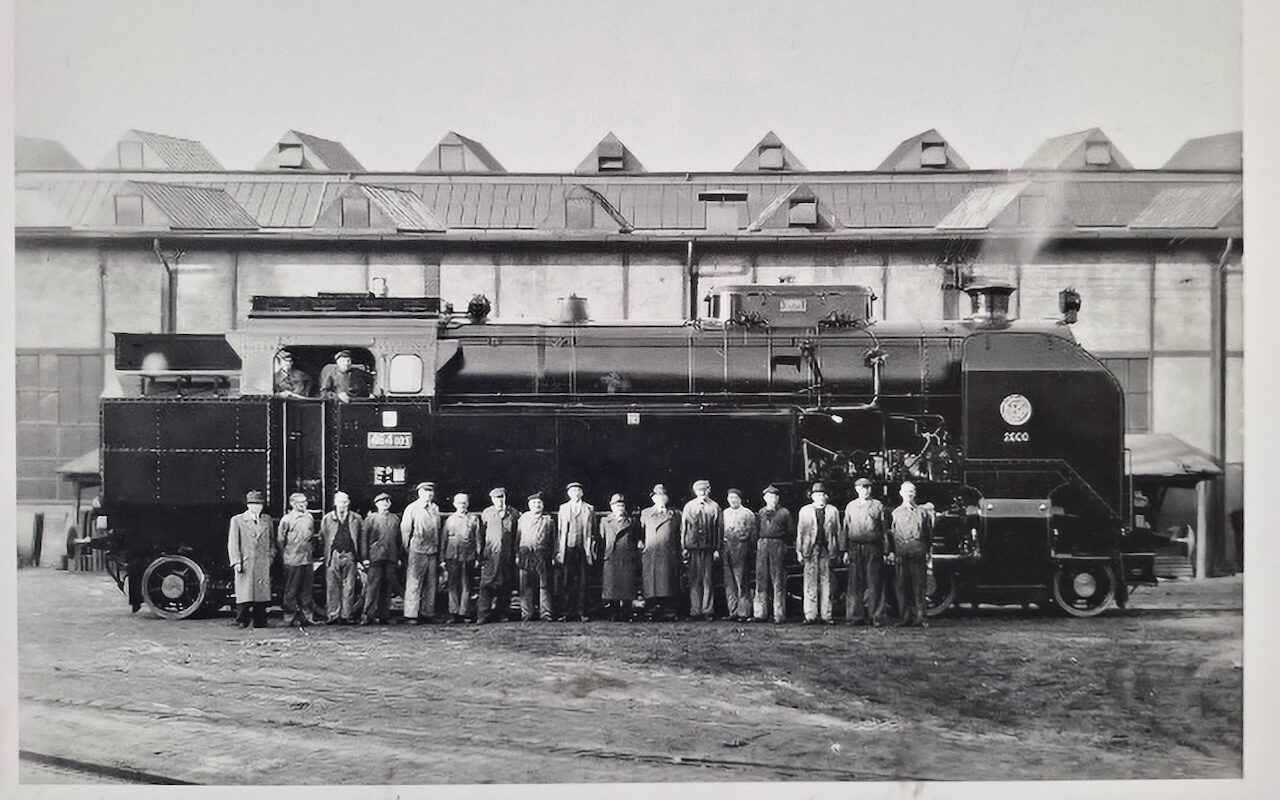
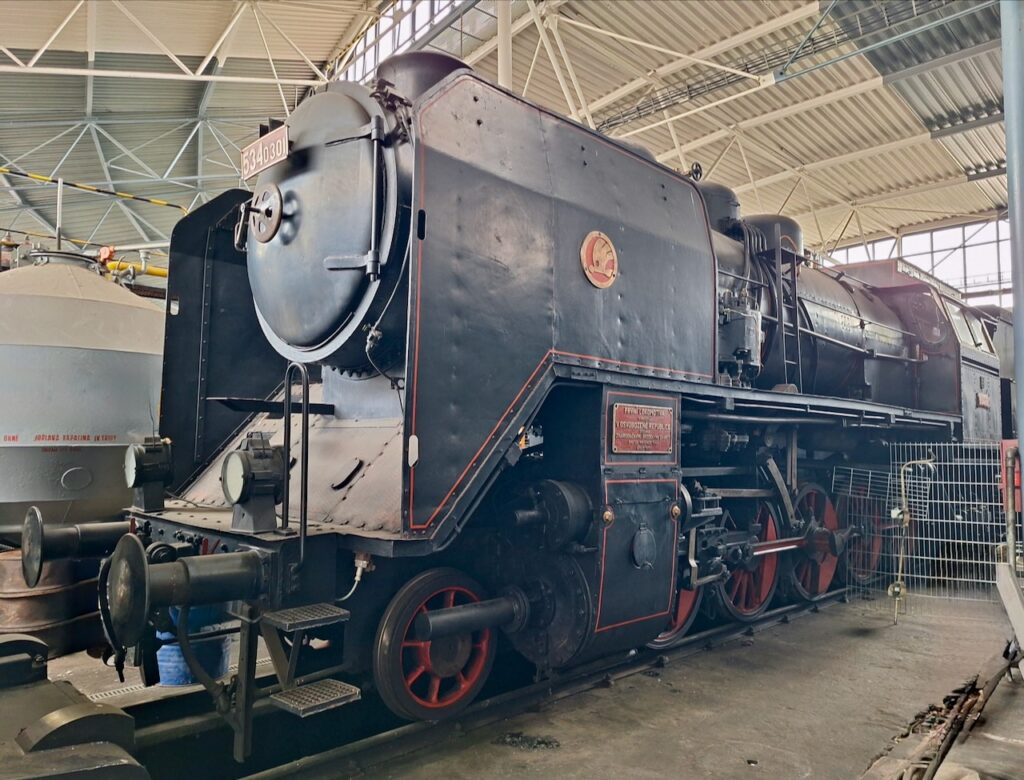
Another notable locomotive is the 534.0301.
Built in 1945, it was delivered by Škoda’s Plzeň after WWII, despite the fact that the factory had been damaged by bombing.
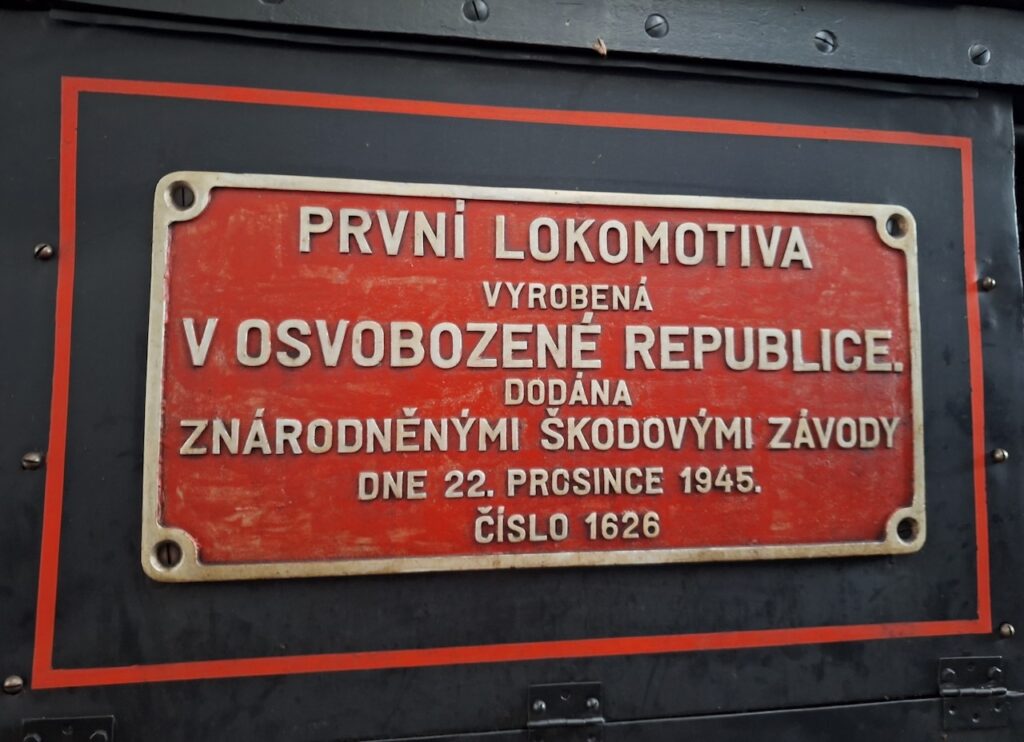
A plate on the locomotive states: “The first locomotive made in the liberated Republic. Delivered by the nationalized Škoda plants on 22 December 1945″.
The collection also features vehicles built for very different purposes, showing the variety of work carried out on the railways.
The 404.003, built in 1901, was among the original steam locomotives used on the steep rack railway between Tanvald, Kořenov and Harrachov.
The small Wohanka, dating from around 1910, with wooden benches and a two-cylinder petrol engine, served as an inspector’s rail trolley.
A steam-powered rotary snowplough, built in 1943, was designed to clear deep snow from the tracks and allow trains to move.
Not every vehicle in the depot is steam-powered.
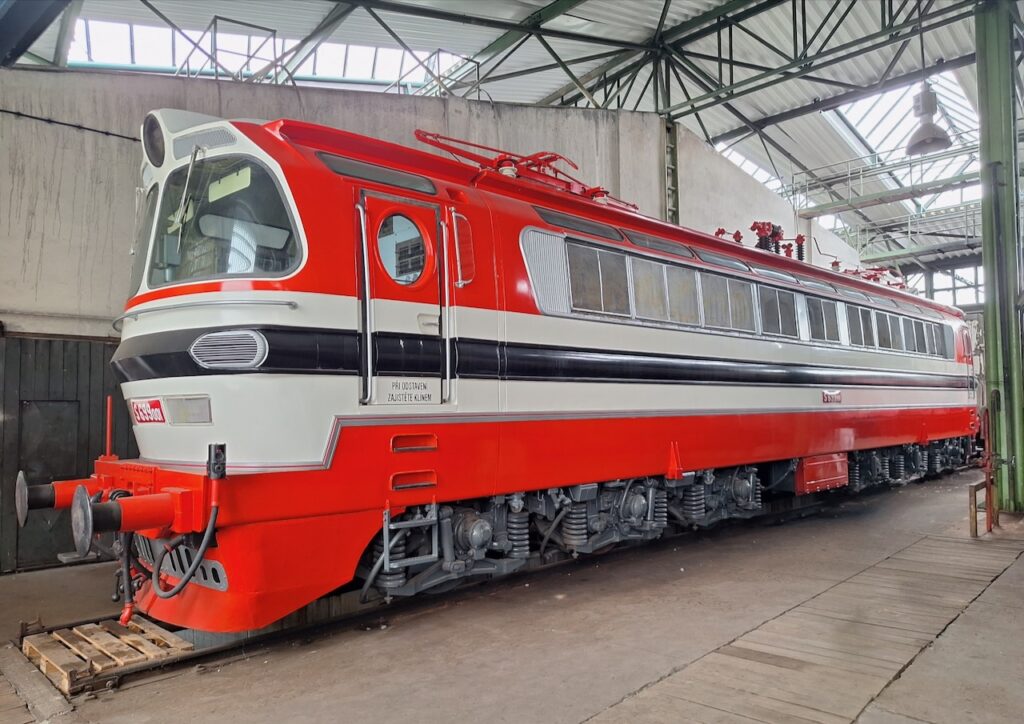
Built in 1963, the S699.001 is a prototype electric locomotive designed for a 25kV alternating-current system.
It weighs 126 tonnes, produces 4800 kW, and features a distinctive fibreglass front designed by industrial designer Otakar Diblík.
The 1953 M131.1405 (nicknamed Hurvínek) is an example of the diesel motor coaches commonly used on local lines.
You can see it in the cover photo of my article about Zubrnice.
Alongside the passenger and saloon cars, these vehicles reveal the many roles rail transport has served, from express and local services to inspection, private travel, and railway maintenance.
Important info
Keep in mind that this is not a museum in the conventional sense, but a collection depository, and it may not appeal to everyone.
Some visitors leave rather negative reviews, because they find it static or even disappointing.
I think this may partly be to the fact that we have become used to modern museums with interactive displays and carefully designed exhibitions.
The Chomutov railway collection is something quite different.
If you are interested in trains and railway history, you will probably appreciate the opportunity to see so many historic vehicles gathered in one place.
The railway collection is usually open from March to October.
Before your visit, check the official website for the up to date opening days and times, ticket prices and other practical information.
How to get there
Chomutov is about 1h30m from Prague by car.
You should park at the free open air parking at Globus supermarket and walk 5 mins from there.
Direct access to the museum by car is not permitted – there is a road leading there, but you will see signs prohibiting access.
By public transport, the journey takes a bit longer.
Take a bus from Regiojet (yellow buses) or Flixbus (green buses) to Chomutov central bus station, then get on a local bus or walk to the museum.
Walking is actually the easiest option, even if it takes about 25 mins, because there is only 1 direct bus to Globus (bus 578, Černovická bus stop), and it runs infrequently.
The alternative involves taking a bus to another part of Chomutov and changing to a second bus from there.
In the end, it takes the same time as walking the whole way.
Remember to check pubtran.cz while planning your trip and buy the tickets directly from the website or app of the transport company.
