
Reading Time: 8 Minutes 47 Seconds
Generic Info
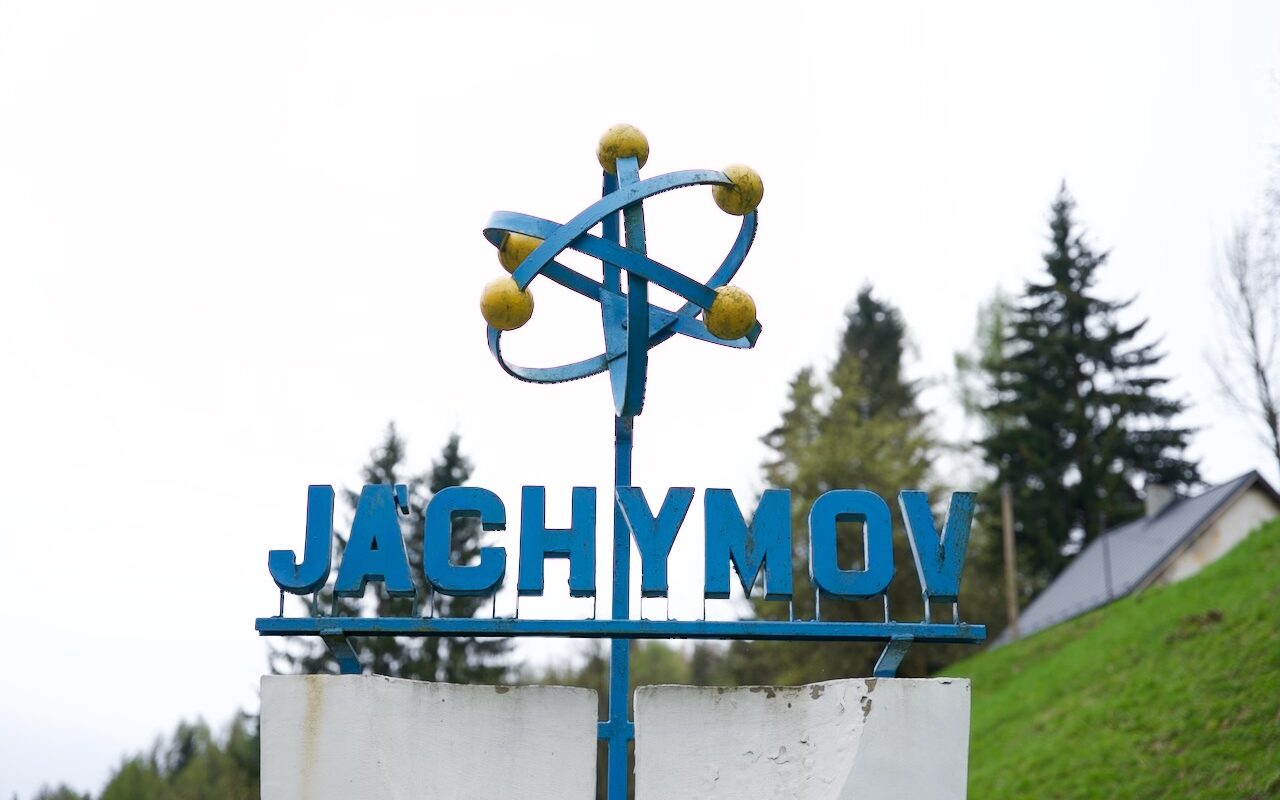
The town of Jáchymov, originally known as Joachimsthal, lies in the Ore Mountains (Krušné hory) and has a rich, layered history.
Its story begins with silver, and passes through the discovery of radium, the development of radon spa treatments, and the forced labour of political prisoners under the communist regime.
Jáchymov and its surrounding mining landscape form part of the Erzgebirge/Krušnohoří Mining Region, inscribed on the UNESCO World Heritage List in 2019.
A town built on silver
Silver was discovered in the area in the early 16th century, leading to the town’s founding in 1516 by the the Czech noble family Schlick.
A massive silver rush followed, bringing wealth and rapid growth to the valley.
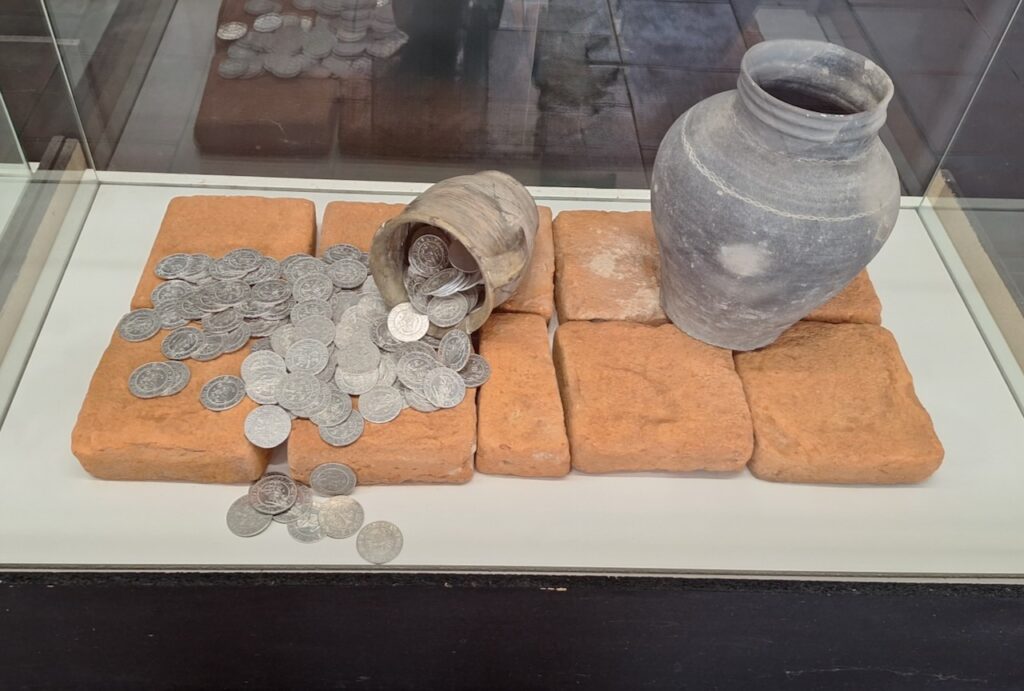
In 1520, the town began minting Joachimsthalers (or thalers/talers) – and I am not going to repeat the ultra famous story about the word taler being the precursor of the US dollar.
Beyond coining history, Jáchymov became an important centre for mining and metallurgy, inspiring German physician and mineralogist Georgius Agricola’s influential work “De re metallica“.
From silver to uranium
As silver mining declined, extraction shifted to other ores, including cobalt and uranium, which became increasingly important in the 19th century.
It was from Jáchymov’s uranium ore that Marie and Pierre Curie isolated polonium and radium in 1898, launching a scientific revolution.
Decades later, during and after WWII, uranium assumed a strategic role, as world powers raced to develop nuclear weapons.
Following Germany’s 1938 annexation of the Sudetenland, the Nazi exploited the region’s uranium deposits for their nuclear projects.
The mines and the prisoner camps
When the Commies invaded after the WWII, they did not shut down the mines, but took control of them, instead.
Initially, German prisoners of war were used as forced labor.
Within a few years, the regime turned Jáchymov and its surroundings into a brutal penal colony, forcing thousands of political prisoners to work in the uranium mines under harsh and deadly conditions.
The mines were interconnected by a widespread network of prisons and labor camps.
Although many of these camps have since vanished, their history is remembered today through local memorials and educational walking trails.
Along the Jáchymovské peklo trail
The 8.5km Jáchymovské peklo (Jáchymov hell) educational trail is a hiking loop around the town that traces the dark history of mid-20th century uranium mining.
Some sections may be poorly maintained, so take care along the way.
One of the first stops is Důl Svornost (Svornost mine), where political prisoners were forced to work deep underground and without protective gear.
Today it is inaccessible and only the shaft head remains visible.
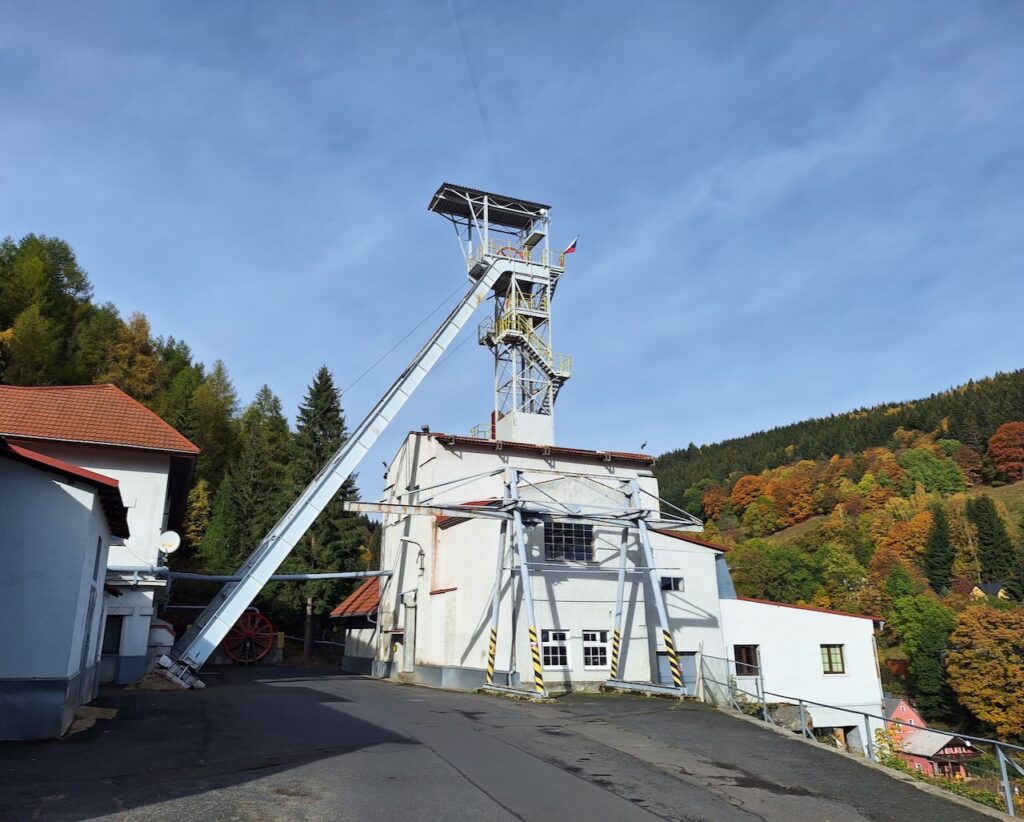
Directly above the mine shaft, on the hillside, stood Tábor Svornost, a prison camp connected to the mine by an infamous staircase of 270 wooden steps – called “the Jáchymov stairs of terror”.
Prisoners climbed the steps each day on their way to and from the mine.
Another place not directly on the way is Štola č. 1 (Adit n.1 or Shaft n.1), a former mine that illustrates the region’s changing mining history, from silver to uranium.
It can now be visited on a guided tour.
Other sites along the trail include the Nikolaj mine and camp, the Eduard Mine, the Eliáš mine, and the Rovnost mine and camp.
All of them were used to dig silver first and uranium later, some of the mines also contained other important ores.
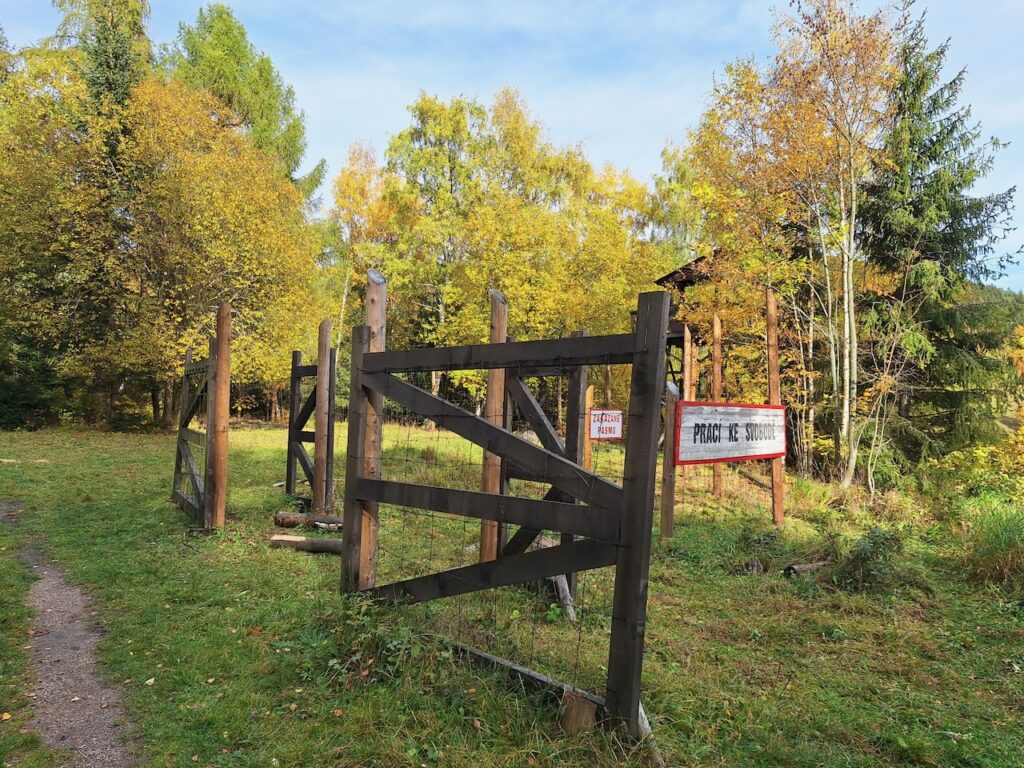
The surrounding area had many more mines and camps, making the Jáchymov complex the largest and most notorious.
Sadly, little remains of these places beyond a few buildings and information boards installed by the Political Prisoners’ Association when the trail was created.
A short distance away, in Ostrov, the Red Tower of Death is another memorial to the forced labour of political prisoners in the uranium industry.
The closure and its legacy
By the early 1960s, the discovery of uranium deposits elsewhere in the world reduced Jáchymov’s strategic value to the Soviet Union.
The complex was gradually phased out, culminating in the closure of the last active site, the Rovnost mine, in 1961.
But this did not bring freedom to the thousands of prisoners who had worked there.
Many were sent to other prisons and labor camps, where they continued to serve their sentences through forced labor.
In the years that followed, much of the evidence of the camps was intentionally destroyed, and nature gradually reclaimed the sites.
Today, the loss of these traces makes it harder to see the full scale of what happened, but remembering the prisoners and their experiences remains important.
Radon springs and the spa town
Jáchymov’s spa history grew out of its mining past.
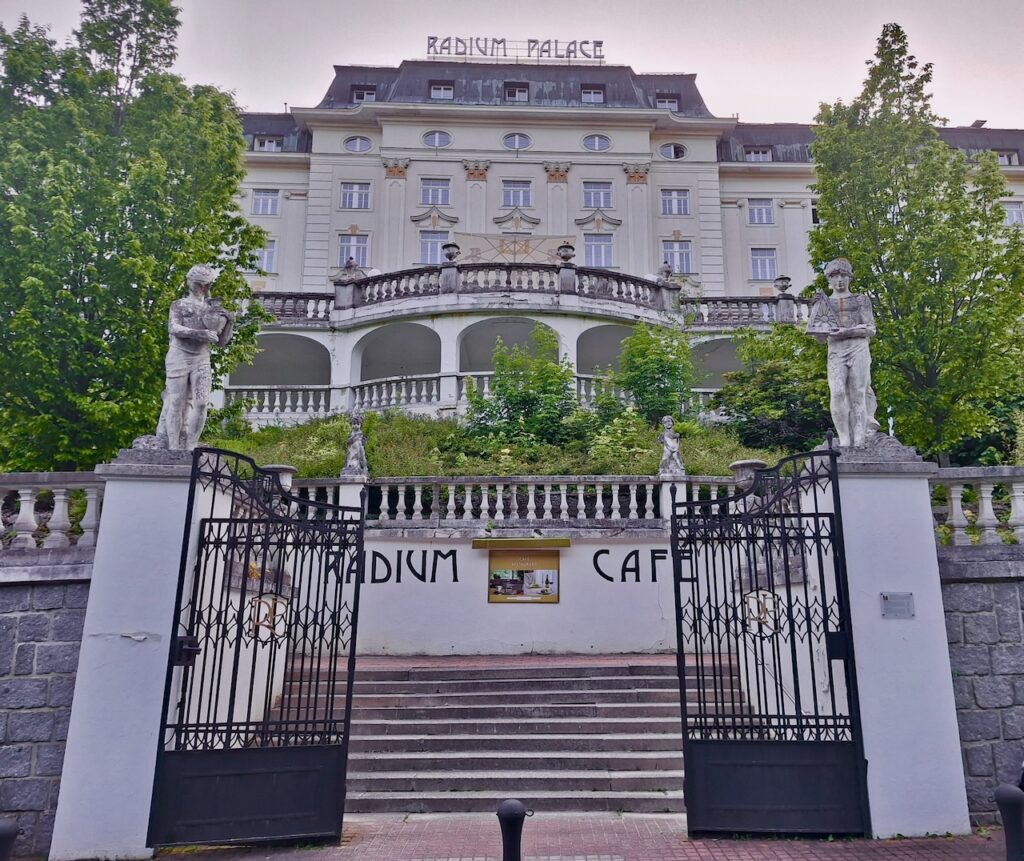
In 1906, the town opened its first radon spa after water rich in radon was discovered underground.
Today, radon water is drawn from the Svornost mine and piped to the spa facilities, where it is used for specific treatments.
Unlike many other Czech spa towns, in Jáchymov there are no springs for visitors to drink from.
Radon water is found only in hotels, such as at the historic Radium Palace, Curie and Běhounek, and at the Agricola Spa Centre, and it is used for medically supervised treatments.
What to see in Jáchymov
Jáchymov stretches for about 3km along the valley.
To make you better understand what is where, I will use the terms “upper” and “lower”, even though the town is not officially divided into upper and lower parts.
After years of being abandoned and sleepy, Jáchymov is slowly coming back to life.
Every time I visit, I notice new improvements.
Upper Jáchymov
The historic centre lies in the upper part of the town, around Republic Square, and it tells the story of the forces that shaped Jáchymov: mining, wealth and dramatic changes.
Here you will find the former Royal Mint, now home to the Jáchymov Museum, the Renaissance town hall, the Church of St. Joachim, and many other historic buildings.
Some have been restored, while others are slowly deteriorating.
The museum is especially interesting: its exhibits trace the town’s history in distinct sections, from silver mining and the famous Jáchymov talers to uranium mining, the discovery of radon water and the development of the spa.
The collection of coins, minerals and artefacts helps explain Jáchymov’s rich mining history.
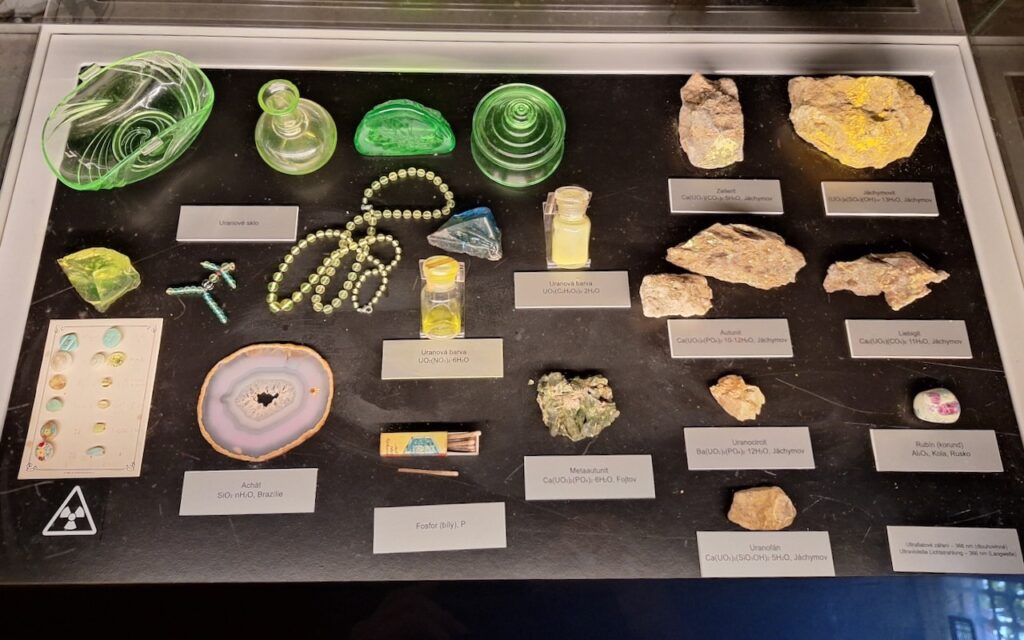
The museum also covers the darker chapter of political prisoners who were forced to work in the uranium mines during the 1950s.
The information boards are in Czech, but you can easily translate them with a camera translation app.
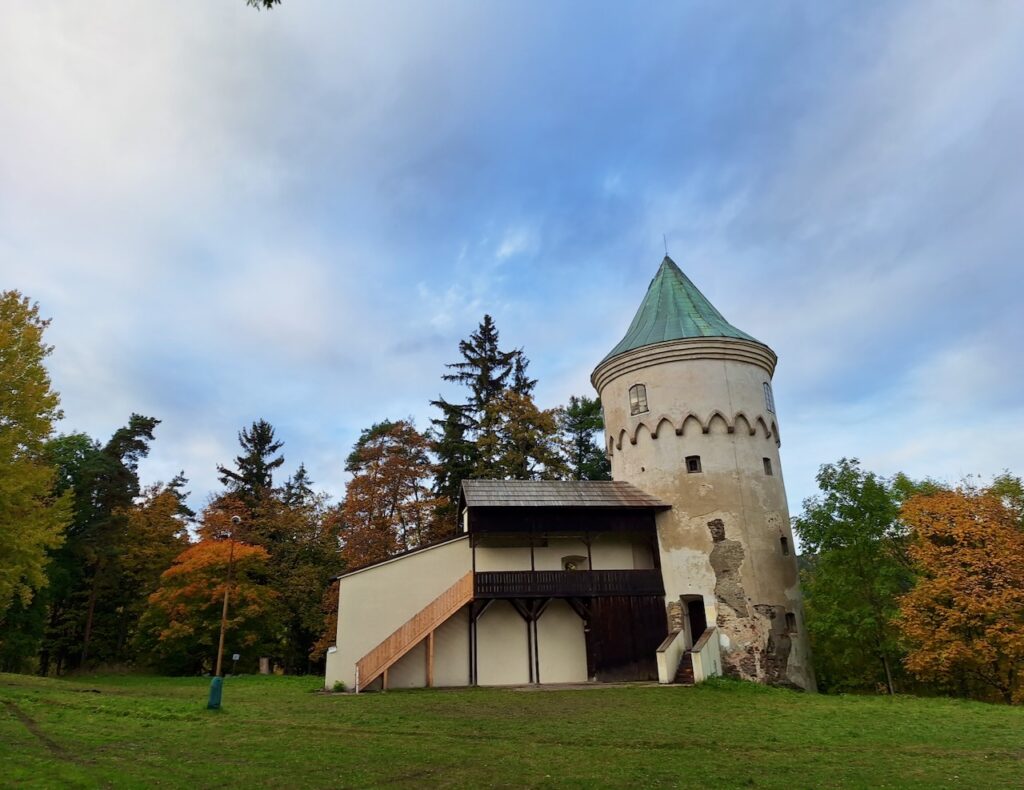
Above the town, the remaining tower of the Freudenstein Castle – also known as Schlick Castle after its founding family – offers a glimpse of Jáchymov’s early history.
Lower Jáchymov
This is where you find the spa hotels and most of Jáchymov’s restaurants and cafés – they are not many!
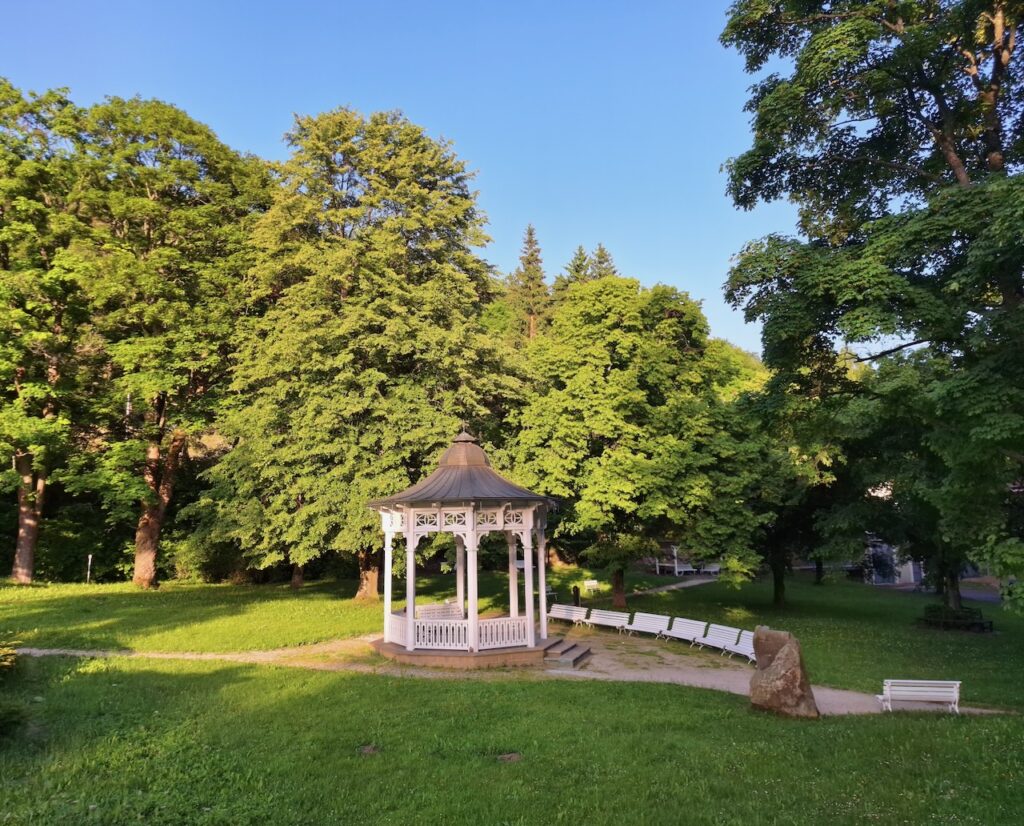
You can take a short stroll through the spa park to see the memorial to Pierre and Marie Curie, spend few hours at the aquapark, or head onto one of the many trails in the surrounding hills and mountains.
The lower part of the town is also a convenient starting point for a trip up Klínovec, either on foot or by chairlift, which runs in winter for skiers and in summer for cyclists and hikers.
Extras
Traditional Czech spa wafers (lázeňské oplatky) are sold in Jáchymov, too. The Apothecary offers a unique nettle-flavoured version, whose green colour is said to evoke uranium.
You can hike along the Imperial alley.
Its lime trees were planted between 1898 and 1903 to mark the 50th anniversary of Emperor Franz Joseph I’s reign. The path climbs above the town and offers views across the valley.
How to get there
You don’t need a car to reach Jáchymov, public transport will bring you there and back easily.
In Prague, you catch a bus to Karlovy Vary from Florenc or Hradčanská, depending on what is more convenient for you. Buses are usually operated by RegioJet (yellow) or Flixbus (green).
There is also the suburban bus 305 from Zličín, but it takes longer, as it makes several stops along the way.
Once at the Karlovy Vary bus station, called tržnice (the market), you jump on a local bus directed to Boží Dar and get off in Jáchymov.
I did this trip a couple of times to go hike in the snow up to Klínovec, and with an early start from Prague it is very doable.
Check pubtran.cz for the latest updated schedule before starting your trip.
Another option is to load your bike on a train to Ostrov and cycle from there.
A nice cycling path runs alongside the main road, following the route of the former railway that connected the Jáchymov to Ostrov from 1896 to 1957.
