
Reading Time: 11 Minutes 03 Seconds
Zlín’s historical background
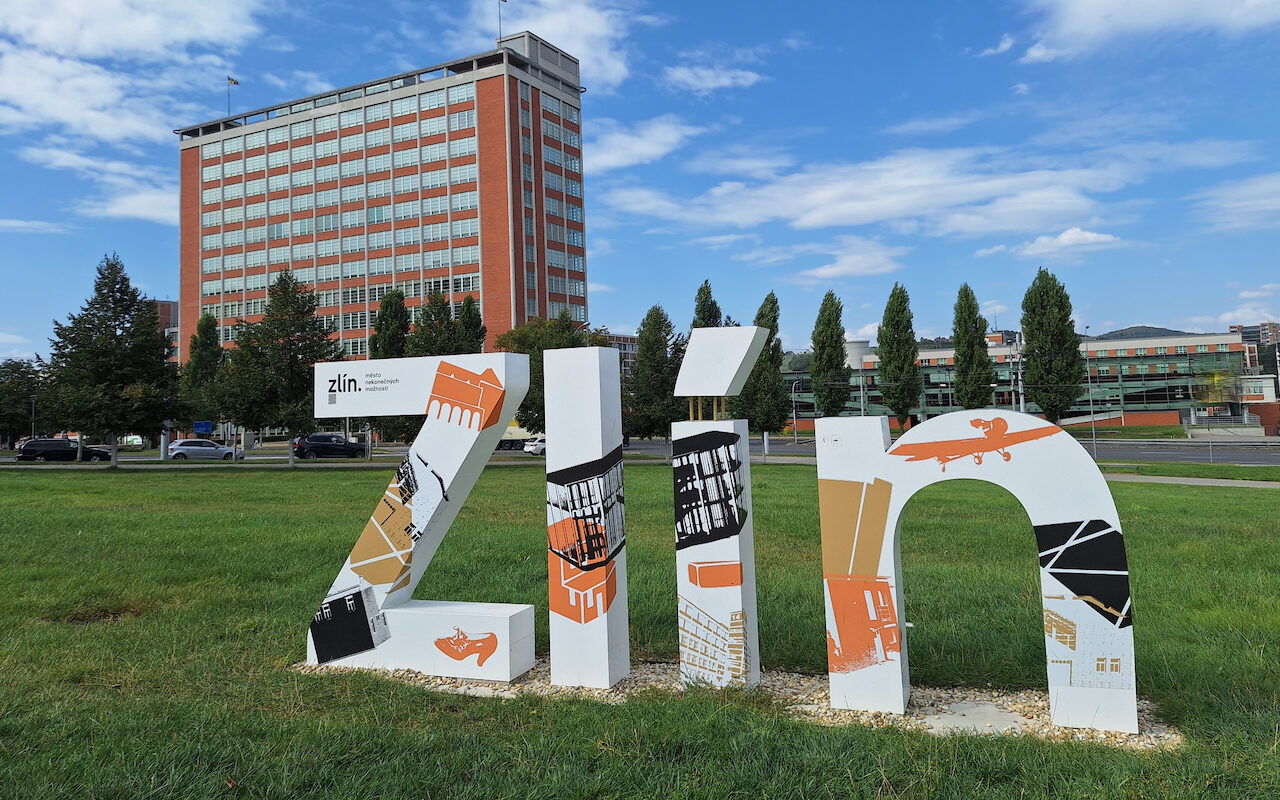
Zlín is a town on the border of three Moravian ethnographic regions: Wallachia, Slovácko and Haná.
By the 1930s it grew from a small provincial town into a major industrial centre largely thanks to the Baťa family.
In 1894 the siblings Antonín, Tomáš and Anna Baťa obtained a permission to process leather and trade shoes in Zlín, and opened a shoemaking workshop, which grew into a company.
The firm’s first substantial order came during WWI, when it supplied boots for more than 5000 Austro-Hungarian soldiers.
After Antonín Baťa’s death in 1908, his brother Tomáš took over the business, expanding over the subsequent 25 years into the world’s largest shoe manufacturer with factories and stores across the globe.
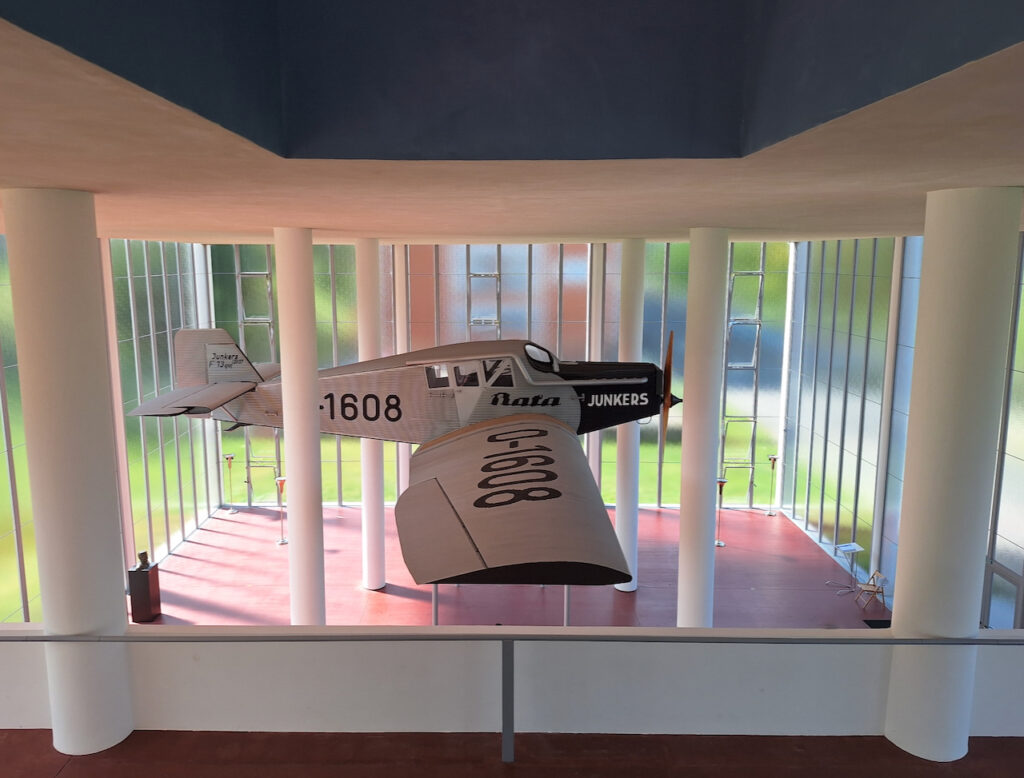
Tomáš Baťa died on 12 July 1932 in a plane crash leaving the company to his half-brother Jan Antonín.
In 1939 Tomáš Baťa’s son, Tomáš Jan Baťa (Tomáš Baťa Junior, Anglicized as Thomas J. Bata), moved to Canada to develop the Bata Show Organization, including a shoe factory and engineering plants.
During WWII, Zlín was bombed. In 1945 the Baťa factories were nationalized, ending the Baťa era.
On 1 January 1949, the town was renamed Gottwaldov in honor to the first communist president of Czechoslovakia, Klement Gottwald – the name was reverted to Zlín in 1990.
Entities linked to the Baťa legacy continued to exist, for example the Zlín film studios, renowned for their animated productions, especially by Karel Zeman and Hermína Týrlová.
Another notable figure is Zdeněk Kovář, a pioneer of Czech industrial design, who developed factory machinery as well as the car Tatra 603 and truck Tatra 138.
Zlín also became the base for the travelling duo Hanzelka and Zikmund.
Architectural development
The rapid industrial growth of Zlín in the first half of the 20th century gave rise to a modern city largely shaped by Functionalist architecture.
Tomáš Baťa invited renowned architects to help shape and develop it.
His building program conceived a “garden city” that addressed both factory needs and employee housing.
It combined standardized, functional housing, generous green space, tree‑lined streets and social amenities, like schools and shops, to create self-contained residential areas.
Typical forms included brick houses and buildings with a white reinforced‑concrete skeleton measuring 6.15 x 6.15 m.
Alongside workers’ districts, the model also included family houses for the company management.
In 1915 he commissioned the prominent architect Jan Kotěra to draft the first plan for an employee quarter.
The first detached-house estate was built on Kotěra’s project in 1918 in the Letná neighborhood.
Unfortunately, most of these buildings were later demolished or destroyed in the 1944 bombing, and what remains today are only four family houses on Kotěrova Street.
Among Kotěra’s works in Zlín is Tomáš Baťa’s modernist villa, now the headquarters of the Thomas Bata Foundation.
František Lýdie Gahura
Kotěra’s planning principles laid the foundation of Zlín’s urban tradition, which were later adopted by one of his students, the Zlín native František Lýdie Gahura.
Gahura envisioned a park boulevard for the city centre lined on both sides by two rows of dormitories for young men and women employed by Baťa.
He also designed the town hall (1922–1924), few buildings around náměstí Práce (Labour Square), including the 9-storey Department Store (1930-1931), the cinema (1932), and the Forest Cemetery (1932)
In 1924–1925 he prepared a master plan for a complete reconstruction of the factory complex, using a reinforced-concrete skeleton system with a 6.15 × 6.15 m grid and adapting it with a combination of bricks and glass.
After Tomáš Baťa’s tragic death Gahura completed the Tomáš Baťa Memorial (1933), a distinctive structure at the top of Masaryk Square.
Vladimír Karfík
Another architect who worked for Baťa was Vladimír Karfík.
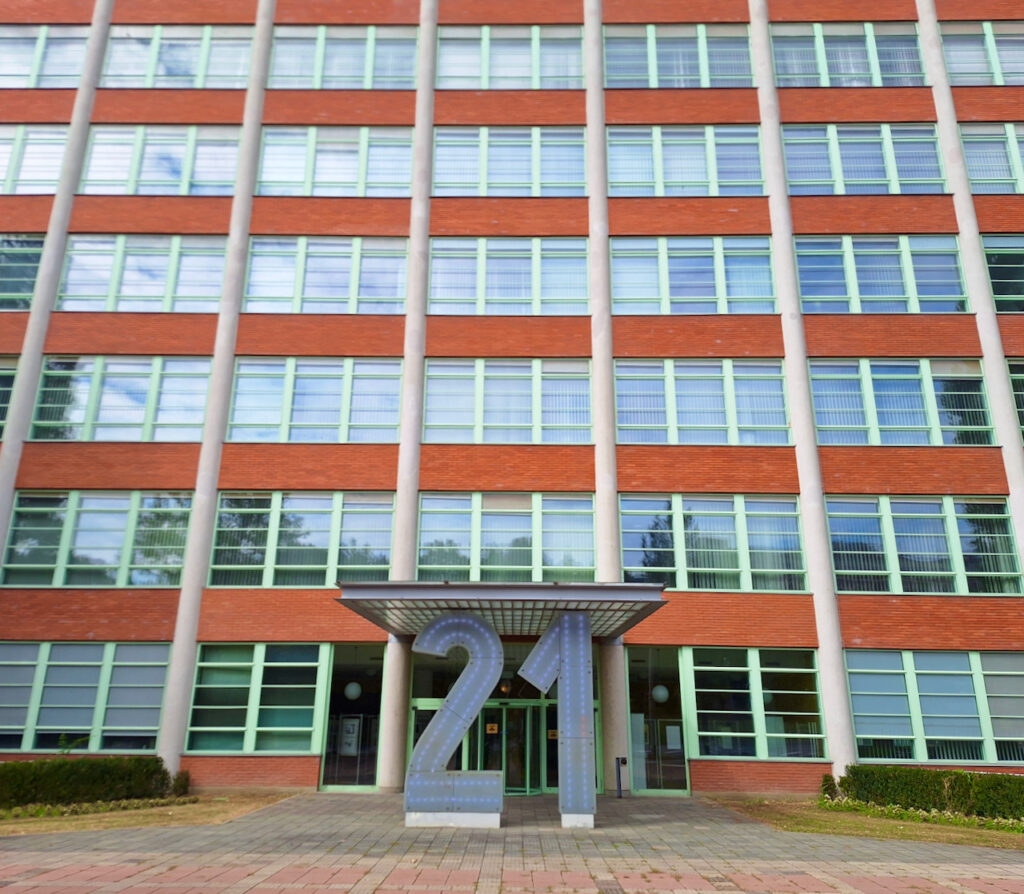
For the company headquarters, he designed the famous 77.6m skyscraper Building No. 21 (1937–1939), which included advanced technical features, such as central air conditioning with individual controls for each office.
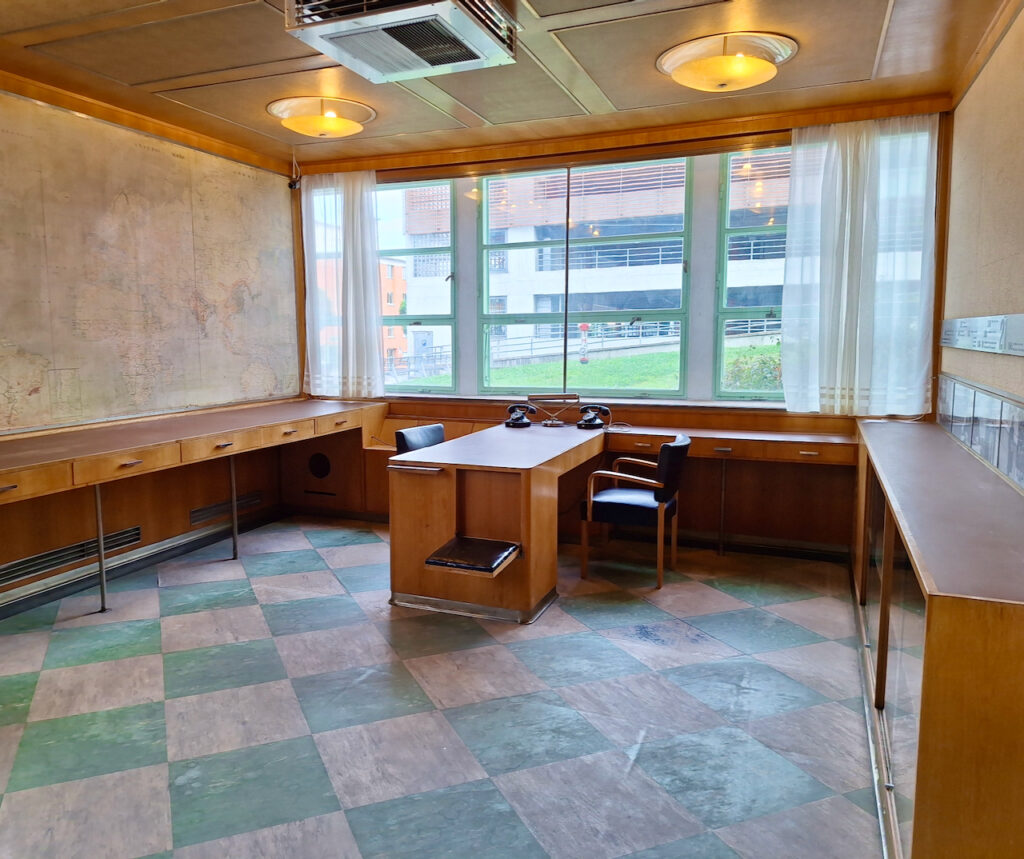
The most interesting attraction in the skyscraper is the mobile office located in the elevator, from where the directors managed the factory.
The moving office had a sink with running water, air conditioning, a telephone and the floor covered by Zlínolit, a rubber carpet produced locally, similar to linoleum.
Karfík studied and worked in France and in the USA, and his production is extensive.
In Zlín we can still see the Community House (1931-1933), which today is the Interhotel Zlín, the Bachelor apartments (1936), the Evangelical church (1936-1937), the swimming pool complex (1946-1950), and the Film studios.
Between 1939 and 1942 he also contributed to a series of villas for Baťa’s directors, such as the houses for Ludvík Gerbec, František Malota, Jan Antonín Baťa (Tomáš Baťa’s half-brother) and Dominik Čipera.
Later expansion
After World War II the Baťa factories (renamed Svit in 1949) were renovated under Jiří Voženílek, who with Vladimír Kubečka prepared a regulatory plan for Zlín in 1946-1947.
Postwar planning promoted collective housing, favouring 3‑storey blocks and high‑rise estates built with prefabricated concrete panels (paneláky).
In this context, architect Miroslav Drofa designed multi-storey houses to meet urgent accommodation needs, making efficient use of the Zlín’s undeveloped land and maximizing space while reducing construction and housing costs.
In 1947 he planned two apartment blocks, nicknamed Morýs after the then Zlín mayor Vilém Morýs, combining brick masonry with reinforced-concrete columns.
Between 1947 and 1950 he built five 8-storey towers, marking a shift from family houses to urban high-rise buildings no longer reserved solely for young workers.
He later prepared a project for a polyclinic (1952–1954) and, between 1959 and 1963, completed the 10‑storey experimental “Drofa” building.
The town development continued on the opposite hilll with the Jižní Svahy estate, a conglomerate of mostly prefabricated houses, that expanded throughout the 1970s and 1980s and was modified further into the 2000s.
Tomas Baťa University was established in Zlín in 2001. The university library (opened in 2008) and the Congress Centre (inaugurated in 2010) were designed by the Zlín‑born architect Eva Jiřičná.
Places to visit
You can freely see most of the places mentioned above from the outside by your own.
To visit the interior of some of the buildings open to the public you either have to join a guided tour or pay for an entrance ticket. Exceptions are the Department store, the cemetery, the swimming pool, the church…
Tomáš Baťa Memorial
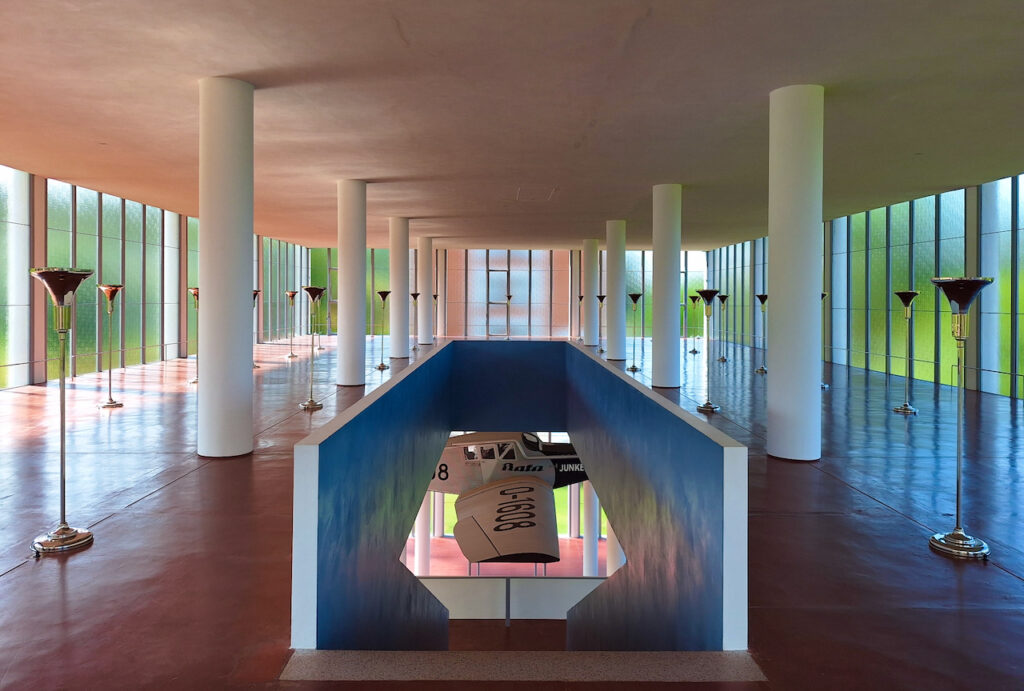
The Tomáš Baťa Memorial is a building constructed entirely of glass, iron and concrete, and, unlike the Zlín standard, without a single brick.
The interior contains a replica of the Junkers F13, the plane in which Tomáš Baťa crashed and died.
Visits are by guided tour only on specific dates. Tours are usually in Czech, but they can provide you with English leaflets or audioguides.
You can always drop them an email for any question – info at the official website.
Infopoint of Baťa housing
The Infopoint of Baťa housing is a red brick house, which remains the only exemplary of single family houses erected in the Nad Ovčírnou neighborhood between 1927 and 1928.
Most of the original houses were later demolished to make way to the dormitory blocks that stand there today.
The interior has been altered multiple times over the years and was recently converted into an architect studio with a small museum.
The ground floor houses the permanent exhibition “The Baťa House: Disappearing Elements of Zlín Architecture”, and the architect studio ellement offers lectures and guided tours.
All the important info is on their website – only in Czech, but you can use a web translator or drop them an email.
The entrance gate to the factory
The brick gate and pedestrian passage will be visible to you when crossing the main road to reach the skyscraper.
On this place the old gates to enter the Baťa’s factory were installed.
There is nothing groundbreaking to see here, I just find this brick structure quite interesting.
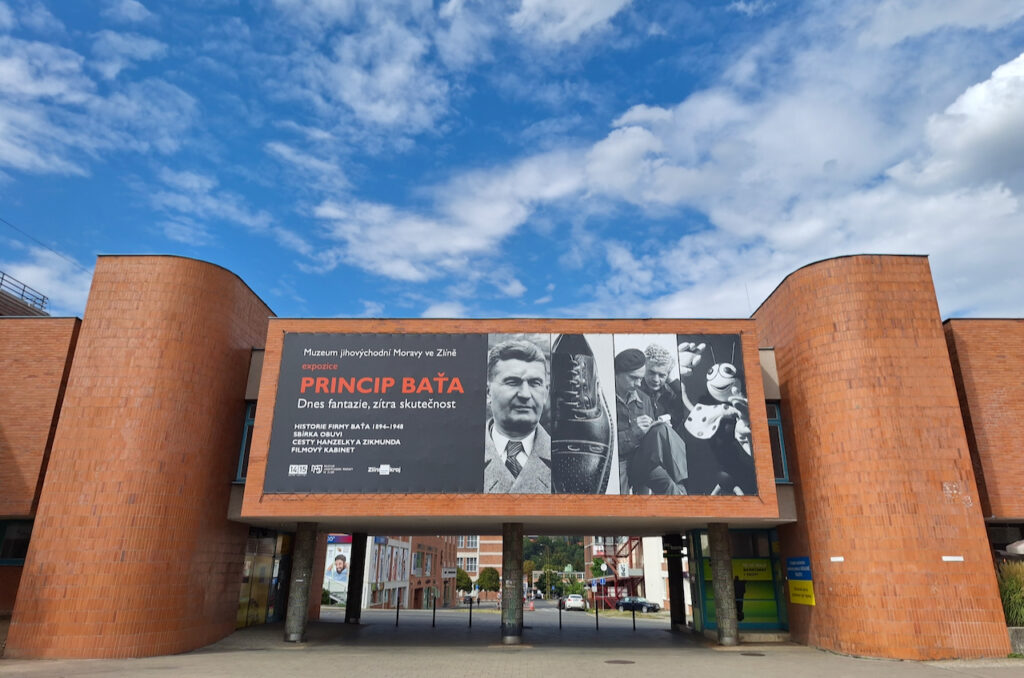
The 14|15 Baťa Institute
The 14|15 Baťa Institute is a gallery, museum, library and info centre housed in the renovated factory buildings 14 and 15, connected by an outdoor platform.
The complex hosts the Museum of South-East Moravia, including the permanent exhibition “The Baťa Principle: Fantasy Today, Reality Tomorrow” and collections of documents and photos from the travels of Hanzelka and Zikmund.
The official website is at this link.
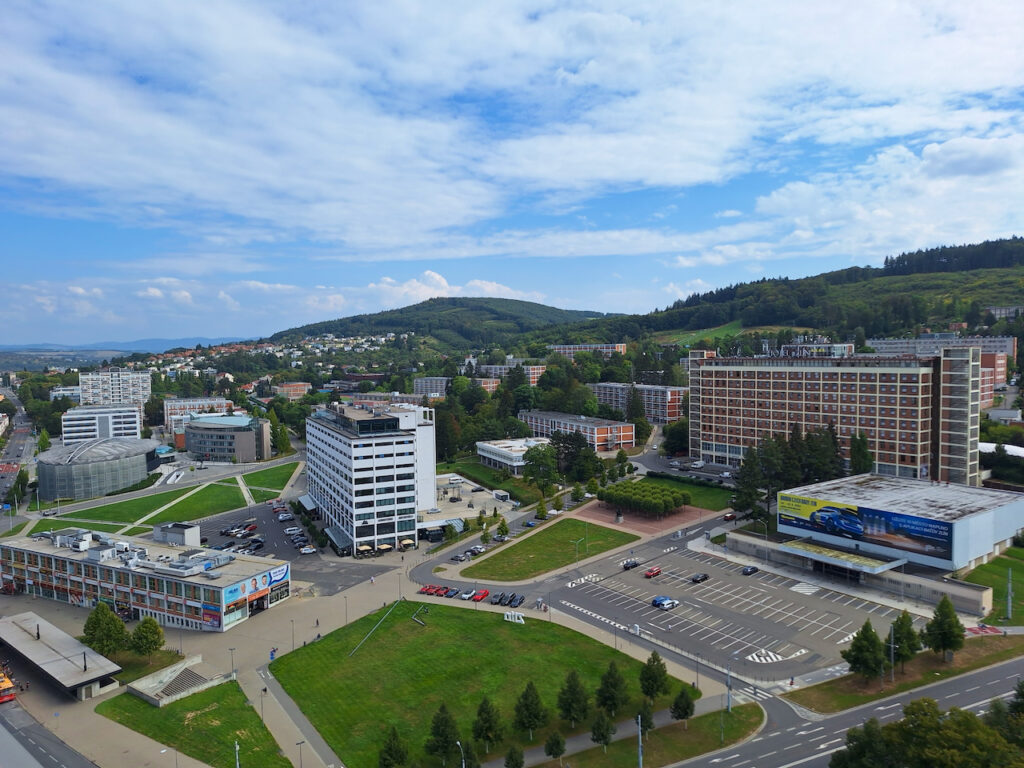
The skyscraper at n. 21
The Baťa skyscraper is actually a functioning office building, nevertheless some floors can be visited anytime.
It is possible to see the mobile office stationed at the 2nd floor and the terrace on the 16th floor, which offers panoramic views over the town.
The terrace also hosts a café, a 3D model of Zlín and a photographic exhibition about the city, the building and the company.
On working days also the 8th floor, the so called “director’s floor”, is open and on display are the original interiors and an exhibition on Baťa’s history.
The building has two paternoster lifts that are not always in operation.
During weekends the entry is not from the main doors at the front, but via the back entrance on the northern side of the building (on J. A. Bati street).
The Thomas Bata Foundation
Since 1998 the villa of Tomáš Baťa has hosted the Thomas Bata Foundation.
The foundation promotes youth development and entrepreneurship and actively preserves and propagates the Baťa legacy.
Restored and open to the public, the villa can be visited on guided tours (often sold out months in advance) or by participating to the events organized by the foundation.
All the events listed on the official website are in Czech, but you can email the foundation with any enquiries.
Zikmund’s villa
As briefly mentioned above, Jiří Hanzelka and Miroslav Zikmund were two Czech explorers and writers who travelled around the world between 1940s and 1960s.
They recorded their adventurous trips with photos, films, journals and diaries, and produced documentaries and radio programs.
Miroslav Zikmund’s villa, together with Jiří Hanzelka’s one, is located on the hilly Nivy neighborhood of Zlín.
Hanzelka’s villa is not open to the public, as he donated it to the city with the request that it be converted into a rehabilitation centre.
Zikmund’s villa is accessible with guided tours, allowing visitors to see the original home where he lived for 60 years, complete with original furniture, personal items and a room filled with books.
Since the tours are usually in Czech and they are somehow expensive, if you intend to visit the villa and enjoy it at its fullest, contact the organizers (official website) to ask about English commentary.
How to get to Zlín
It is not possible (or better, not recommended) to visit Zlín on a 1-day trip if you are not in Brno or already somewhere in Moravia.
The trip from Prague takes about 4 hours, no matter if you choose to travel by bus or by train. If you travel by car it is a bit shorter, but still 3 hours are needed.
Therefore, the best is to opt for a weekend, or even more days, to be able to stroll around without rush and visit all the beautiful places mentioned in the article and beyond.
Extras
Architecture fans will love the Zlín Architecture Manual (ZAM), which offers themed walks to discover Zlín’s architectural treasures.
You can download the guide on your phone or get the paper version for free at one of the tourist info centres in town.
Other useful resources are the Bata Region website and the Tourist Portal of Zlín.
If you are travelling in the area for longer time, then check out the spa town of Luhačovice too!
