
Reading Time: 3 Minutes 49 Seconds
Historical info
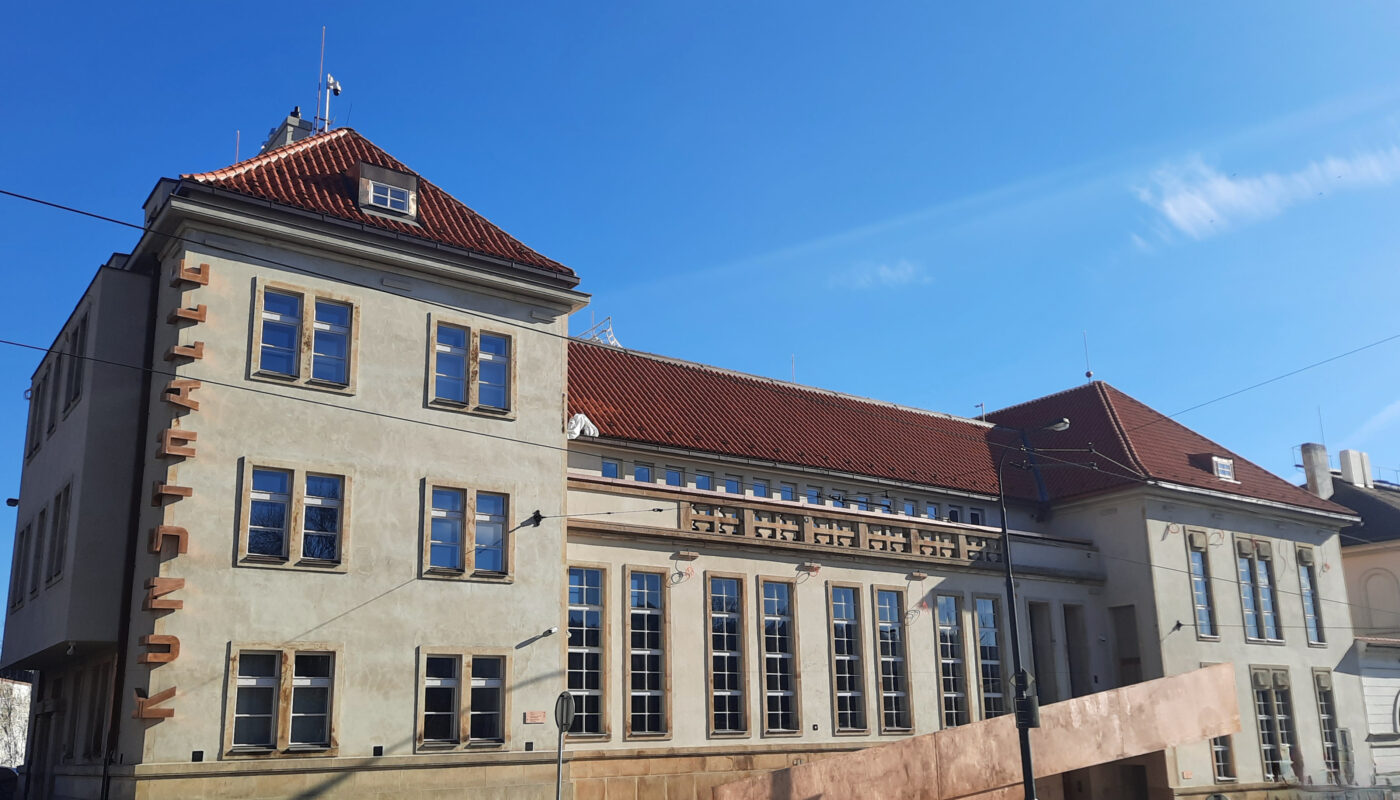
In 1923, Prague’s electricity company needed a new substation to keep the city running, and for that purpose they acquired a strip of land from the old barracks beneath Letná.
Between 1930 and 1934 a new building was erected on the site to function as a power substation (in Czech: transformační stanice; or colloquially “trafostanice” or “trafačka”).
Designed by architect Vilém Kvasnička with assistance from Jan Mayer (both students of Jan Kotěra), the building was named after the prominent Czech physicist Václav Karel Zenger and became locally known as Zengerovka.
Architectural details
The structure exemplifies Modern Classicism: Kvasnička combined the industrial and rationalist interior with an exterior conceived as a urban palace.
Its neoclassical façade allows the building to blend naturally and harmoniously within the historic architecture of Malá Strana.
The building was divided into four main sections: the residential area, the engine room, the transformer room, and the substation (which is the nodes connecting multiple power lines).
Modern technology occupied the basement, along with a tram substation, while the two upper floors housed apartments and offices.
The design reflects the key principles of modern architecture theorized by Swiss architect Le Corbusier: the flat roof, a reinforced-concrete structure, and the pilotis (pillars) that elevate the building.
In 1931, the Zenger station opened, and its electricity powered the trams and trolleybuses of Prague 1, 6, and 7.
The substation also became a key hub for the Petřín funicular, which transported athletes to the Strahov Stadium.
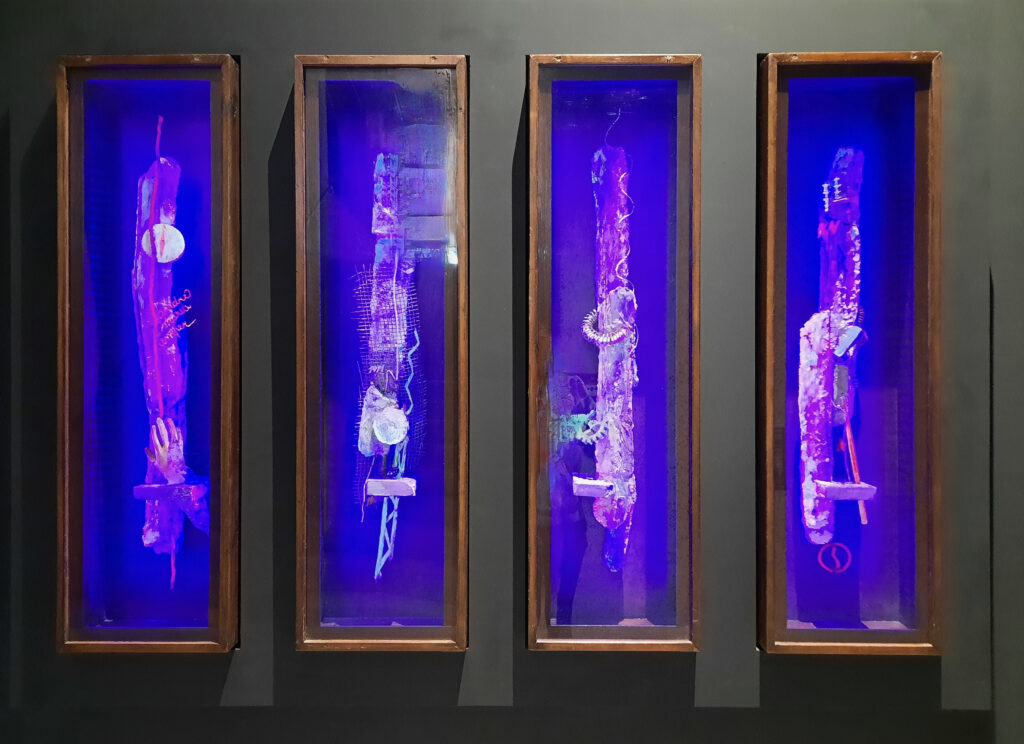
Kinetic-art pioneer Zdeněk Pešánek (see the Edison substation article) designed four monumental kinetic light sculptures for Zengerovka’s front façade, made from plaster, plastic, metal and neon tubes.
The electric company of the City of Prague commissioned the artwork, which was called “One Hundred Years of Electricity” (in Czech: “Sto let elektřiny”).
The art pieces were exhibited in the Czechoslovak pavilion at the 1937 Paris World’s Fair, winning several awards. Unfortunately, after their return to Prague they were lost and only the models survive, preserved in the National Gallery in Prague.
From Zengerovka to Kunsthalle (aka Art museum)
The former substation had been mostly empty since the 1990s.
A civic initiative tried to revive the space, and at the prompting of the Club for Old Prague (Klub za starou Prahu) and other experts, the building was declared a national cultural monument in 2015.
In 2018, the Pudil Family Foundation, founded by Pavlína and Petr Pudil, purchased the building and began its restoration to convert it into a museum.
This provoked negative reactions from heritage advocates, who said the reconstruction would introduce insensitive interventions in a national cultural monument.
In fact, during the work, the original floor plan was largely lost and only the shell of the old substation remained.
The Kunsthalle director explained that most of the structure had to be dismantled because harmful substances were found in both the fabric and the soil, requiring excavation and removal.
The reconstruction completed in 2020, giving rise to the Kunsthalle (German for “Art Gallery”) which opened on 22 February 2022.
The architectural and technological elements of the Zengerovka were meticulously documented and inventoried before its demolition, allowing a faithful reconstruction.
The building retains key elements of the original design: gutters, cornices, facades, steel shutters, the staircase, and the balustrade of the original “fake” terrace (the terrace was not used during the substation era).
The renovated crane is a remarkable structure that has been preserved and incorporated as a historical artifact.
New interventions include an open interior layout for exhibitions and a beige façade tone reminiscent of sandstone.
Furthermore, the new main entrance features a stainless-steel walkway in the form of a triangular pyramid, worked with bronze.
The terrace now hosts a café with a superb view of Prague.
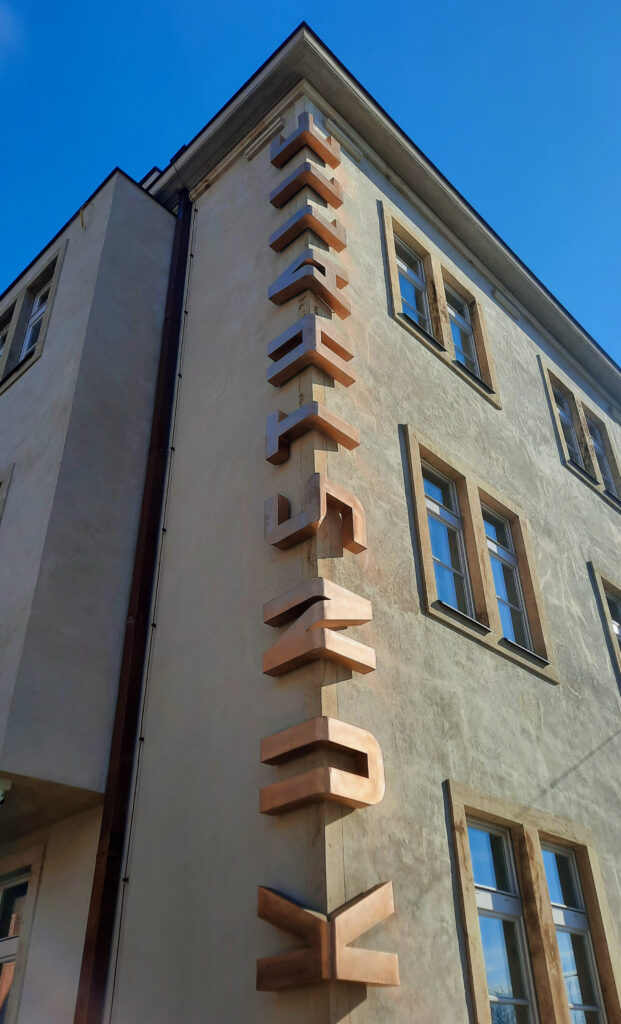
For the curious ones: the name “Kunsthalle” anchored to the façade is formed from ten stainless-steel letters constructed as closed boxes with bronzing finish.
