Reading Time: 3 Minutes 36 Seconds
Historical info
Czechoslovak Cubism was a brief and intensive chapter in architectural history.
It emerged in the early 20th century as a local expression of the broader Cubist movement, with the difference that unlike Cubist painting, the style was applied to architecture, furniture and decorative arts.
Cubism rejected the decorative surface ornaments typical of Art Nouveau, reducing forms to geometric planes, fracturing perspective, and favoring structural analysis.
It represented a modernist break and a shift toward abstraction and functional approaches that shaped 20th century design.
Contemporaries often called it the “new art” as they promoted European avant‑garde ideas at home.
The Czechoslovak Cubist style is unique in the world and nowhere else did Cubist architecture flourish as it did in what is today the Czech Republic.
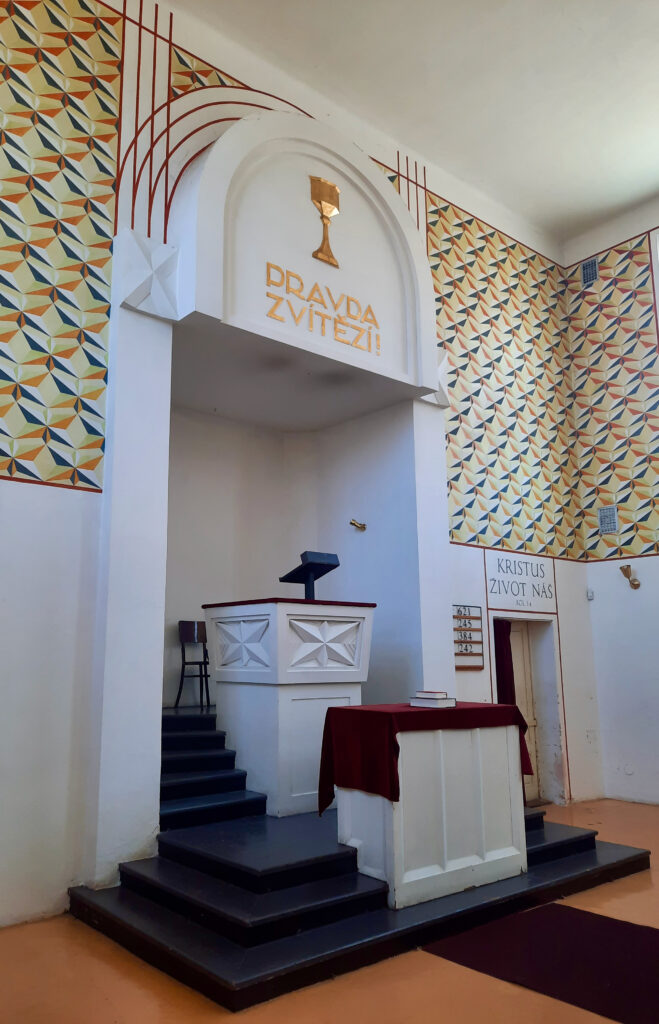
The style later softened and evolved into a variant locally known as Rondocubism, which kept geometric abstraction, but introduced rounder motifs and national style ornament.
Cubist architecture in the Czech lands was developed by a group of architects led by Josef Gočár, Josef Chochol, Emil Králíček, Pavel Janák and Otakar Novotný. They were part of the Mánes Association of Fine Artists, a circle of painters, sculptors and architects who discussed Czech and European art.
Distinctive features of Cubism
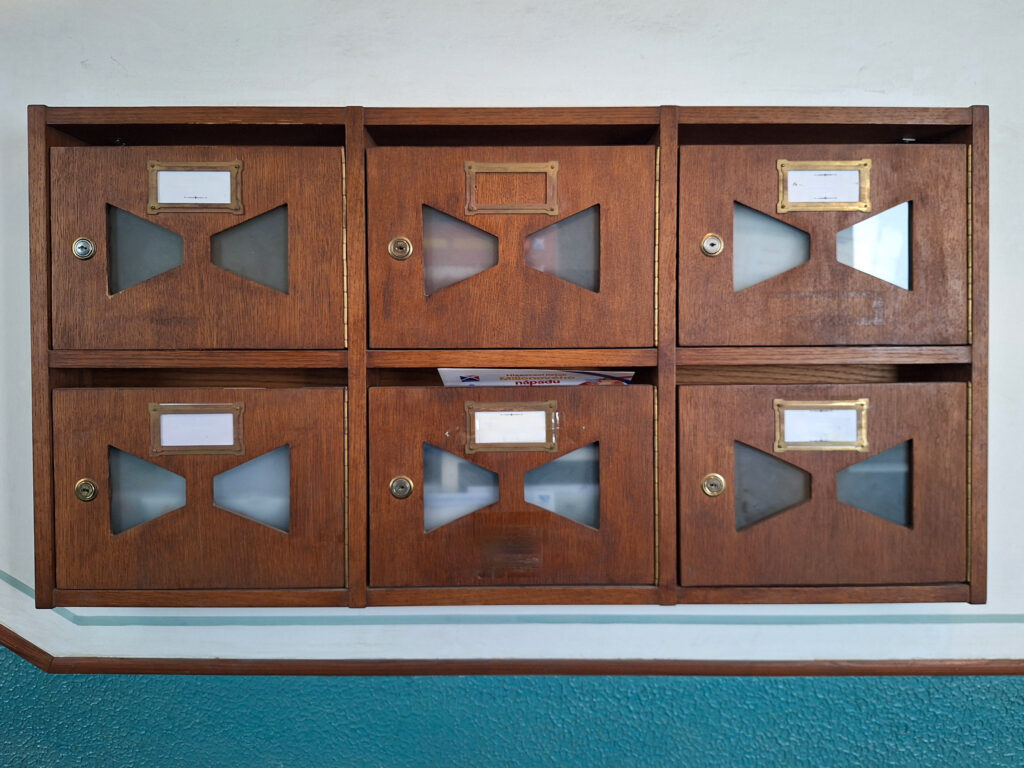
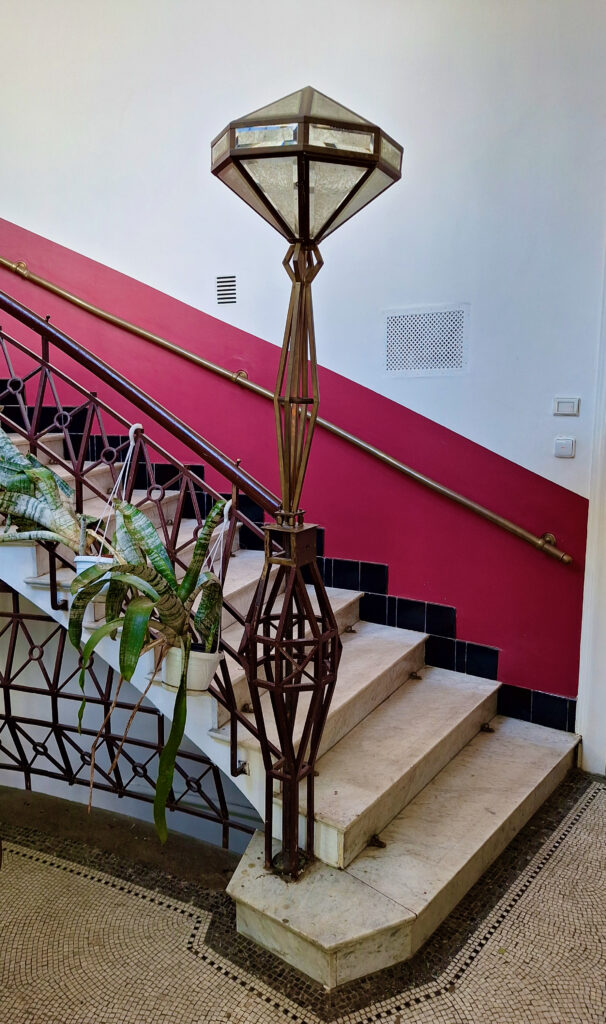
Form and surface: façades and interiors use sharp geometric shapes and bold profiles, dynamic silhouettes and mostly smooth, monochromatic surfaces with strong angles.
Unity of design: architecture, furniture, lighting and decorative objects were designed together to make unified interiors.
Language and evolution: more angular and geometric; later it blended with Functionalism’s focus on simple and practical forms.
Significant buildings & works
Here below are listed several Cubist and Rondocubist buildings, places, and objects that you can see and in some cases visit too.
Cubism
- Façade and interior of the “House of the Black Madonna” (in Czech, Dům U Černé Matky Boží) by Josef Gočár.
Today the ground floor houses the “Černá Madona” café and the “Kubista shop“, a store selling Cubist furnitures and furnishings; the first floor contains the café and restaurant “Grand Café Orient“; upper floors hold a permanent exhibition on Czech Cubism with important furniture, glass and ceramic collections. - Cubist streetlamp, Palác Rokoko, and the Bethlehem Chapel (Betlémská kaple) by Emil Králíček.
- Façade of the building “Diamant House” by Josef Gočár.
- Ďáblický Cemetery by Vlastislav Hofman, the only Cubist cemetery in the world.
- Kovařovic Villa, Neklanova apartment building and the three-story house on Rašín embankment, works by Josef Chochol.
- Teachers’ Houses by Otakar Novotný.
- Trade Union House (Odborový dům) by Alois Dryák.
- Villa Bílek (Bílkova vila), a sculptural and architectural work by the Czech sculptor and architect František Bílek.
- Bauer’s villa (Bauerova vila) in Libodřice, close to Kolín, another work by Josef Gočár.
Rondocubism
- Legiobanka, often referred to as Palác Archa, by Josef Gočár.
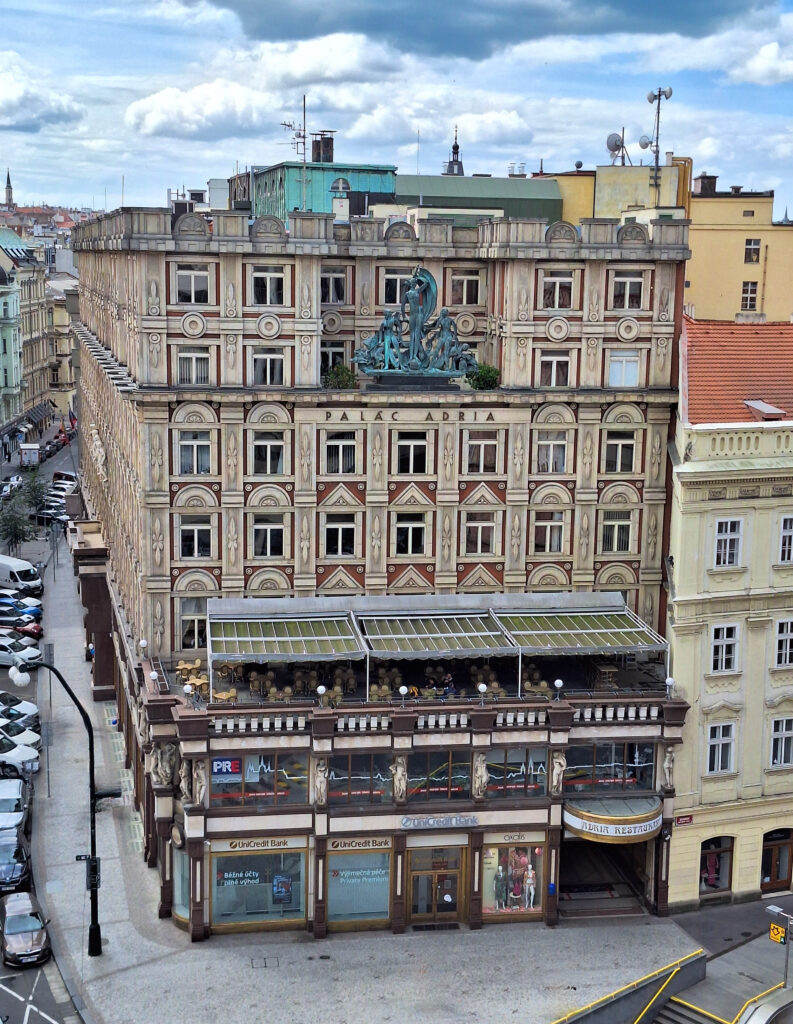
- Adria Palace, and the Crematorium in Pardubice by Pavel Janák.
- U Myšáka house, by Otto Ehlen, Josef Čapek, Josef Gočár.
- Švehla’s dormitory (Švehlova kolej) by Jan Chládek.
- Radio Palace by Alois Dryák.
- The abandoned building of the long-distance telephone exchange (Meziměstská telefonní ústředna) by Bohumír Kozák.
Suggested tour in Prague: begin at the Radio Palace (close to Náměstí Míru metro station), walk through Žižkov, reach the centre, follow the Vltava to Výtoň and finish in Výšehrad.