
Reading Time: 7 Minutes 43 Seconds
General info
The Přáslavice anti-nuclear bunker is one of the largest publicly accessible bunkers of its type in Central Europe.
Constructed between 1968 and 1976, it spans 10.000 m² across 4 underground levels fortified by 1.5 metres thick walls.
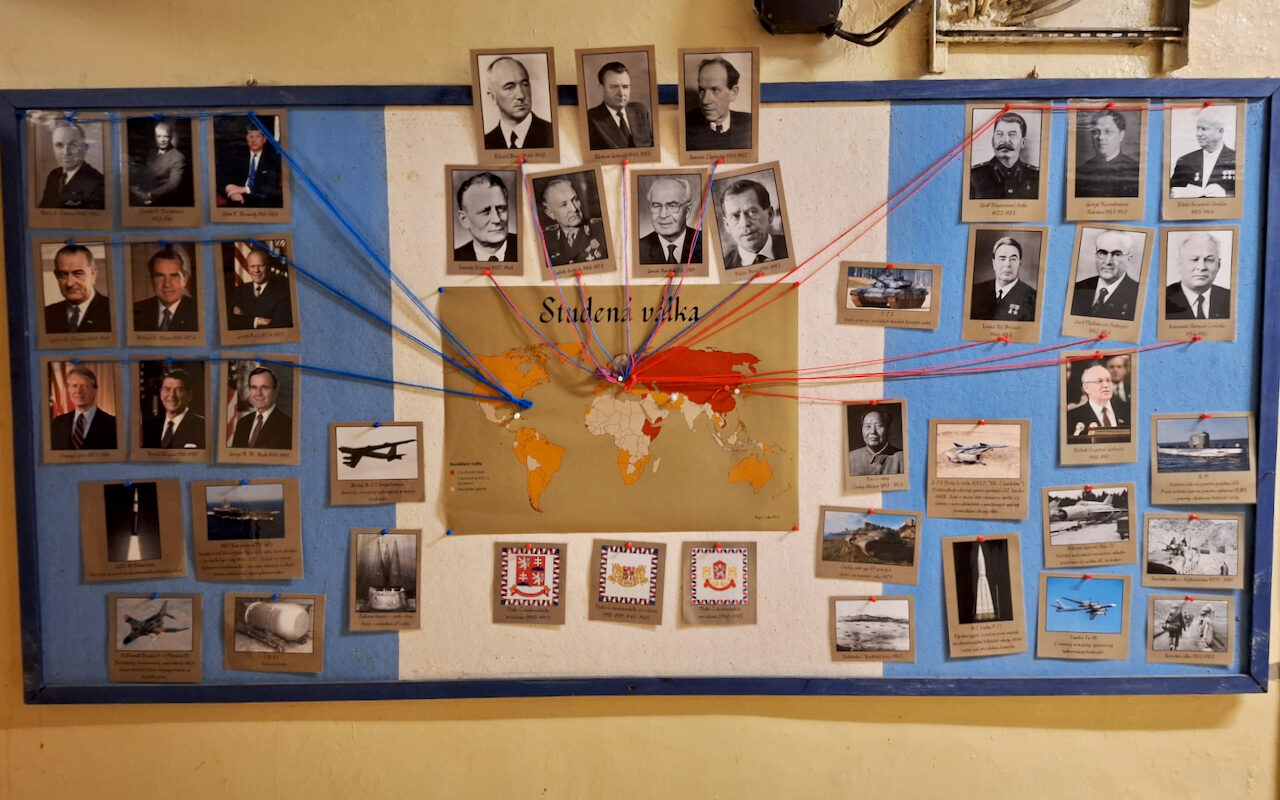
The bunker‘s construction was driven by the Cold War tensions, particularly the 1955 Warsaw Pact agreement and the 1962 Cuban Missile Crisis.
Military strategists believed that any conflict would pass through Czechoslovakia and identified a critical weakness in the country’s communications infrastructure.
To address this vulnerability, an extensive secret telecommunication network was established via the MKKM1 trunk line that connected Berlin, Prague, Warsaw and Moscow.
The network consisted of backup amplification stations, antenna arrays, and a vast underground telephone exchange.
Such circumstances prompted the construction of defensive infrastructures capable of withstanding a direct hit, with the Přáslavice bunker becoming the prototype of seven parallel installations developed across Czechoslovakia.
The facility featured the latest telecommunications technology of the time, including repeaters and backup power systems, and infrastructure capable of sustaining the crew for about 8 to 10 days without external support.
The bunker was engineered with blast resilience: a nearby nuclear explosion would only slightly shake the structure, allowing occupants to survive without risk.
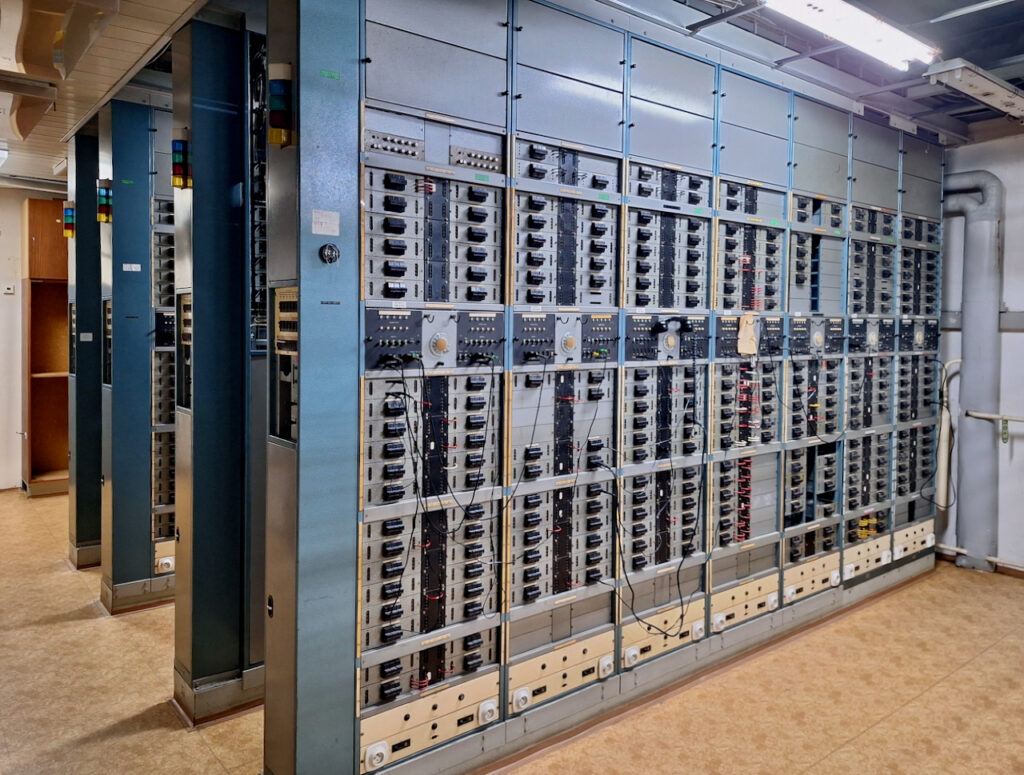
Core infrastructure of the Přáslavice bunker
Communication technology dominated the bunker, with giant telephone exchanges, intercoms, switchboards, antennas, and related equipment that occupied the majority of the space and remain visible today.
Přáslavice bunker’s network relied on specially engineered coaxial cables with four pressurized hollow passages for routing individual cables.
This design provided an early warning system: any damage to the wire would modify the cable pressure and immediately alert the operators about potential tampering, preventing further use of the compromised line.
The cable supported 1.920 parallel connections, even though its transmission capacity required amplifier stations approximately every 6km, some of which operated unattended while others had dedicated staff.
The telephone exchange operated continuously through a permanent crew of electricians, signalmen, locksmiths, and other specialists.
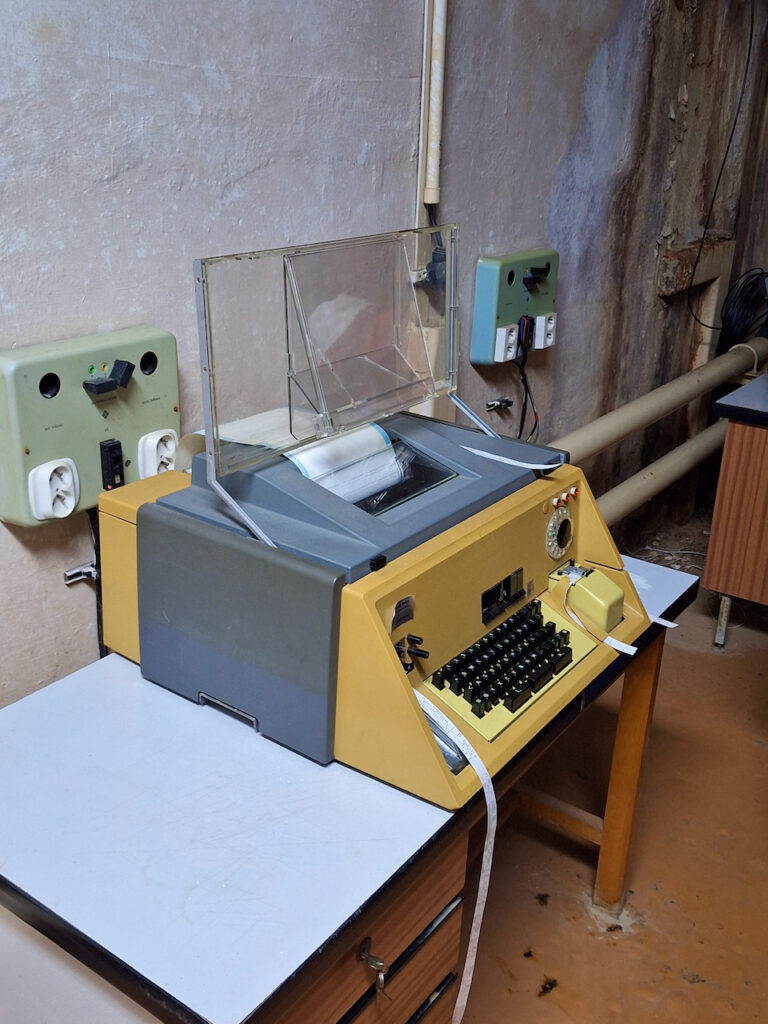
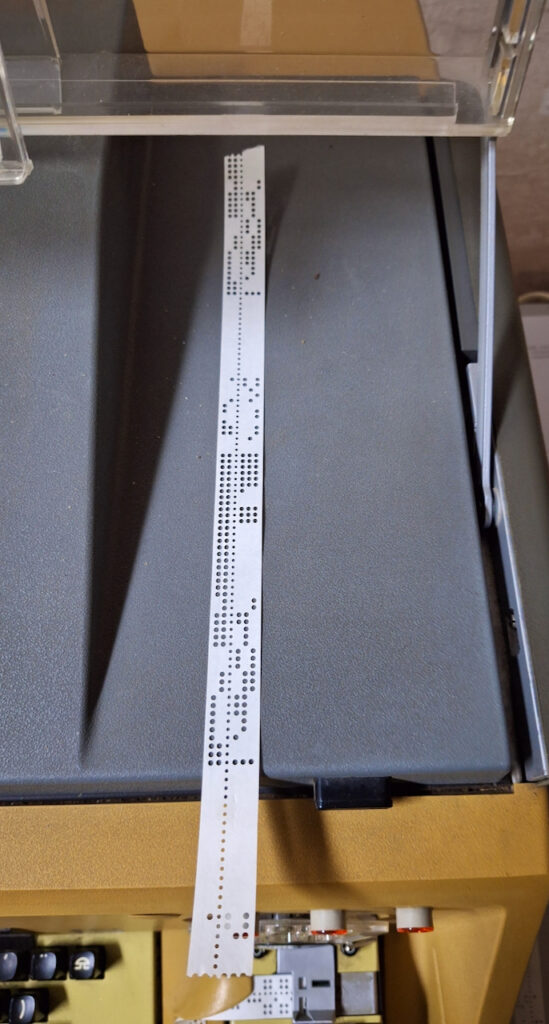
Secretive technologies within the facility included telephone scramblers and telex coders to protect sensitive communications, ensuring that transmitted information remained secure even during external surveillance or infiltration attempts.
Self-reliance of the bunker
The bunker was engineered to be completely independent from external power grids and featured mostly mechanical systems with minimal electronics and full redundancy.
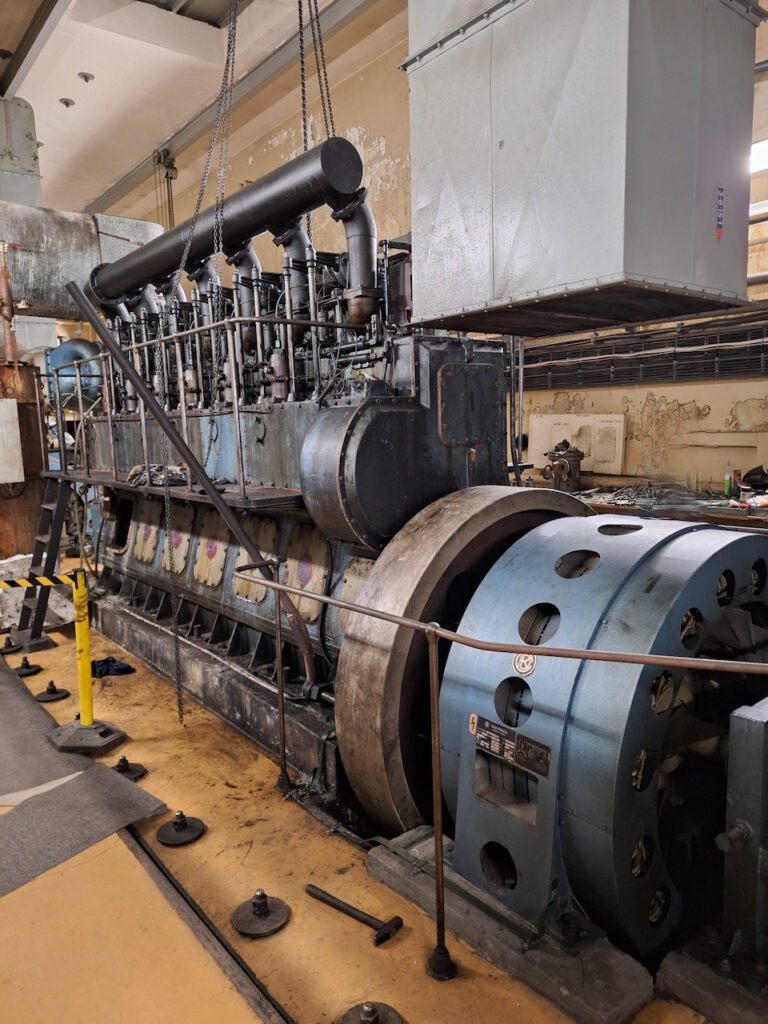
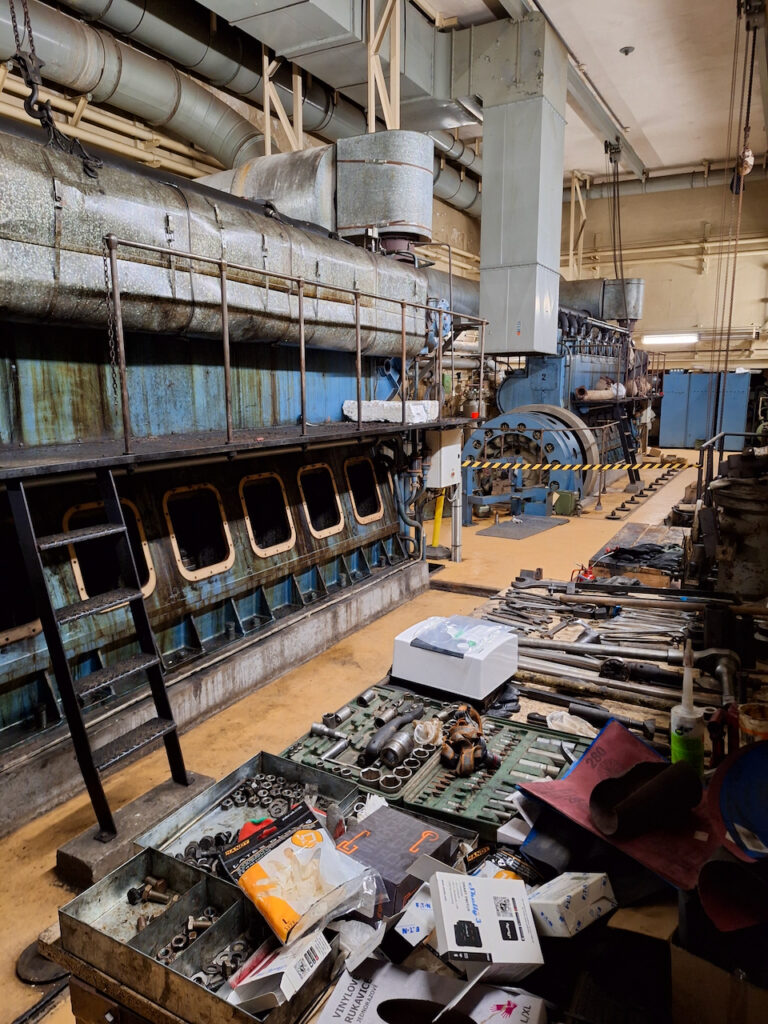
A massive diesel generator, powerful enough to supply electricity to three villages, served as the primary power source.
The power supply room contained two motors: one producing alternating current and one direct current.
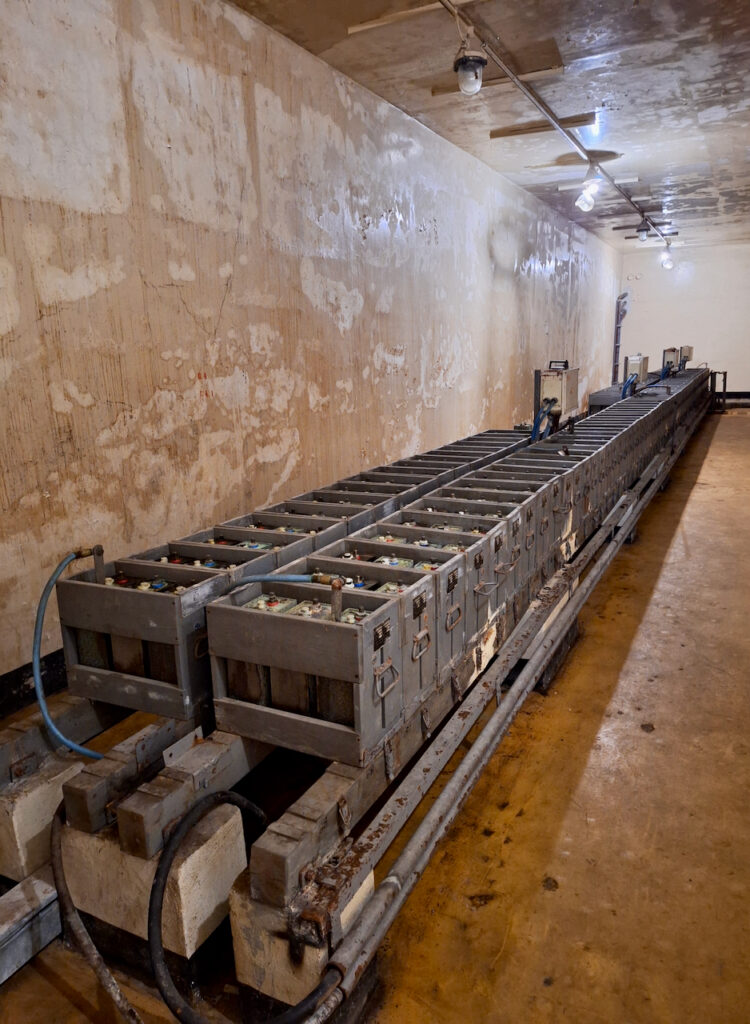
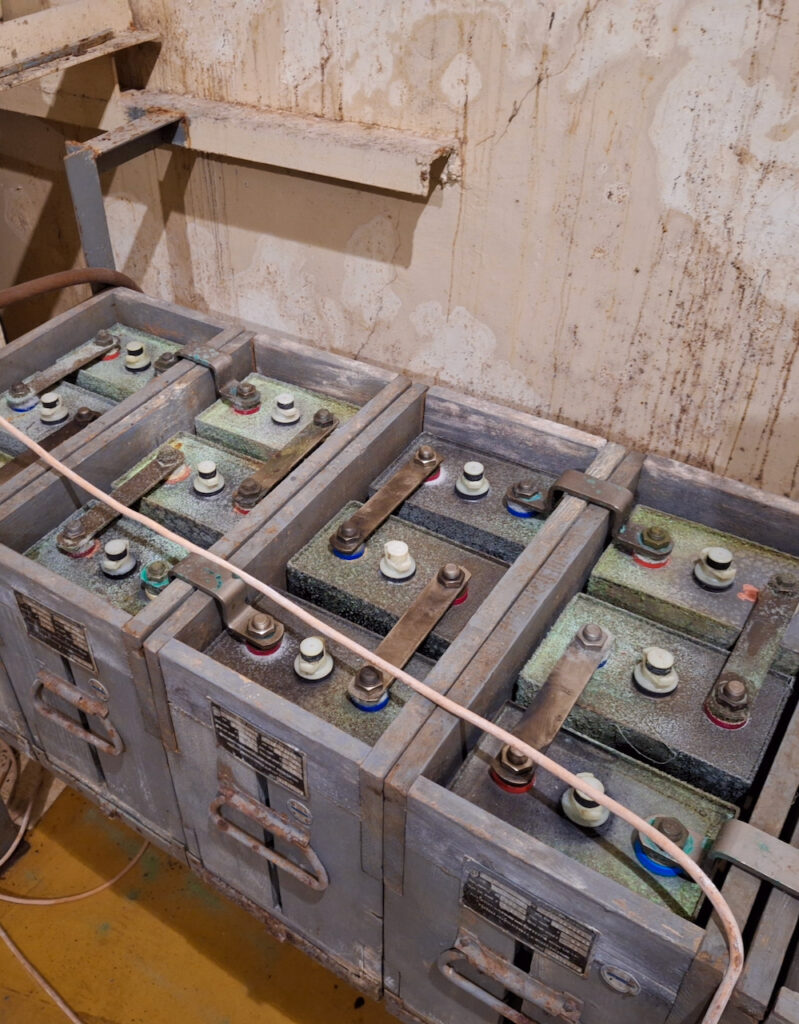
When the external grid failed, the motor switched to a direct current system powered by submarine-grade batteries.
This setup automatically spun up a generator which produced standard alternating current for the telecommunications equipment.
How the bunker operated
The facility functioned as a sophisticated command center primarily designed to house technological infrastructure rather than serve as a civilian defense shelter – this is evident by the absence of large water storages.
Its capacity suited a small operational crew of around a dozen people.
The Přáslavice bunker was equipped with administration offices, medical facilities, living quarters including a kitchen and bedrooms, and technical rooms supporting both communication and survival operations.
Offices and dining rooms featured wooden cladding, while posters and curtains on the walls created a familiar environment that helped the personnel endure underground isolation.
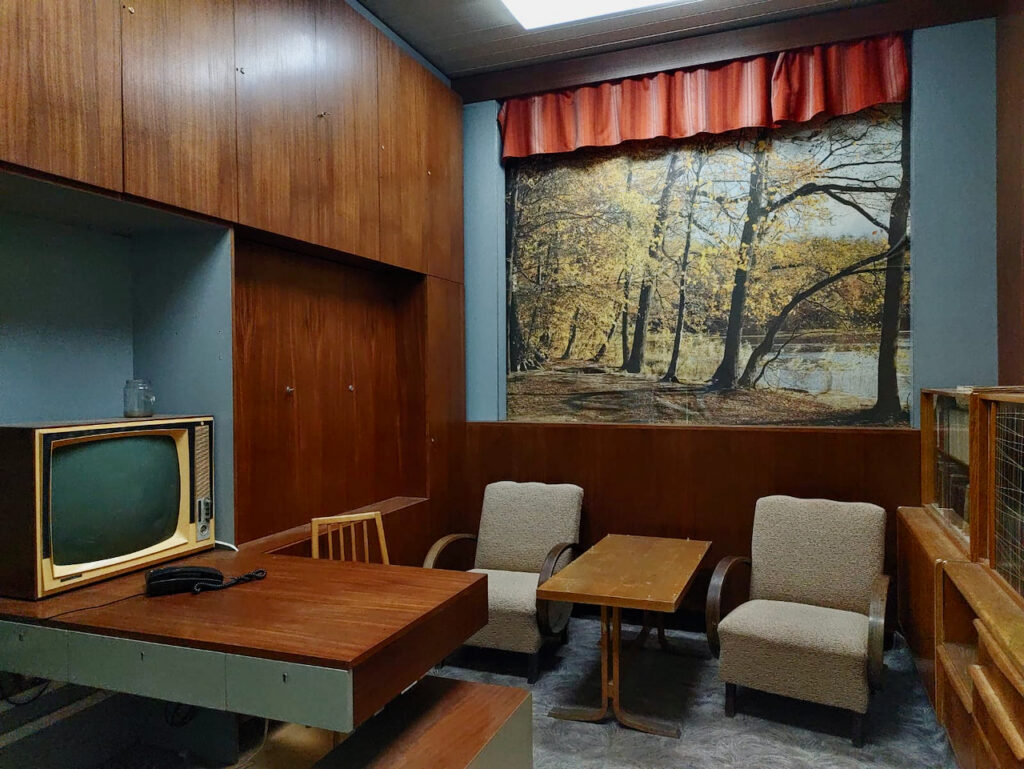
Beyond these living areas, the structure contained decontamination and filtration equipment, air purification and ventilation systems including an oxygen plant, and carbon dioxide measurement systems.
People’s movement throughout the building was strictly monitored from a control room operated by the secret police, who had the ability to wiretap internal communications through a dedicated circuit – a system that reflected the bunker’s dual purpose as both military communications hub and surveillance checkpoint.
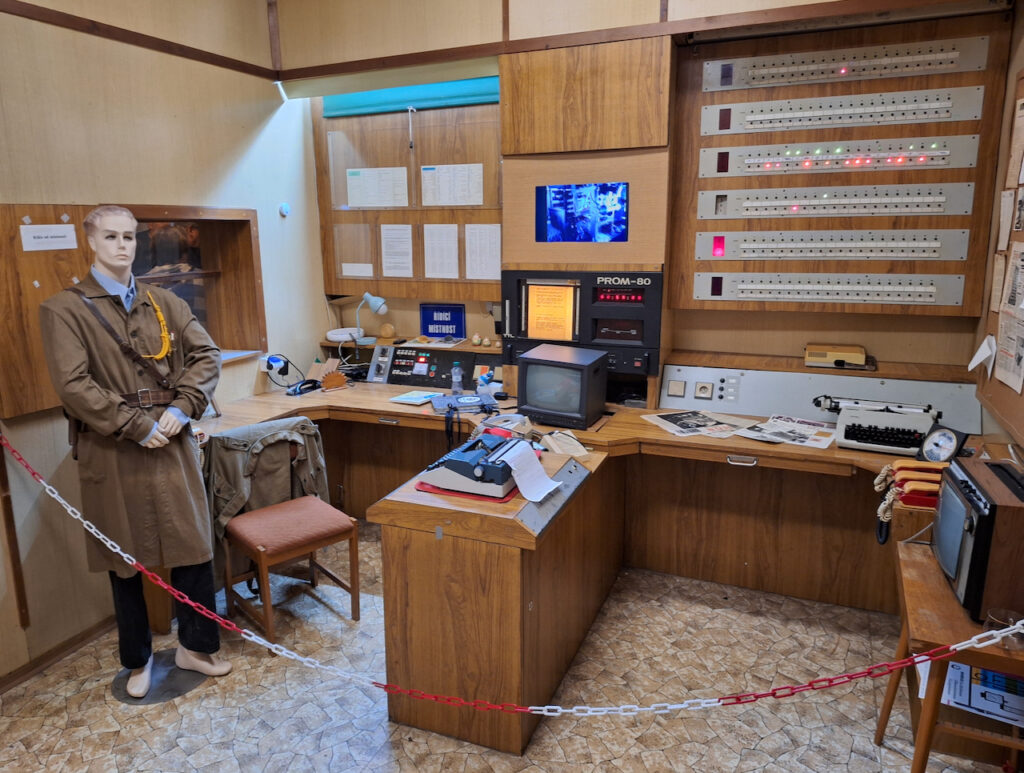
The bunker operated in multiple modes to maintain functionality under various hazardous conditions, including chemical and radiation exposure.
During peacetime operation, the outside air was filtered through ventilation systems as it was assumed to be contaminated. In complete isolation mode, the building was entirely pressurized and outside air was not used at all.
In combat mode, a decontamination protocol came into effect. Separate clean and dirty zones were linked by a decontamination corridor equipped with chemical showers.
Thick sealing doors divided the structure into sections with one always sealed while another remained open to maintain pressure difference.
A supervising officer would guide the personnel through decontamination using control buttons, ensuring they came out clean and received fresh clothing.
While the staff undoubtedly trained extensively on these procedures, secrecy surrounded the facility’s operations, leaving few surviving records.
The bunker today
The last active military members departed in 2001 and the facility transitioned to civilian use.
The bunker’s defensive walls remained off-limits to the general public until recently, requiring special security authorization for entry.
Although the private company Flenexa Aquaponie acquired the complex in 2010, the building received full declassification only in 2016 and was opened to the public in June 2022.
Tourist information
Ticket purchase is done in advance through the official website. It is not possible to buy tickets on-site with cash or cards.
There are several tour options available, with the standard and VIP tours being the most popular.
It is important to say that even if the website has an English version, English tours are provided only for pre-arranged group visits with a minimum of 10 people. If you join one of the tours they have listed online, only the Czech version will be available, and they won’t provide you with any English leaflet or notes.
That said, I would still recommend visiting anyway , just make sure you read up on everything they have on the website first.
Photos for personal use are allowed, but video recording is restricted – you can try asking the guide.
Professional photos or videos need to be discussed with them in advance.
The temperature inside the bunker is around 15-17 °C all year round, therefore dress appropriately.
Additionally, the altered air pressure and lack of oxygen will leave you a bit dizzy by the tour’s end. Bring water with you.
There are clean toilets available at the ground floor, right after the building entrance. You can use them only before or at the end of the tour.
At the moment of writing there is no possibility of purchasing drinks or food.
How to get to the Přáslavice bunker
The Přáslavice bunker is located 20 minutes by car from Olomouc and free parking is allowed right at the premises.
A sign at the road entrance restricts access to authorized vehicles only, but if you are booked for a tour, go ahead.
Don’t despair, because public transport can bring you there too!
From Olomouc, take a bus and after 20-30 minutes you will reach the stop called “Přáslavice, sušárna“, which is only a 15 minutes walk from the bunker.
The starting point of your trip can be either the bus station or the train station, depending on the schedule and bus number you are getting on. For this reason, don’t forget to check pubtrans.cz while planning your trip.
