
Reading Time: 13 Minutes 4 Seconds
General info
Zubrnice is a tiny village located in a valley of the Ćeské středohoří, close to Ústí nad Labem, in north Bohemia.
Historically, Zubrnice’s economy used to focus on fruit growing and drying and on exporting farm goods to Germany, with hops being especially profitable.
The village continuity was interrupted after World War II, when the Sudetenland were returned to Czechoslovakia and the original inhabitants expelled.
In addition, several buildings were demolished and the church narrowly escaped destruction.
Today, Zubrnice functions as an open‑air museum preserving the traditional folk architecture and rural life of the Central Bohemian Highlands across centuries.
The museum works to recreate the atmosphere of rural traditions by gradually restoring the village into a mid-19th century appearance.
The village retains its original plan centered on the main square, where you will find the Gothic Church of St. Mary Magdalene, which was restored after the fall of Communism, and a wooden well.
You will learn about life on a farmstead, take a look inside an old country shop, visit the local railway station and the watermill valley.
The museum began as a project to save historically and architecturally relevant buildings.
Several half‑timbered and brick houses still stand in their original location, while other rescued structures where brought to Zubrnice from elsewhere.

What to see in Zubrnice
You can stroll around the village and visit all the outdoor areas and the church (if it is open) on your own any time of the year.
To enter specific buildings you must buy a ticket and join a guided tour (currently available only in Czech) during the opening season.
Since the museum organizes several events throughout the year (ex. Carnival celebration, Easter at the museum), you could also opt to join one of them and visit the buildings during that occasion.
All the info about opening times, tours, prices ad events are on the official website.
~> Farmstead
The Farmstead No. 61 (the Hop Farm) is the heart of the open‑air museum.
This is two‑storey house from 1808, that today hosts the permanent exhibition “Hops that Built Houses”.
The exhibit traces hop cultivation methods and drying techniques: the older roof‑fan ventilation system and the later brick hot‑air dryer with its own furnace.
The site also includes a mid‑19th‑century brick farmhouse, a carriage shed, a half‑timbered barn, a fruit‑drying room and a granary.
~> The merchant’s shop Franz Seidl
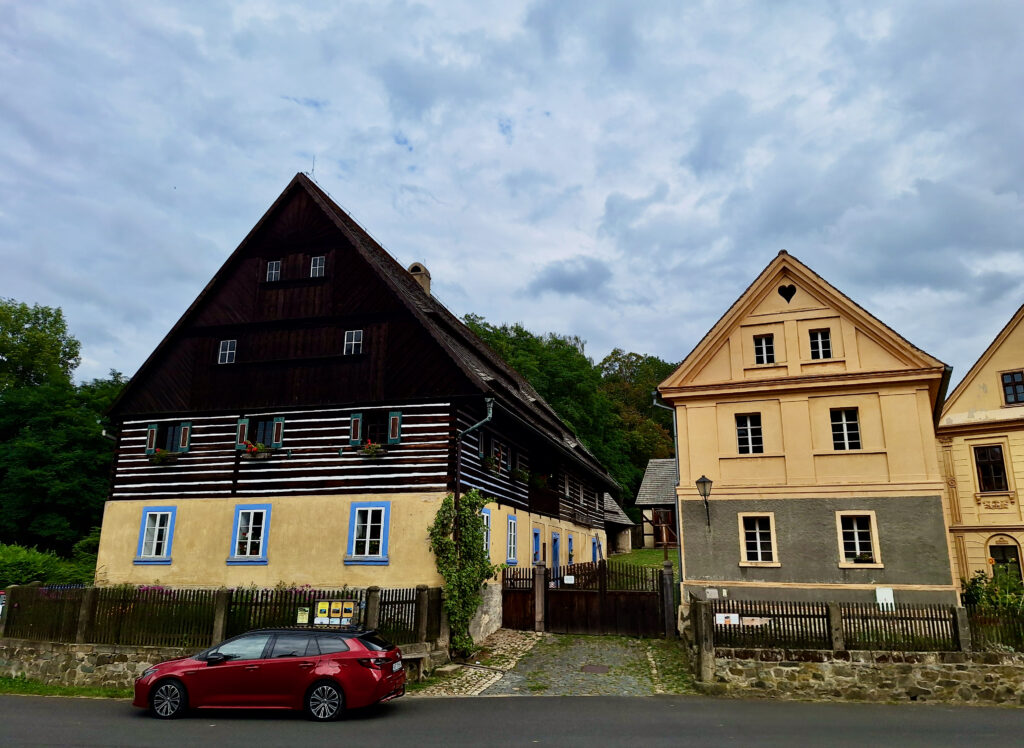
The merchant’s shop of Franz Seidl at No. 74 is a colonial store operated from the late 19th century until the early 1950s.
Inside, there is an exhibition of a typical village shop from the 1930s and an adjacent room shows ironing and washing equipment.
~> House from Loubí
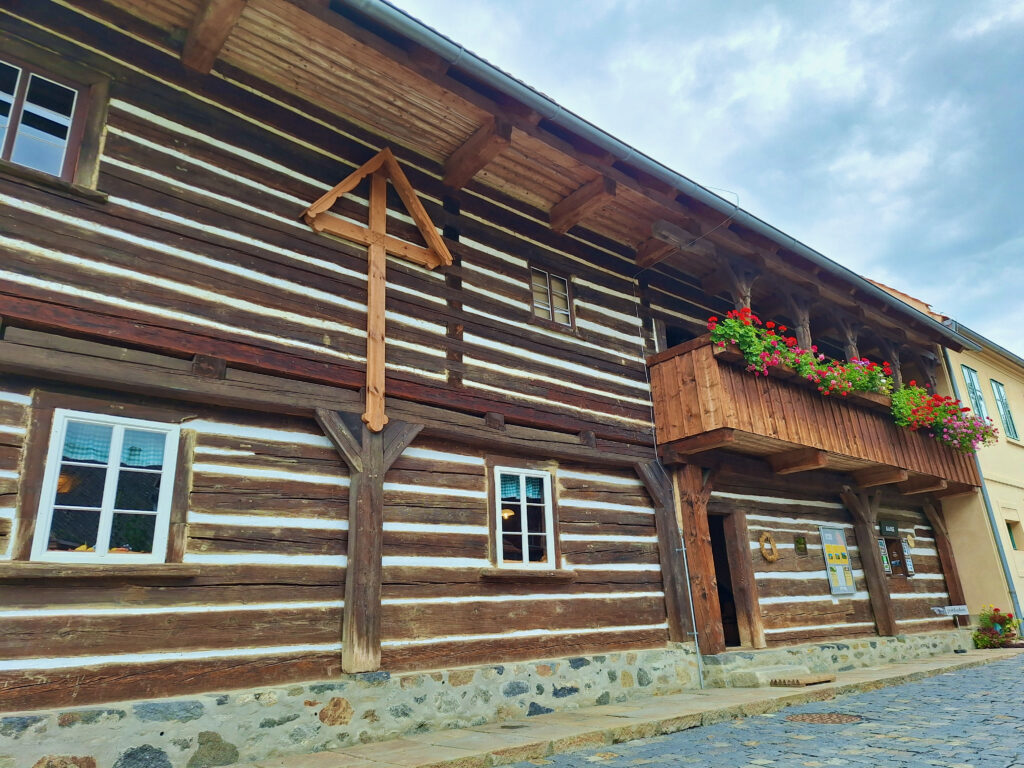
The former magistrate’s house (rychta) is a large half‑timbered building erected between the late 17th and early 18th century.
Originally from the village of Loubí, it is one of the region’s most valuable folk buildings and was the last house moved to the museum.
The site also includes a granary rescued from the village of Ostré.
The house hosts short‑term exhibitions showcasing folk architecture and rural life in northern Bohemia and the Central Bohemian Highlands (České Středohoří) and can be visited with a guided tour.
The ticket office for all the Zubernice visits is located in this building.
~> The school
The actual school building dates from 1863 and was constructed on the site of an older wooden school.
It had two classrooms on the first floor and the teacher’s apartment on the ground floor.
Classes were held here until June 1962, when the school relocated because of the building’s poor condition.
However, the replacement remained in use until 1976, after which the local students began traveling to Velké Březno.
~> The granary from Lochočice
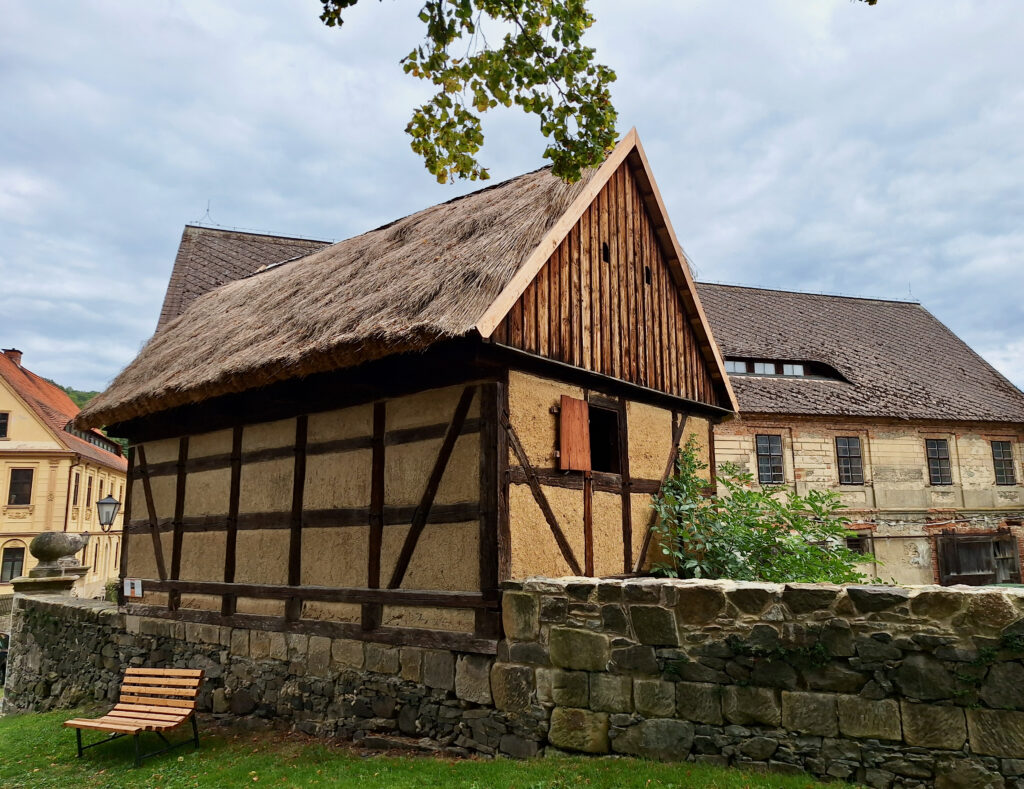
The granary (špýchar in Czech) is a building that combines a brick barn with a half‑timbered roof.
It was built at the end of the 18th century in the village of Lochočice, which was destroyed to make space for brown coal mining.
~> The apiary
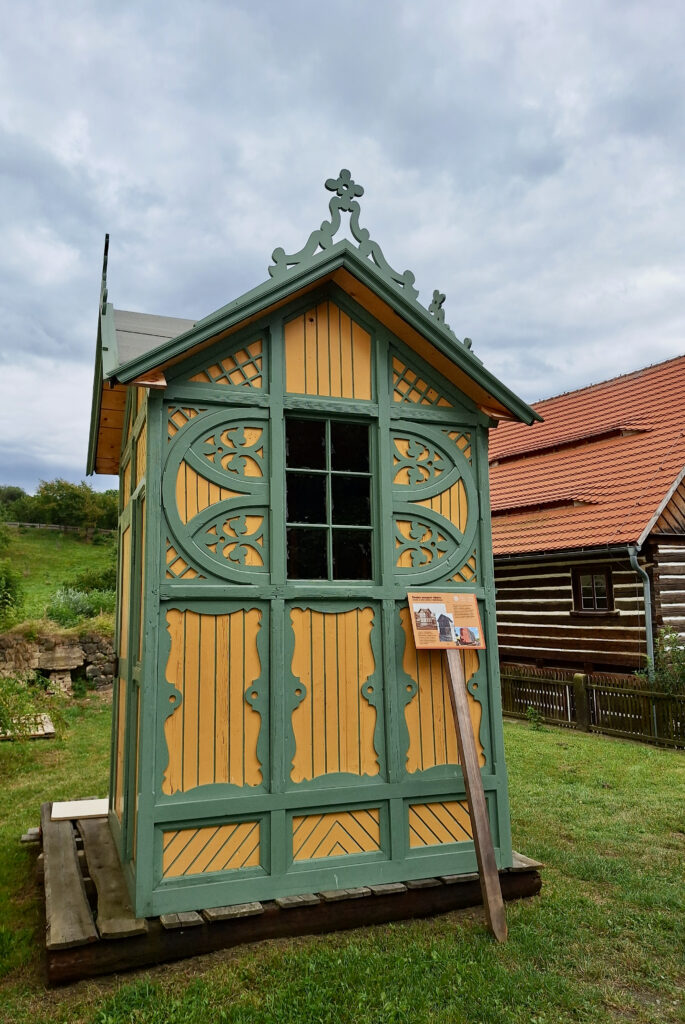
Between the colonial and the rychta you will find an apiary in Art Nouveau style, that was moved to Zubrnice in 1899, after a donation.
Inside it has room for eight hives.
~> The Watermill Valley
Behind the village a natural area known as the Mill Valley (Mlýnské údolí in Czech) preserves five watermills (three now ruined) from a once‑remarkable total of 27 mills along the 12 km of Luční stream.
The valley’s highlight is the functional small farm mill at number 27, which can be visited via one of the guided tours offered.
Nevertheless, this is a pleasant short walk even just to view the mills from the outside.

~> The Chapel of the Holy Trinity
A bit out of the village, at the cemetery entrance up the hill, stands the Chapel of the Holy Trinity, another half-timbered structure moved to Zubrnice.
It was built between 1717 and 1719 in the village of Žichlice, which was cleared in 1978 to receive the waste dumps of the coal mines in Ústí.
The inhabitants were evicted and the village demolished.
The chapel was the only surviving building and was brought to Zubrnice by an engineer who helped move the Church of the Assumption of the Virgin Mary in Most a few years earlier.
~> Zubrnice railway
Zubrnice is on the train line that once connected Ústí nad Labem to Úštěk via Velké Březno.
The line was initially used to move agricultural and industrial goods to the city, and with time it gained popularity for recreational travel.
With the expulsion of the Germans after World War II the local industry declined and road traffic increasingly replaced the railway one. The line became unprofitable and largely reduced to weekend passenger service.
It last operated in 1978, after which the track and the infrastructure were removed.
Around the same time the idea of a folk museum in Zubrnice was taking shape, it was decided to preserve the Velké Březno-Zubrnice section and convert the Zubrnice train station into a railway museum.
During the 1980s and 1990s volunteers formed an association (ZMŽ – Zubrnice Railways Museum) to repair and restore the tracks, the cars, the station buildings and to create the museum.
In 1998 the 11km section from Velké Březno through Zubrnice to Lovečkovice was listed as cultural monuments of the Czech Republic.
Since 2016 the tourist line T3 has been operating with the support of the Ústí nad Labem region and it runs from the beginning of April to the end of October on weekends and holidays.
The T3 starts in Ústí nad Labem-Střekov, follows the right bank of the Elbe/Labe to Velké Březno and then climbs for 6km into the České středohoří to the final station of Zubrnice-Týniště.
The service is operated by the M 131.1 Hurvínek (visible in the cover).
~> Zubrnice railway museum
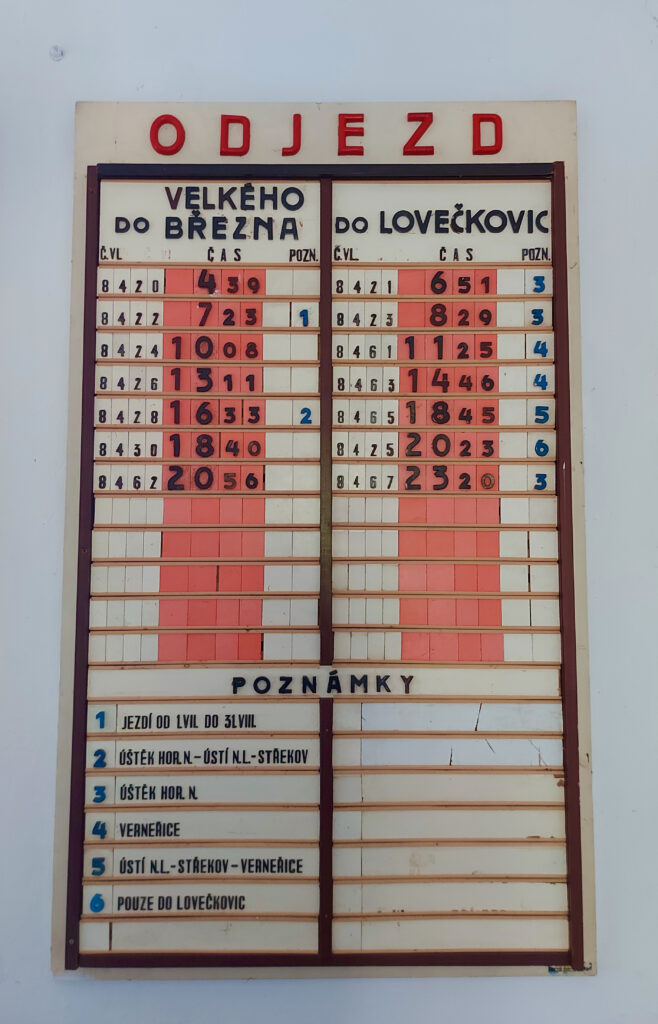
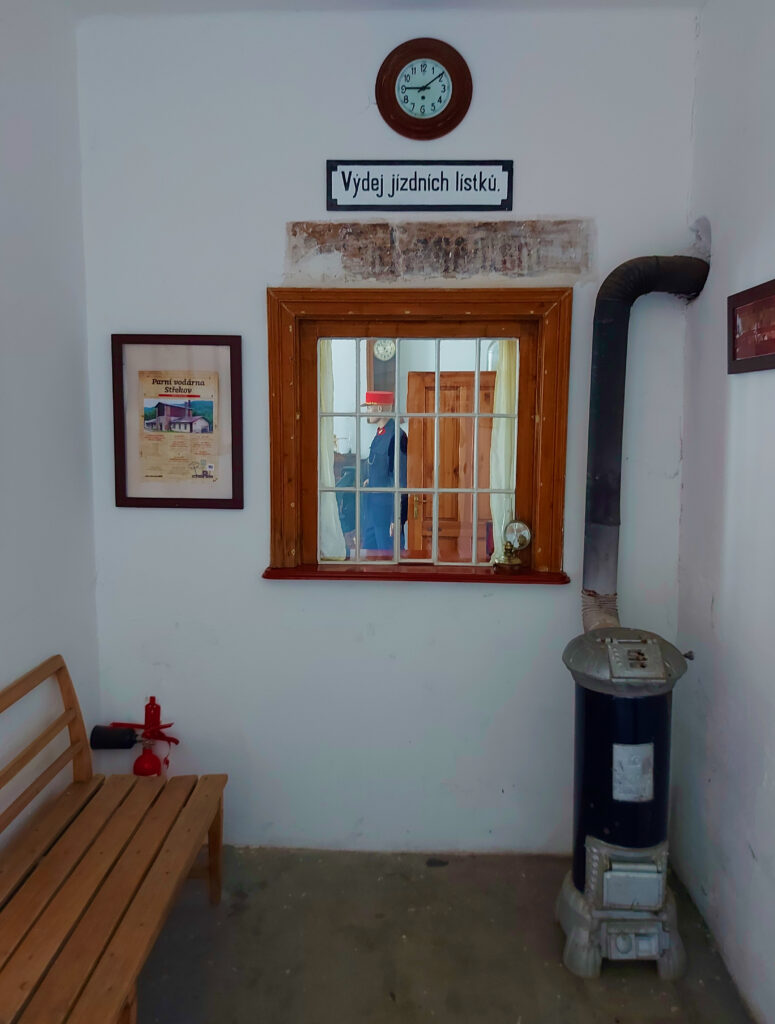
The old station building housed the transport office and a waiting room, which have been converted into a museum presenting the railway’s history with exhibits, sketches and photographs from the line’s construction in 1890 to today.
In a nearby building, a dedicated hall traces the evolution of railway trolleys from hand‑pushed carts to motorized vehicles, and displays beautiful pieces such as the Tatra Dm6.
Two carriages on the rails host themed exhibits: one on railway lighting and the other on safety equipment.
Outside there are benches, a model railway with a running train and a small enclosures with goats.
Visitors can buy refreshments and souvenirs on site and take part to guided tours offered as part of the museum’s program.
All the information about the museum and the train rides can be found at the official site of the Zubrnice Railway Museum.
How to get there
Whether you travel by car or by public transport, Zubrnice is easy to reach.
By car
Drive to Ústí nad Labem, cross the Elbe and continue to Malé Březno, then turn right into the valley and follow the road to Zubrnice.
By public transport
Take the scenic motoráček (diesel train) “Hurvínek” previously mentioned and enjoy the ride through the valley.
Remember that the line is active only between April and October during weekends and holidays, and that the train leaves Ústí from the Střekov station, which is on the right bank of the Elbe/Labe. If you arrive at Ústí main station, you will then have to take a bus or another train to cross to Střekov.
In addition, if you travel out of that season, you should use the regional bus line 452 – schedule available at pubtrans.cz.
When travelling in the Ústí region (Ústecký kraj), it is very convenient to use an app called DUKapka for checking connections (buses, trams, trains) and buying tickets at a lower price.
There is no online version of the same, just the app to download to your phone and you must create an account to use it.
To continue further
During the season of the T3 train line there is a bus service from Zubrnice train station to Úštěk that mirrors the old train route.
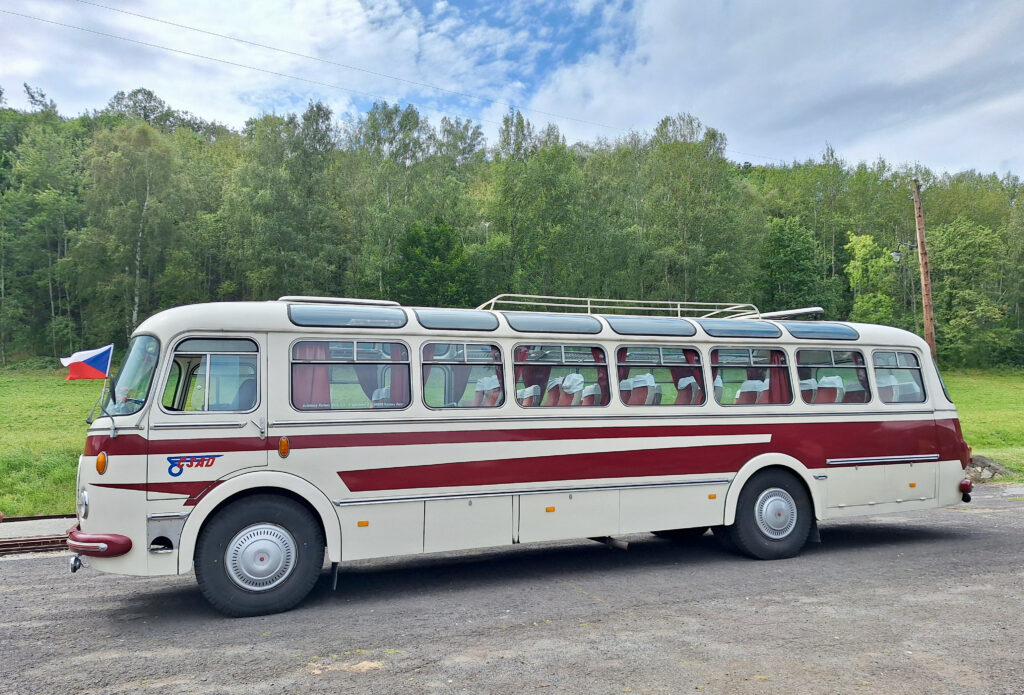
The line, named T32, is usually operated by a Škoda 706 RTO bus, which you can see in the photo here below.