
Reading Time: 5 minutes 33 seconds
General info
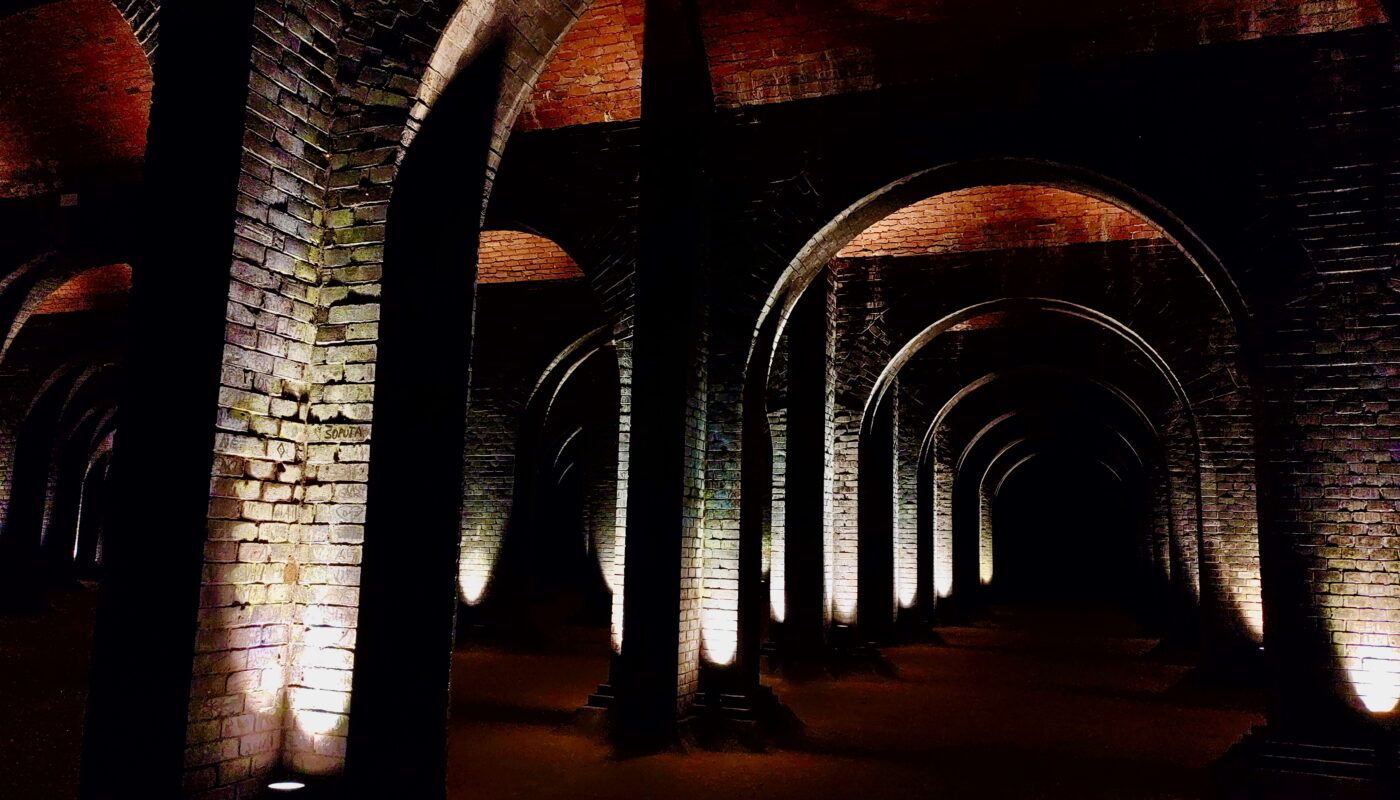
The Vodojemy, or water tanks, consist of three structures built between 1874 and 1917 beneath the Žlutý kopec (in English, the Yellow hill), on the western side of Brno.
These tanks were created to address the inadequacies of the existing water supply system, which struggled to meet the demands of the city’s growing population in the 19th century.
In response, the city council established a new water source, drawing from the Svratka river.
Collectively, the three tanks hold a total capacity of 30 million litres.
Unfortunately, the water produced by this system did not meet drinking standards and was only suitable for washing and heating until their decommissioning in 1997.
After falling into disrepair and following unfruitful discussions about their future use, it was decided in 2014 to demolish them.
However, public interest sparked by online photos led to their designation as a National Cultural Monument in 2019, preserving their unique architectural significance.
From 2024, the Vodojemy became accessible to the public, allowing visitors to admire them in almost original condition.
They are clean and well illuminated, and the inner area is spacious and high, so if you suffer of claustrophobia, you don’t need to be scared.
Today, the Vodojemy stand not only as a testament to industrial engineering but also as an important part of Brno’s cultural heritage.
Vodojem n. 1 – 1874
This water tank is the oldest of the series and it was constructed in 1874.
It is said to have been designed by a British builder named Thomas Docwry, even though I cannot find much information about him online.
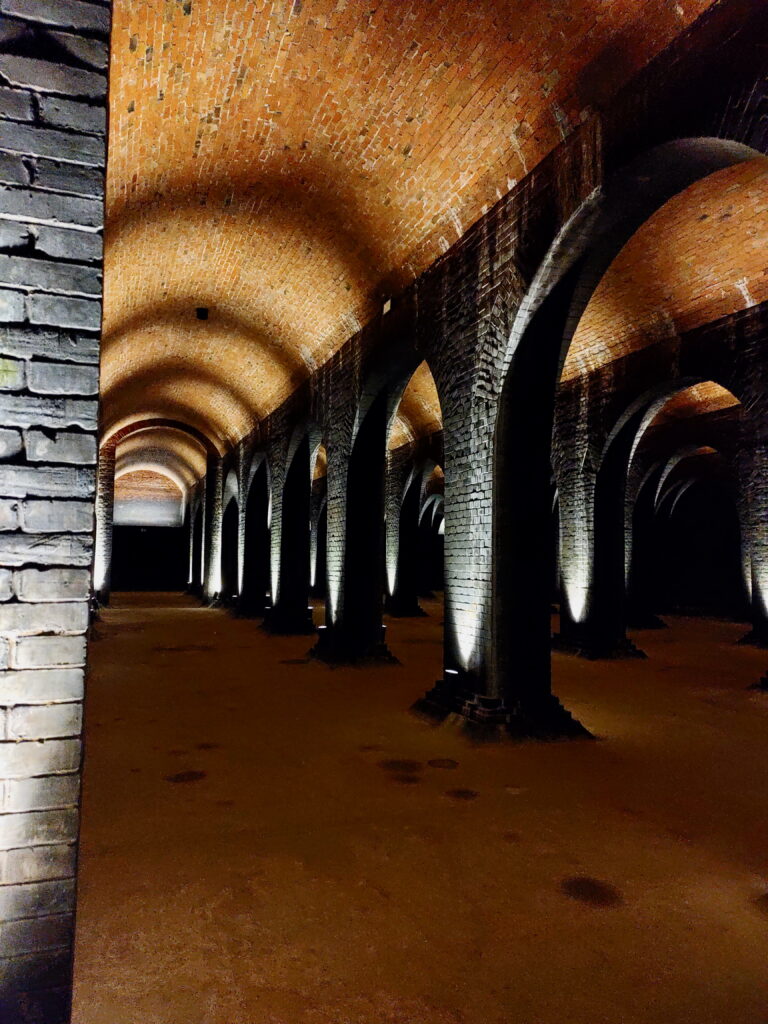
This Vodojem is a large, straightforward reservoir made of red bricks, measuring 45 by 45 metres, with a vaulted ceiling that rises 6.5 meters high.
The volume of the reservoir exceeds exceeded 9.5 million litres.
The bricks used for the construction were made directly in Brno and date back to the same period as those used for the Red Church (Červený kostel), with the structure requiring no steel, wood, or reinforced concrete.
The interior is organized into 11 parallel sections connected by a corridor on the northern side, featuring a floor consisting of inverted vaults rather than a flat surface.
Each wall features six arched windows, and the barrel vaults are supported by spaced pillars.
During its construction, the entire structure was insulated with a half-meter layer of white clay to prevent any external water from penetrating.
Vodojem n. 2 – 1894
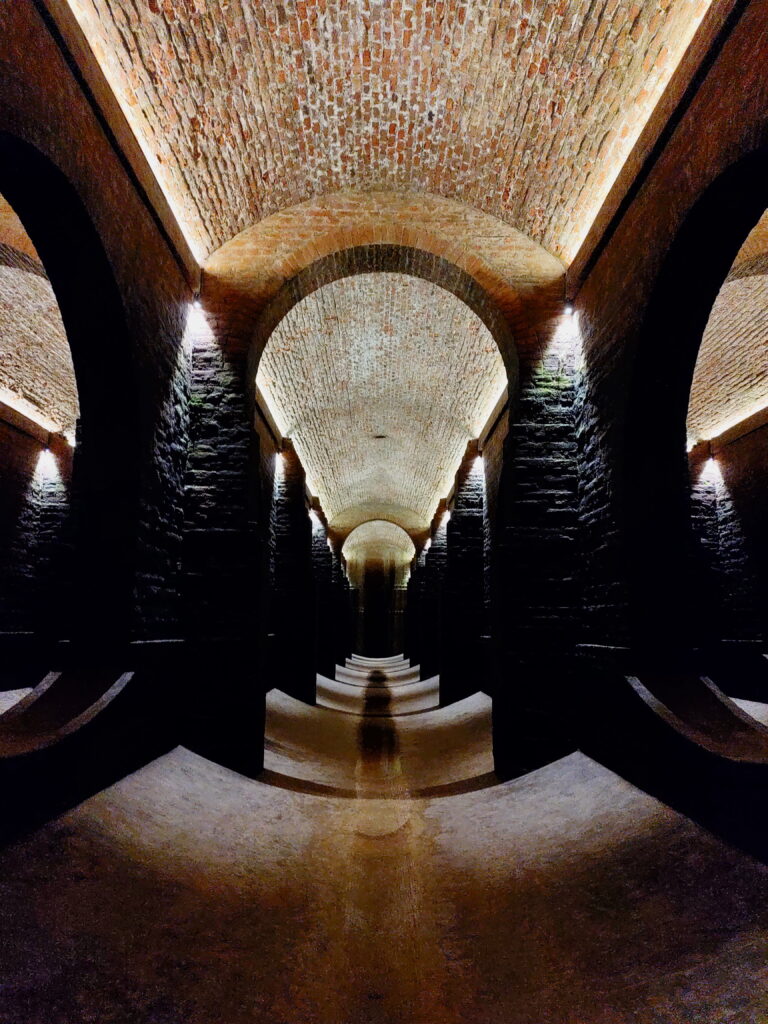
Since the 1874 reservoir was no longer sufficient, a second water tank was constructed between 1893 and 1894 base on the plans of Brno engineer Emil Procházka.
This Vodojem measures 35 x 55 metres with a height of 6.5 metres and has a capacity of over 8.5 million litres, making it an impressive structure.
Its construction features a simple design, with 70 pillars made of fired red bricks, similar to the previous water tank, supporting semi-circular arches that rise from a flat concrete base and are topped with a series of barrel vaults.
For a reliable insulation, layers of clay and gravel were placed under the concrete floor, complemented by soil added along the outer walls.
Vodojem n. 3 – 1917
The third and youngest Vodojem represents a significant achievement in water storage infrastructure, showcasing robust engineering and careful design.
This reservoir features two interconnected monolithic concrete tanks, supported by a system of 87 concrete pillars.
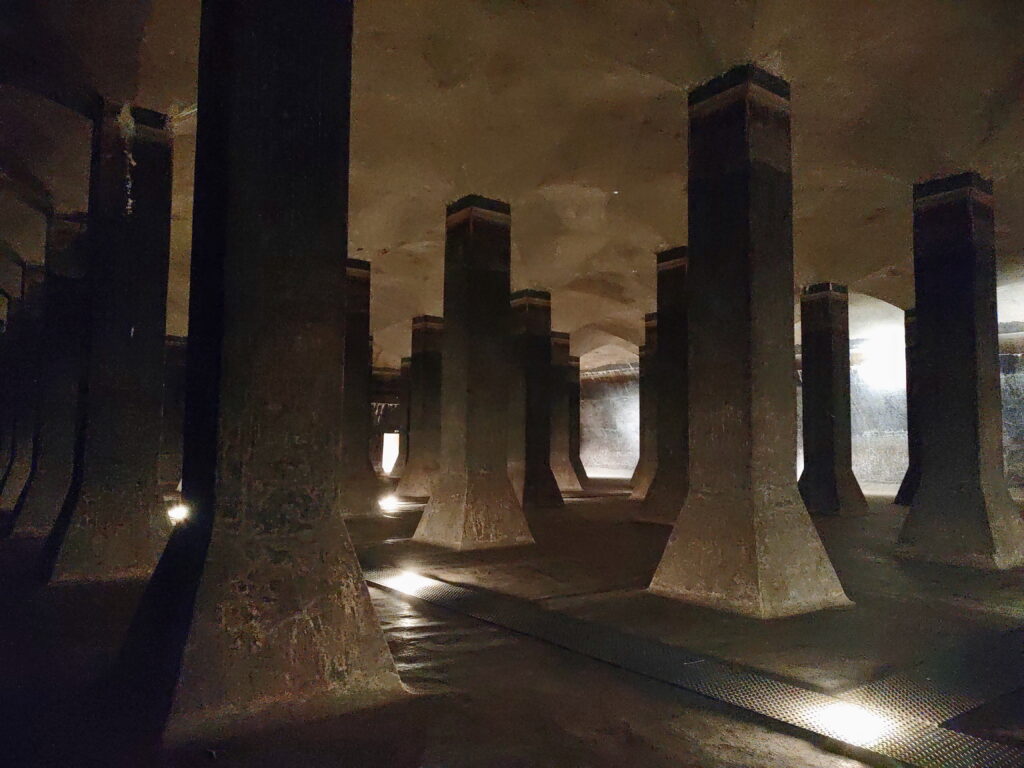
The first tank, located to the north, has an almost regular square shape, measuring 30 by 35 metres, while the second one is slightly larger, with dimensions of 30 by 45 metres.
The combined capacity of these two tanks reaches an impressive 15 million litres.
Built by the Austrian construction company Pittel and Brauservetter according to the plans of of the Municipal Waterworks Company, the tanks are insulated by a layer of soil ranging from 120 to 150 centimetres thick, to ensure that the water remains protected from temperature variations and environmental factors.
Tourist information
The Vodojemy are open daily from 10:00 to 18:00, except for Mondays.
You can visit them on your own or join a guided tour – the price is the same, 350Kč.
Discounts and package deals are available on the official Vodojemy website, where you can also find free downloadable audioguides in English, German, Polish and obviously Czech.
The tour begins in front of the ticket office, which is hosted in the reconstructed maintenance house.
The original structure was demolished, and a replica has been built based on preserved elements like rafters and the brick cornice, as well as historical photographs from the late 19th century. Note that the materials and colors used today differ from the originals.
Inside, you will find souvenirs, toilets, lockers, and puffy seats where to rest.
You first visit the reservoir n. 2, that is situated at the southern end of the park and is accessed by a staircase hidden in the terrain.
After that, you return back to the building to proceed underground, where the water tanks n.1 and 3 are located.
VodojeMyArt – WatertanksArt
The Vodojemy website says that there is a calendar of events happening in the water reservoirs.
When I was there, I got mesmerized by the light shows in the both rooms of Vodojem n. 3.
The smaller tank had an installation from artist Ondřej Doležal called “Díra” (Hole), while the bigger area presented “Critical level” by the collective SVITAVA.
How to get there
If you arrive by car, you can opt to park in the purple zone (free on weekends) in Tvrdého street or at the small parking area in Tomešova street.
If you travel by public transport, there are various combination of trams, buses and walk, depending on where you come from.
Check pubtrans or maps for the most updated connections.
